In short: WW1 coach trips from Lille put most of the Western Front within an hour of your hotel. Fromelles and Vimy are 30 to 45 minutes away, Ypres, Arras and Cambrai about an hour, and the Somme about 90 minutes. Groups come with their own UK coach or by Eurostar, then hire a local coach company that builds the programme around them.
Most Western Front tours sleep near Ypres or Albert and spend long hours on the motorway. Lille sits in the middle of it all. From one hotel, a coach reaches Flanders, Artois, the Cambrésis and the Somme, and the group comes back each evening to a lively city with good restaurants. Here is how I would plan WW1 coach trips from Lille, site by site, with the timings a group leader needs.
Two ways to organise WW1 coach trips from Lille
Groups have two options, and both work. I worked with both kinds of operator for years when I promoted the region’s tourism to British coach companies and tour operators.
Book a UK coach operator
Many British coach operators run Western Front tours for schools, regiments, Royal British Legion branches, family history groups and clubs. They pick the group up at home, cross the Channel with the coach and often bring their own battlefield guides. From Calais, Lille is a little over an hour down the A25, so it makes a comfortable base for three or four nights.
Take the Eurostar and book a local coach company
The other option is to travel by Eurostar to Lille-Europe and hire a coach company from the Lille area for the days on the battlefields. The fastest trains link St Pancras to Lille-Europe in about 1 hour 20, and Eurostar sells group fares to parties of 10 or more paying passengers on direct services only. Local coach operators then build a tailor-made programme around your request: the sites you want, the pace that suits your group and a hotel in Lille.
Ask the local tourist offices
The tourist offices of Arras, Lens and Cambrai also help groups put together a tailor-made stay. They know the sites, the local guides and the group rates in their area, and they can point you to the right coach company.
The battlefields an hour from Lille
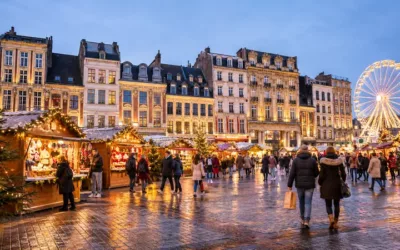
This is why Lille works as a base: almost every major site is a short coach ride away, and the group never has to change hotel. Our guide on why visit Lille shows what your group can do in the city after a day in the field.
| Site | Country | Rough travel time from Lille | Best for |
|---|---|---|---|
| Fromelles | France | About 30 minutes by road | Australian and British losses in 1916 |
| Vimy Ridge and Notre-Dame-de-Lorette | France | 30 to 45 minutes by road | Tunnels, trenches and the great memorials |
| Arras | France | About 1 hour by road | Underground life at the Wellington Quarry |
| Ypres | Belgium | About 1 hour by road | The Salient, museum and Last Post |
| Flesquières and Ligny-en-Cambrésis | France | About 1 hour by road | Deborah the tank and the first Australian to fall |
| Thiepval and the Somme | France | About 1 hour 30 by road | The 1916 offensive and its memorials |
Travel times move with traffic, so ask your coach company to confirm them for your date.
Fromelles, Vimy and Arras: the closest battlefields
Fromelles and the Pheasant Wood cemetery
Fromelles lies about 20 km west of Lille. The attack began on the evening of 19 July 1916 and ran into the next day, which makes it one of the worst days in Australian military history. Fromelles (Pheasant Wood) Military Cemetery holds 250 Australian and British soldiers, recovered from German mass graves in 2009 and dedicated on 19 July 2010. The site is signposted from the N41 and has room for coaches.
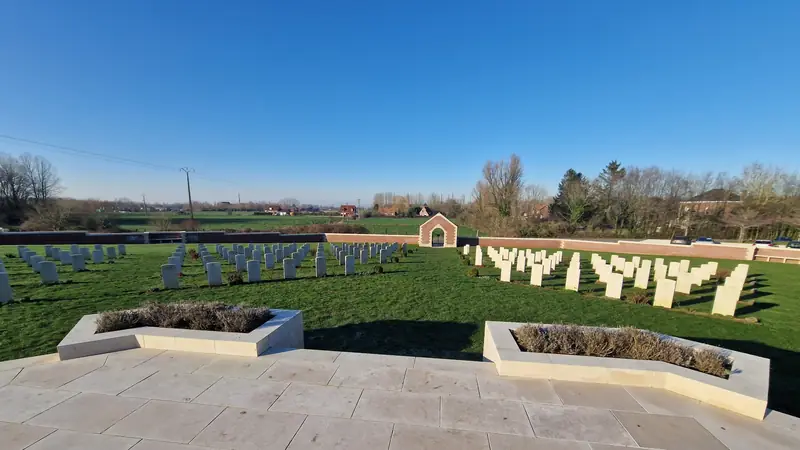
Fromelles, like Cambrai, sees far fewer groups than Arras, Vimy or Notre-Dame-de-Lorette, and yet its story is one of the most moving on the Western Front. When I first came here, the only museum was a small amateur display. Then the Pheasant Wood graves were found, and science did the rest: thanks to DNA from descendants, 181 of the 250 soldiers have their names back so far. The Commonwealth War Graves Commission built its first new cemetery in fifty years to receive them, and Prince Charles dedicated it.
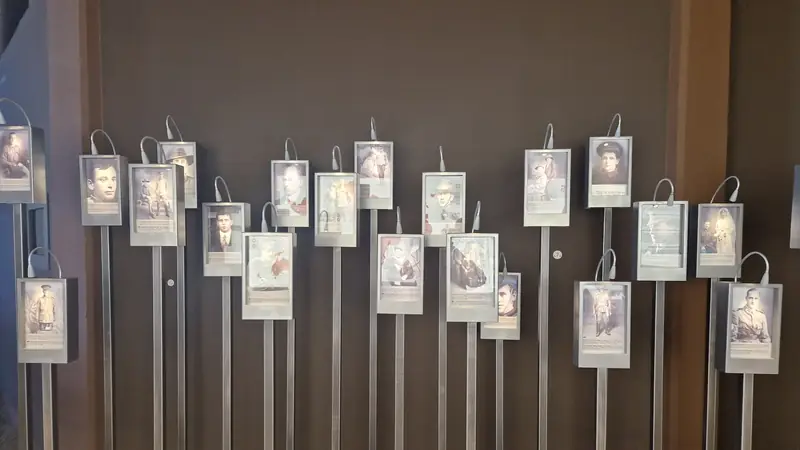
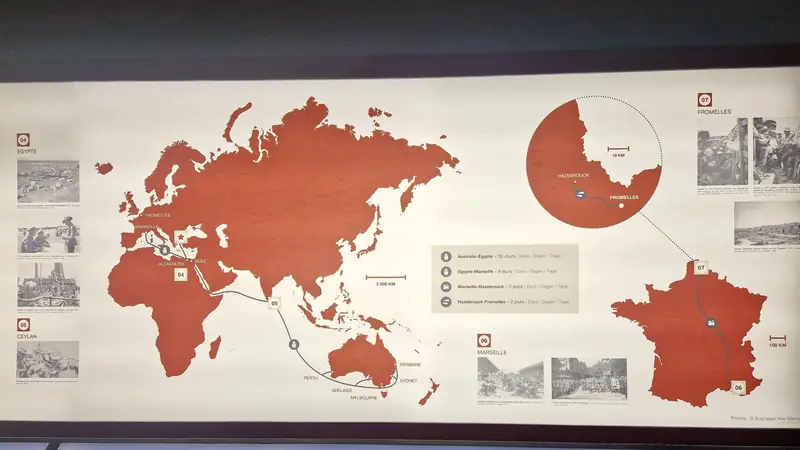
Next to the cemetery, the Museum of the Battle of Fromelles is a world away from the old amateur display. It follows these Australians who crossed oceans to fight in French Flanders, and tells the stories of a few of them one by one. I find it deeply moving. Before you leave, stop at the Australian Memorial Park to see Cobbers, Peter Corlett’s bronze of Sergeant Simon Fraser carrying a wounded mate out of no man’s land. It is a statue about fraternity, named after the cry of a soldier waiting for help: “Don’t forget me, cobber.”
In my years promoting the region’s tourism to British tour operators, I worked on the Fromelles memorial site, and I still put it first in a Lille-based programme. It gives a British group an Australian story that few of them know.
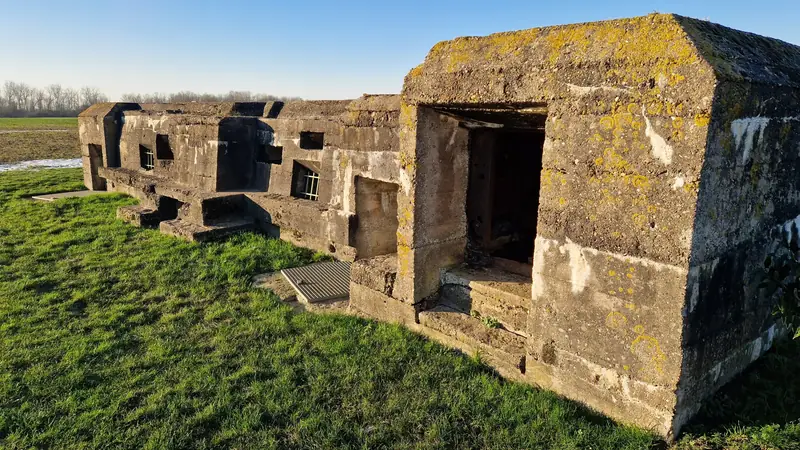
Nearby, the Battle of Fromelles trail leads to the Abbiette bunker. This German command post stood between the first and second German lines, with no openings on the side facing the front. From its doorway you can make out the flags of the Australian Memorial Park a little over 900 metres away, on the old first line of trenches, and grasp how close the two armies were.
The Canadian National Vimy Memorial
The Canadian assault on Vimy Ridge began on 9 April 1917 as part of the Battle of Arras. The memorial carries the names of 11,285 missing Canadian soldiers, and its twin pylons rise 27 metres. King Edward VIII unveiled it on 26 July 1936, after eleven years of building.
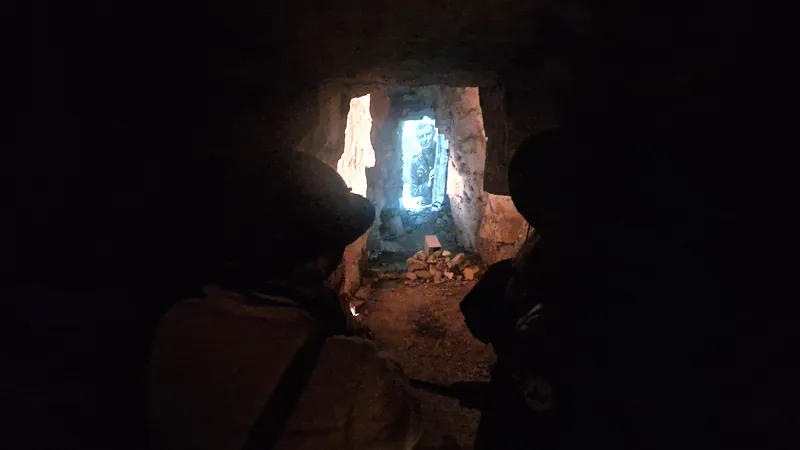
On the ridge, reconstructed trenches show the 1917 lines in places only 25 metres apart. Five British tunnelling companies dug fourteen tunnels in the Canadian sector, and the longest ran for more than 1,700 metres. A visitor education centre explains the Canadian and Newfoundland role. Check opening hours and tunnel access on the Veterans Affairs Canada site before you fix a date.
Notre-Dame-de-Lorette and the Ring of Remembrance
At Notre-Dame-de-Lorette, the Ring of Remembrance lists 580,000 soldiers killed in French Flanders and Artois between 1914 and 1918. The 500 steel plates place names in alphabetical order without distinction of rank, nationality or religion, so former enemies appear side by side. The French president unveiled it on 11 November 2014. The neighbouring French cemetery holds nearly 43,000 graves, a lesson in scale for visitors who have only seen British figures.
Arras and the Wellington Quarry
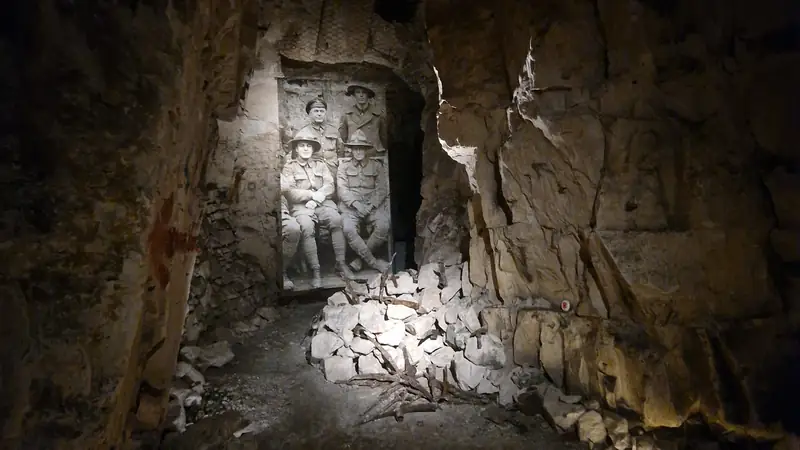
Beneath Arras, New Zealand tunnellers linked medieval chalk quarries into underground barracks about 20 metres down. The Wellington Quarry could shelter up to 24,000 soldiers before the Battle of Arras. It opens daily, from 9:45 to 12:30 and from 13:30 to 18:00.
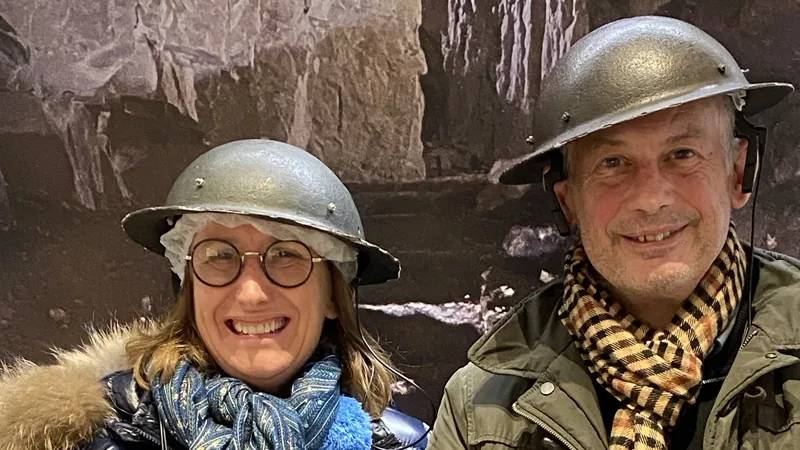
Language is no problem here: English-speaking visitors outnumber the French, and visits run in English. Tours leave at set times through the day, so groups book their slot in advance. A December group can pair the quarry with the Arras Christmas market on the Grand-Place, about 15 minutes on foot from the quarry, before the coach heads back to Lille, about an hour away.
An Ypres day: In Flanders Fields Museum, Tyne Cot and the Last Post
Ypres sits in Belgium, about an hour from Lille, so this is a cross-border coach day and everyone should carry their passport. The In Flanders Fields Museum in the Cloth Hall makes the best first stop, because it gives the Salient its story before the group sees the ground. Tyne Cot Cemetery, Essex Farm, Langemark German cemetery and the Hooge Crater museum fill the afternoon.
The Last Post at the Menin Gate
The Last Post has sounded at the Menin Gate every evening at 8pm since 1 July 1928. Only the German occupation interrupted it, and it resumed on 3 September 1944, the day Polish forces liberated Ypres. Ypres Fire Brigade buglers arrive at 7:55. Operators advise standing in place by 7:15 to get a good spot, and weekdays and winter evenings are quieter than weekends and school holidays.
The gate lists almost 54,000 Commonwealth soldiers who died in the Salient before 16 August 1917 and have no known grave. A group can lay a wreath if it arranges this in advance, through the Royal British Legion and with a donation. Sources differ on whether a booking is compulsory, so confirm it with your organiser.
Getting back to Lille
With the ceremony ending shortly after 8:30pm, the coach is back in Lille at about 9:30pm. Tell the hotel or the restaurant to expect a late supper. On 11 November, Ypres holds a full day of remembrance, and our guide to what’s on in Lille in November explains how that day usually runs.
A Cambrai day: Deborah the tank and the first Australian to fall
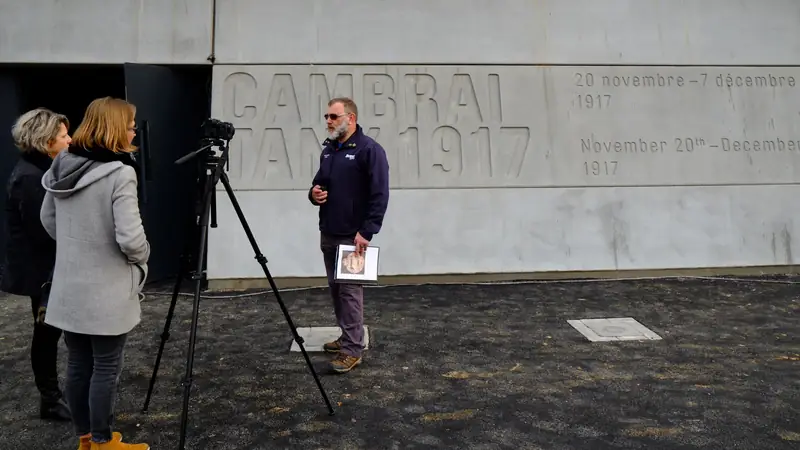
Cambrai sits about an hour south of Lille by coach, and most Western Front programmes drive straight past it. I would not. Like Fromelles, it draws far fewer groups than Arras or Vimy, and it has one of the finest stories on the front. On 20 November 1917, the British sent 476 tanks into the Battle of Cambrai, the first time tanks attacked in mass. One of them, D51 Deborah, a Mark IV of D Battalion, Tank Corps, was knocked out by a German field gun in the village of Flesquières on the first day. Five of her crew were killed, and they lie in Flesquières Hill British Cemetery, a few steps from where she now stands.
Cambrai Tank 1917 at Flesquières
Deborah stayed buried in the field until 1998, when local historian Philippe Gorczynski tracked her down and dug her out. She waited 17 years in a barn before moving into Cambrai Tank 1917, a museum built around her and inaugurated for the centenary in November 2017. She is the only tank left of the 476 that fought at Cambrai, shown as she was found, shell damage included.
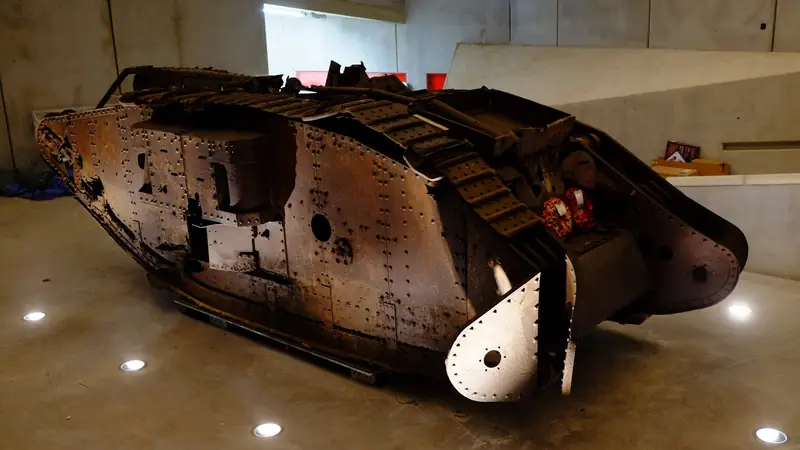
I met Philippe in the early 2000s, when Deborah was still sitting in a farm barn in Flesquières. He ran the Hôtel Beatus in Cambrai, where he kept the Great War objects he found in the surrounding fields, and he would tell anyone who listened how he had hunted for her: six years of archives, aerial photographs and searching before the dig of November 1998. He put a crazy amount of energy into it. Deborah was later brought back to the heart of the battlefield, and the museum, a concrete bunker, was built around her. Cambrai Tank 1917 is above all the story of one man telling the story of other men.
I know this place well. When I was promoting the region’s tourism, I launched Cambrai Tank 1917 on the communication and press side. Deborah’s story went out on the BBC and in the British national papers, and I welcomed the coach operators who then added Flesquières to their battlefield programmes. For any group, it is a rare chance to stand beside a tank that fought in 1917 and to meet the names of the men inside it.
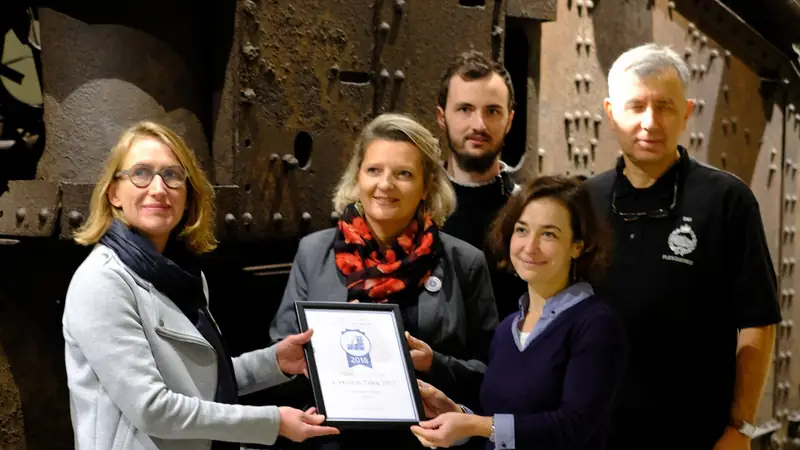
The British travel trade noticed. In 2018, Cambrai Tank 1917 was shortlisted as best European project at the British Guild of Travel Writers awards at the Savoy in London. It came home highly commended, second only to Nausicaá in Boulogne-sur-Mer, and I took the certificate straight back to Flesquières to hand it to the team, in front of Deborah.
The museum opens in the afternoon only, and its opening days change through the year. Check them, and the group rate, on Visit Cambrai, the English-language site of the Cambrésis tourist office, which I created with its translations. A morning in Cambrai itself, with its belfry and squares, fills the gap before the visit.
Lieutenant William Malcolm Chisholm at Ligny-en-Cambrésis
About 25 minutes from Flesquières, the communal cemetery of Ligny-en-Cambrésis holds a story that few visitors hear. William Malcolm Chisholm was born in Sydney in 1892 and went to Sydney Grammar School before his family moved to England. He trained at Sandhurst and joined the 1st Battalion, East Lancashire Regiment. On 26 August 1914, during the retreat from Mons, his battalion faced the German guns at Le Cateau. He had reached the town only the evening before, went into action at 4am, was shot at about 3pm and died the next day, aged 22.
That makes him, as far as the records show, the first Australian killed in the First World War, about two weeks before the first Australians in uniform fell in German New Guinea. I came across him while I was promoting the region for the centenary. We were researching the Battle of Le Cateau when a street in Ligny called Rue Chisholm caught our eye, and the small communal cemetery did the rest. Once we had put it all together, we realised he was probably the first. In March 2014 I told the Australian press, and that July the Australian War Memorial added his name to its Commemorative Roll.
His headstone describes him as the elder son of Dr and Mrs William Chisholm of Sydney, New South Wales. After the war, his father gave £1,000 to help the families of the village’s own fallen soldiers, and Ligny renamed its main street Rue Chisholm. When his mother died in Sydney in 1928, his father had her ashes brought to Ligny so that she could rest beside their son. Pair this stop with Fromelles and your group follows Australia’s war in France from its very first death in 1914 to one of its worst days in 1916.
A Somme day: Thiepval, Lochnagar and Beaumont-Hamel
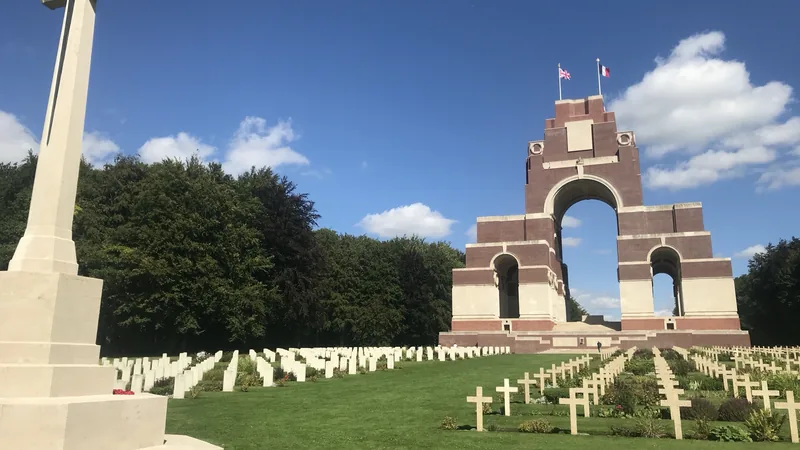
The Somme sits about 90 minutes from Lille, so the day includes roughly three hours on the coach. It is the one long day of a Lille-based programme, and for many British groups it is the reason for the trip. The Thiepval Memorial bears the names of 73,367 British soldiers who died between July 1915 and March 1918 and have no known grave. Fighting for Thiepval began on 1 July 1916 and ended on 26 September 1916.
The visitor centre opens from 10:00 to 18:00 between 1 May and 30 November and from 9:00 to 17:00 between 1 December and 30 April. It closes from mid-December to mid-January. The Ulster Tower nearby opens Tuesday to Sunday.
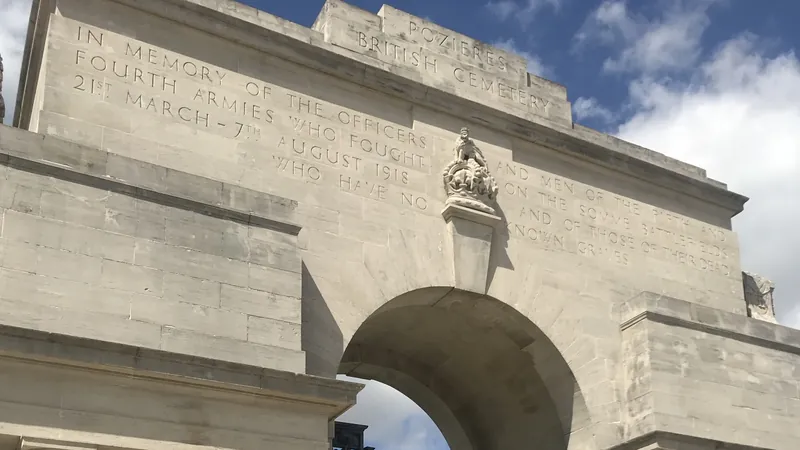
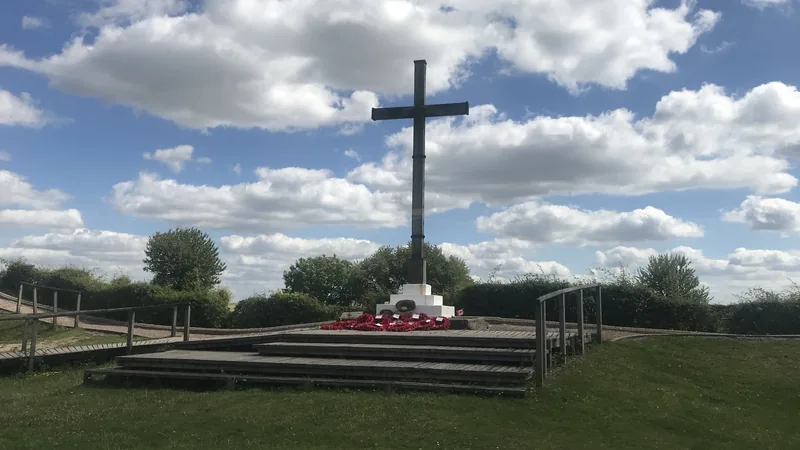
On the D929 between Albert and Bapaume, Pozières British Cemetery is worth a stop on the way. Its memorial carries the names of more than 14,000 British and 300 South African soldiers who died on the Somme between 21 March and 7 August 1918 and have no known grave. That takes the group beyond 1916 to the German Spring Offensive of 1918. The village itself fell to the 1st Australian and 48th Divisions on 24 July 1916, and more than 450 Australians lie in the cemetery, a link for any group following the Fromelles story.
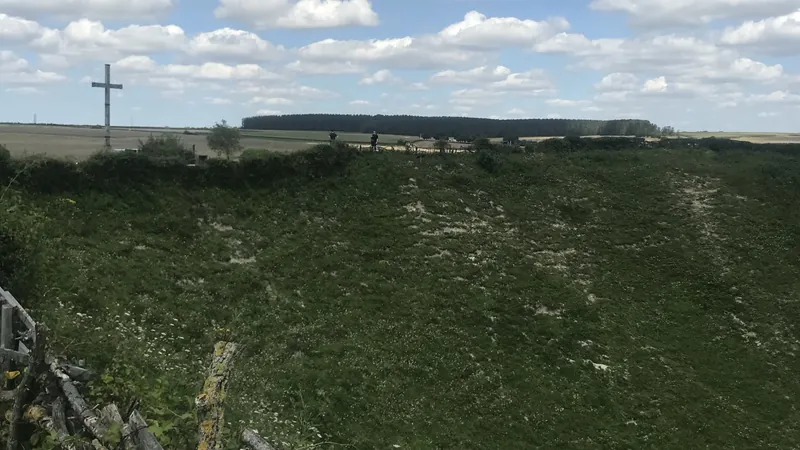
Lochnagar Crater, the Newfoundland Memorial Park at Beaumont-Hamel and the 1916 museum in Albert fill the rest of the day on most operators’ programmes.
A four-day programme for WW1 coach trips from Lille
This plan runs four days and three nights in Lille, with one battlefield area per day and no change of hotel. It puts Ypres on Day 2 so the 8pm ceremony needs no extra night, and Cambrai on the last day, when the afternoon opening of Cambrai Tank 1917 fits the journey home.
| Day | Morning | Afternoon | Evening |
|---|---|---|---|
| Day 1 | Arrival in Lille by coach or Eurostar, lunch | Fromelles, Pheasant Wood cemetery and Cobbers | Supper and a walk in Old Lille |
| Day 2 | In Flanders Fields Museum, Ypres | Tyne Cot and Essex Farm | Last Post at 8pm, coach back to Lille |
| Day 3 | Vimy memorial and trenches, Notre-Dame-de-Lorette | Wellington Quarry in Arras | Back in Lille for supper |
| Day 4 | Ligny-en-Cambrésis and Cambrai town centre | Cambrai Tank 1917 at Flesquières | Coach home via Calais, or Eurostar from Lille-Europe |
With only three days, keep Fromelles, Ypres and Vimy with Arras, and give Cambrai a place on your next trip. For a Somme focus, swap Day 3 or Day 4 for Thiepval, Lochnagar and Beaumont-Hamel and allow a full day. From Flesquières, the coach reaches Calais in under two hours, so a Cambrai afternoon still makes an evening crossing.
WW1 coach trips for schools
Schools are among the most frequent groups on these routes, and the same programme works for a class. Eurostar allows free date changes up to 31 days before departure, then refunds fall to 50% from 30 days out, so read the terms before you pay a deposit. In December, a battlefield day pairs well with a festive morning, as our page on school trips to French Christmas markets shows.
What to check before you book
- Coach: book a company that knows both French and Belgian roads, and agree pick-up and drop-off points in Lille.
- Prices: confirm every site rate for your date, including the Wellington Quarry group rate and your tour slot.
- Closures: the Thiepval visitor centre shuts from mid-December to mid-January, and Cambrai Tank 1917 opens in the afternoon only, on days that vary through the year.
- Evenings: Lille offers plenty to do for free, and our guide to free visits in Lille covers it.
Are WW1 coach trips from Lille worth it?
Yes, for any group that wants Fromelles, Ypres, Vimy, Arras and Cambrai without packing and unpacking every night. One hotel, an hour on the coach each morning and a real city every evening: that is hard to beat on the Western Front. Whatever you choose, confirm dates, prices and opening hours with each site, then book the coach, the Wellington Quarry slot and the Last Post wreath first.
WW1 coach trips from Lille: your questions answered
How far are the WW1 battlefields from Lille?
Most of them are within an hour by coach. Fromelles is about 30 minutes away, Vimy Ridge and Notre-Dame-de-Lorette 30 to 45 minutes, and Ypres, Arras and Cambrai about an hour. The Somme is the furthest, at about 1 hour 30, so plan it as a full day.
How many days do you need for a WW1 coach trip from Lille?
Three days cover Fromelles, Ypres and Vimy with Arras. Four days let you add Cambrai and Deborah the tank, which most programmes miss. If the Somme matters most, swap it in for one of those days or add a fifth.
Can a UK coach operator use Lille as a base for a battlefield tour?
Yes. From Calais, Lille is a little over an hour down the A25, and the group can stay in the same hotel for the whole trip. The coach reaches Flanders, Artois, the Cambrésis and the Somme each day, and the group comes back to a lively city every evening.
Can we travel by Eurostar and still do a coach trip?
Yes. The fastest Eurostar trains reach Lille-Europe from St Pancras in about 1 hour 20, and groups of 10 or more paying passengers can book group fares on direct services. A coach company from the Lille area then drives the group to the battlefields each day.
Is Cambrai worth adding to a WW1 coach trip?
Yes, if you want something most groups miss. Cambrai Tank 1917 at Flesquières shows Deborah, the only survivor of the 476 British tanks that attacked on 20 November 1917. The museum opens in the afternoon only, so pair it with Ligny-en-Cambrésis, where the first Australian killed in the war is buried.
Do groups need to book the Wellington Quarry in Arras?
Yes. Visits run in English and leave at set times through the day, so groups book their slot in advance. The quarry opens daily from 9:45 to 12:30 and from 13:30 to 18:00.
Can a group lay a wreath at the Menin Gate?
Yes, if it is arranged in advance through the Royal British Legion, with a donation. The Last Post sounds every evening at 8pm, and groups should be in place by about 7:15 to get a good spot. From Ypres, the coach is back in Lille at about 9:30pm.
What is there to see at Fromelles?
Fromelles has the Pheasant Wood cemetery, where 250 Australian and British soldiers found in a German mass grave were reburied in 2010, and the Museum of the Battle of Fromelles next to it. Nearby, the Australian Memorial Park holds Cobbers, the statue of Sergeant Simon Fraser carrying a wounded mate.
Delphine was born and raised in the Lille metropolitan area — close enough to hear the “Mongy” tram rattle past her childhood home. After more than 20 years promoting the Nord department to British visitors, first through press trips, trade shows and tour operator partnerships, then as a digital marketing consultant specialising in tourism, she’s spent her career building bridges between her home city and the UK.
Along the way, she’s picked up a genuine soft spot for both sides of the Channel: London’s Spitalfields market and a good bagel from Brick Lane are as close to her heart as the passageways behind Lille’s cathedral or a plate of Merveilleux from her favourite bakery. She was even honoured at the British Guild of Travel Writers’ dinner at the Savoy for her work bringing Cambrai’s Tank 1917 museum to life.
On Tour de Lille, Delphine writes as the local who never left — sharing the quiet corners of her city and the stories behind them, for visitors who want to see Lille the way a Lilloise does.