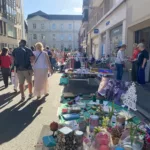
Every first weekend of September, Lille turns into Europe’s biggest flea market. Between bargain hunters, mussels and chips, and pedestrian streets as far as the eye can see, the Braderie de Lille takes a little preparation to enjoy properly. Here, seen through the eyes of a true Lille local, are the tips to make the most of this weekend, from the first story to the last night tram.
Getting under the skin of the Braderie before you dive in
One evening in August, in a hidden courtyard between Rue Lepelletier and the cathedral, I heard a neighbour bring his guitar out onto his balcony. Five minutes later, a window opened across the way, then another. Nobody had planned a thing. That’s Lille before the Braderie: a city that starts singing on its own, without anyone asking it to.
A story that goes back to the Middle Ages
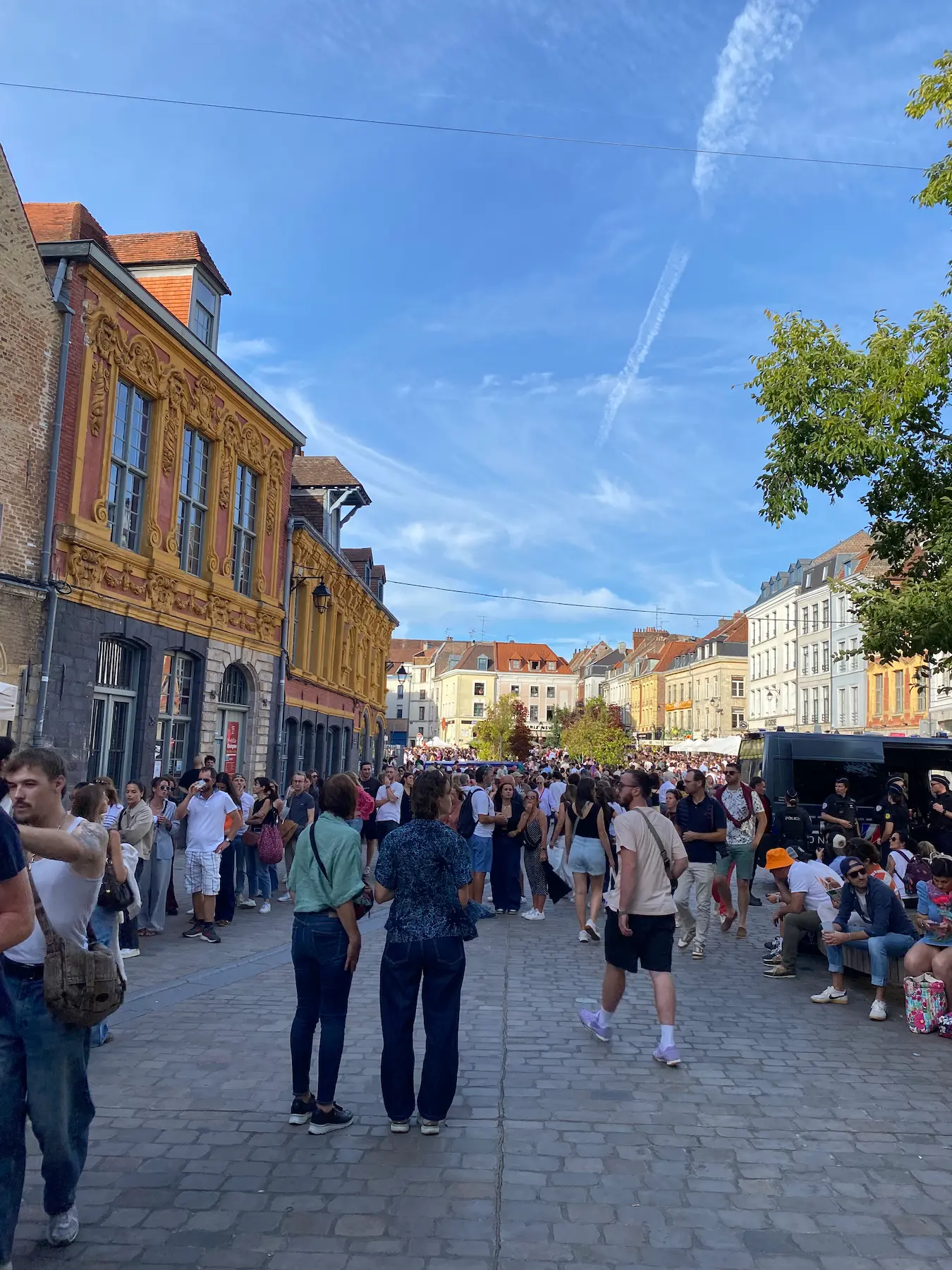
The Braderie de Lille isn’t a new idea. Back in the 12th century, servants were allowed to sell off the things their masters no longer wanted, just for one weekend. Over the centuries, that small freedom grew into a huge flea market, the largest in Europe.
Numbers that make your head spin
Every year, the Braderie de Lille brings together more than 8,000 traders along nearly 100 kilometres of stalls. About two million visitors walk the streets of the centre over a single weekend, and some locals add their own doorstep to clear out the attic. On the food side, Lille and its visitors get through as much as 500 tonnes of mussels in under 48 hours.
| Landmark figure | Number |
| Traders | More than 8,000 |
| Length of stalls | Nearly 100 km |
| Visitors | About 2 million |
| Mussels eaten | Up to 500 tonnes in 48 hours |
When and where it happens
The Braderie takes place every first weekend of September, from 8am on Saturday to 6pm on Sunday. The whole of central Lille closes to traffic: not a single car moves through the centre for those two days.
If you’re looking for practical information before you visit, including the full programme, transport advice, maps and opening times, read our complete Braderie de Lille 2026 guide.
The early birds bag the best bargains
Most visitors don’t reach Lille until late morning, and by then the locals have already picked over the best finds. The flea market stalls aren’t the only place worth rushing for either: Lille’s well-known fashion shops and department stores run their own Braderie promotions, and locals queue outside before opening on Saturday morning. By lunchtime, plenty of the most popular offers are already gone.
Lille, just a short hop from London
For British readers, Lille sits 1 hour 20 minutes from London by Eurostar. Once you’re there, everything is done on foot: no need to hire a car, unless you’re planning to bring an armchair home in the boot. In that case, bear in mind that park and ride car parks fill up fast on Saturday morning.
- Two days, a whole town centre handed over to pedestrians
- A tradition born nearly nine centuries ago
- A straight run from London, no car needed
I don’t tell the story of the Braderie like a historian. I tell it like someone who grew up with it, tram after tram.
Now you know what you’re in for, the next thing is knowing how to arrive without empty hands or sore feet.
Kitting yourself out and getting around without getting caught out
“You’re not going in flip flops, are you?” My grandmother used to say it every year, and she had a point. The Braderie shows no mercy to badly chosen shoes.
A backpack rather than a wallet on show
Comfortable, sturdy trainers are a must, as the kilometres of cobbled Lille streets wear out even the sturdiest calves. Leave the heels at home: trainers are the unofficial dress code of the whole weekend. A roomy backpack will hold your finds, but avoid leaving your wallet inside: the dense crowds attract pickpockets too. A bum bag worn at the front keeps your papers, phone and money close at hand.
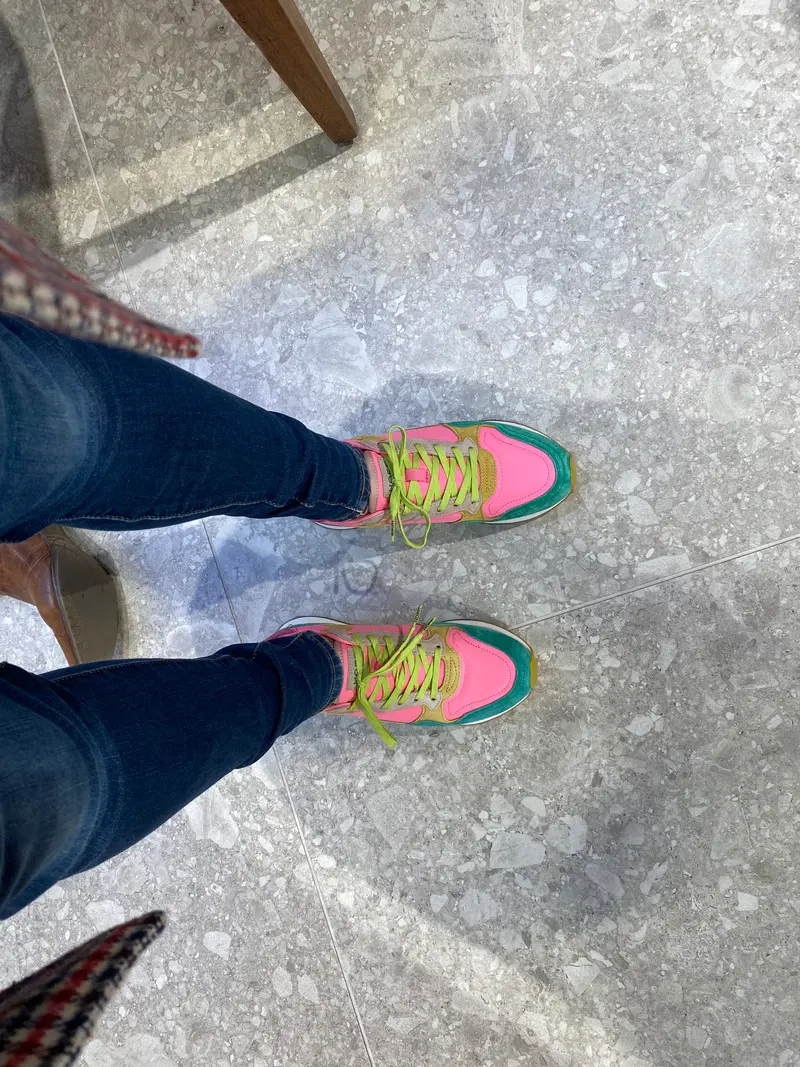
Northern weather never gives you fair warning
One of the biggest surprises for first timers is how changeable September can be here. A chilly morning can turn into warm sunshine by midday, then a shower by teatime, sometimes all four seasons in a single day. We’ve had Braderies at 30 degrees, and others under sheets of rain. Dress in layers, pack a cap and sun cream, a water bottle, and a lightweight waterproof jacket rather than an umbrella, which is useless in the crush. Bring some cash too: plenty of traders and restaurant owners still won’t take a card.
| What to bring | Why |
| Comfortable trainers | About 100km of stalls to cover |
| Bum bag | Papers and money kept safe from pickpockets |
| Layers and a light waterproof | Four seasons can turn up in a single day |
| Cash in small notes and coins | Many traders don’t take cards, and it makes bargaining easier |
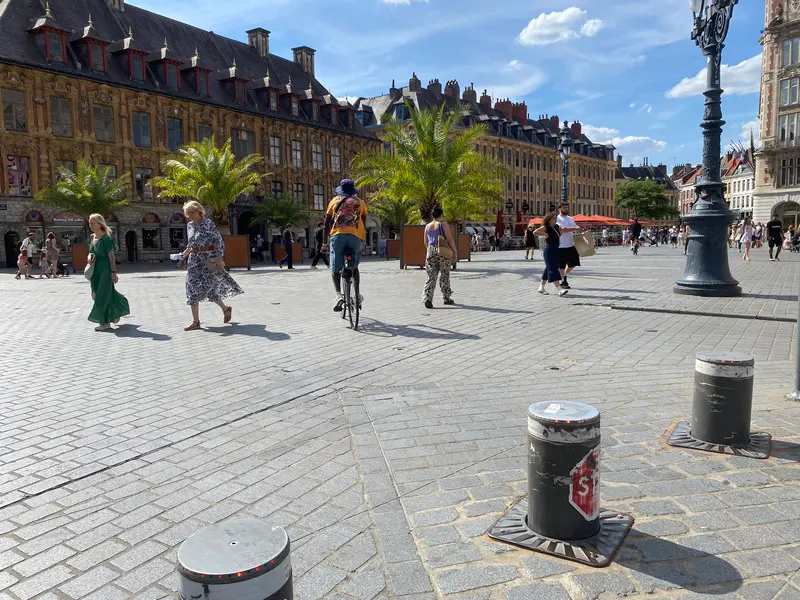
No cars in the centre
No vehicles are allowed in the centre of Lille that weekend. If you’re travelling light, Eurostar is the easiest option, dropping you straight into the city centre. If you’re coming to shop seriously and plan on bringing home vintage furniture or armfuls of bargains, driving makes more sense, but don’t count on parking centrally. Park and ride sites such as Saint-Philibert and 4 Cantons offer free parking once you continue into town by metro or tram on the Ilévia network, although they fill up early on Saturday morning. TER Hauts-de-France trains also run extra services at reduced prices for the occasion.
A word on safety
Every year, 1,900 police officers and gendarmes are deployed, largely to tackle heavy drinking. That means you can relax, as long as you keep your children close at all times: crowds like this make it easy to lose someone. Skip the pushchair too, as it’s hard to manoeuvre through packed streets.
- Park in a park and ride early on Saturday morning
- Take the metro or tram into the centre
- Keep your children in sight and your cash on you
Once you’re properly shod, backpack on and children held by the hand, you’re ready for the main event: hunting for bargains, and catching every bit of the Lille night.
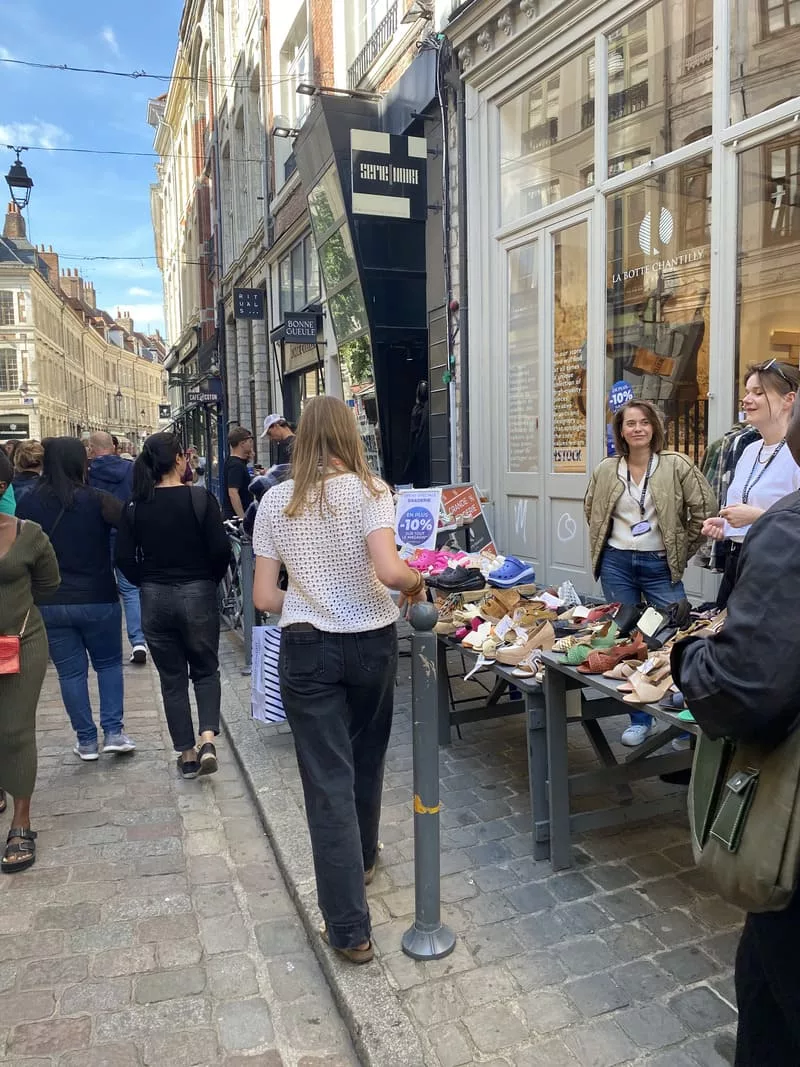
Bargain hunting like a true bradeuse and enjoying it right through the night
“What exactly are you after?” a dealer on Boulevard Lebas always asks when I wander without a clear plan. And that’s the real trick: knowing where to look, without ever quite knowing what for.
Every street has its own style
With more than 100 kilometres of stalls, nobody sees the whole Braderie, so it pays to think in neighbourhoods rather than streets. Vieux-Lille has beautiful Flemish architecture, independent boutiques and one of the liveliest atmospheres, though its narrow cobbled lanes can get very packed. The city centre holds the biggest concentration of major shops and national brands. Wazemmes carries a more local, mixed-culture feel. Antique dealers gather along Boulevard Jean-Baptiste Lebas, professional dealers tend to set up around the Citadelle, and private sellers clear out their homes in the small streets of the centre. If the crowds feel like too much, duck down a side street: a five minute detour there can save you half an hour of shuffling.
Wondering what you’ll actually find on all those stalls? I walked the Braderie camera in hand to put together a guide to what to buy at the Lille Braderie, from antiques and second-hand clothes to some much stranger finds.
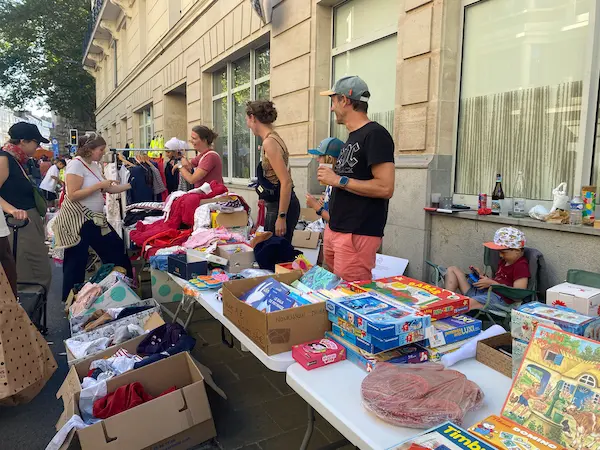
Bargaining at the right moment
At the private stalls, the price you see is often just the opening line of a conversation, and a bit of friendly haggling is very much part of the Braderie’s culture. In the shops, though, prices are fixed, so save your charm for the pavement. The best time to bring stall prices down comes right at the end of the Braderie, on Sunday afternoon. After a gruelling weekend, sellers are often happy to knock a bit off rather than pack everything back up.
| Type of seller | Where to find them |
| Antique dealers | Boulevard Jean-Baptiste Lebas |
| Professional dealers | Around the Citadelle |
| Private sellers | Small streets in the centre |
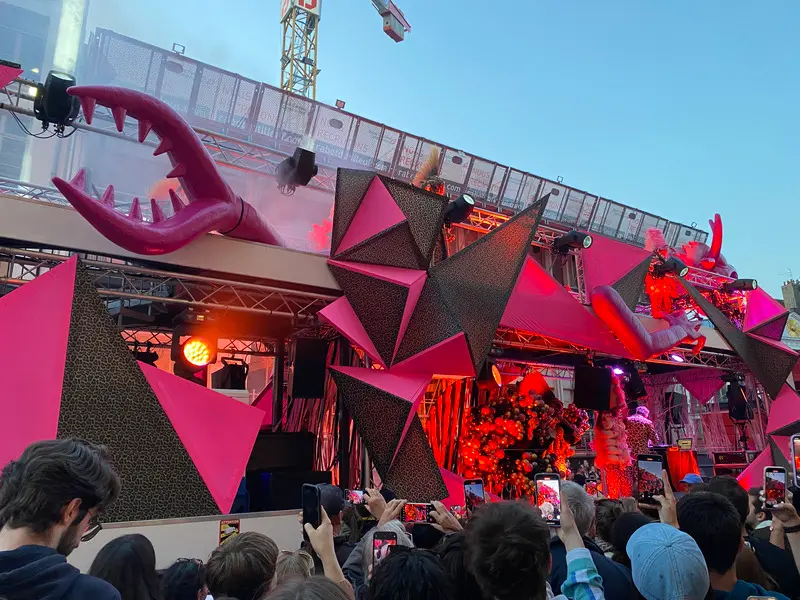
When you need a breather
If the crowds get too much, head towards the Citadel. The September funfair on the Champ de Mars is a favourite with local families, especially handy if you’ve got teenagers in tow. Lille Zoo and the park around it sit just a short walk away too, and make for a welcome pause before you dive back into the crowds.
The mussel shell pile, a tradition worth a photo
Since the start of the 20th century, the pile of empty shells outside each restaurant has been part of the scene, and the one at Place Rihour remains the most photographed. Forget any normal idea of restaurant service that weekend, though: most places in the centre don’t take bookings, so you queue for a table and often end up sharing a long table with people you’ve never met. That’s all part of the fun, and don’t expect a big menu either, since moules-frites take over every board in town.
The night Lille doesn’t sleep
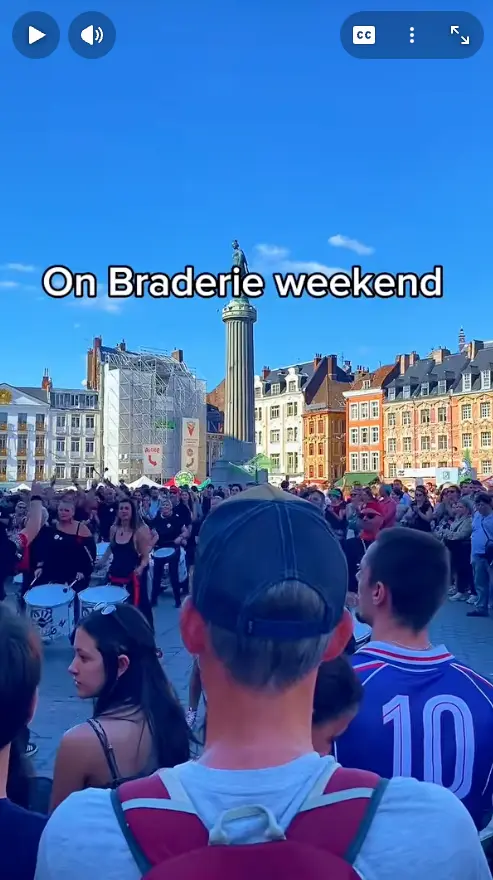
Trams run all night during the Braderie, which changes everything: you can stay out without watching the clock. The atmosphere carries on along Rue Royale, Rue de la Monnaie and Place du Théâtre until the small hours, between impromptu music and chats with strangers who become, for one night, neighbours. Slow down between stalls too: watch the street performers, stop for a drink on a busy terrace, catch some live music. Some of the best memories of the Braderie have nothing to do with what you buy.
Planning to make a night of it? Knowing where to stay for the Lille Braderie is worth sorting out early, as hotels fill up fast for the weekend. If you leave it too late, coming over as a day-tripper is often the easiest alternative.
- Hunt for bargains on Saturday morning for the best pieces
- Bargain on Sunday evening for the best prices
- Stay out at night, the trams keep watch over you
The Braderie never really ends on Sunday at 6pm. It carries on a little in our legs, and a lot in our memories.
Come back and see us at Tour de Lille: the city has countless other stories to tell you, long after the last stalls have been packed away.
The Braderie de Lille, a weekend worth experiencing at least once
From its medieval origins to its two million visitors, the Braderie de Lille remains, above all, about meeting people, walking its streets and sharing mussels with strangers who become friends for an evening. Comfortable shoes, cash in your pocket and children held close are enough to turn this weekend into a lasting memory. One question remains, and it’s different for every bargain hunter: what find will you bring home this year, and which street in Lille will you have dug it up on?
Delphine was born and raised in the Lille metropolitan area — close enough to hear the “Mongy” tram rattle past her childhood home. After more than 20 years promoting the Nord department to British visitors, first through press trips, trade shows and tour operator partnerships, then as a digital marketing consultant specialising in tourism, she’s spent her career building bridges between her home city and the UK.
Along the way, she’s picked up a genuine soft spot for both sides of the Channel: London’s Spitalfields market and a good bagel from Brick Lane are as close to her heart as the passageways behind Lille’s cathedral or a plate of Merveilleux from her favourite bakery. She was even honoured at the British Guild of Travel Writers’ dinner at the Savoy for her work bringing Cambrai’s Tank 1917 museum to life.
On Tour de Lille, Delphine writes as the local who never left — sharing the quiet corners of her city and the stories behind them, for visitors who want to see Lille the way a Lilloise does.