Once a year, my city turns into the largest flea market in Europe, and for two days you’ll hear singing from an open window, smell mussels on every terrace, and lose all sense of time in a crowd that somehow never feels like a crowd. This guide starts where the Braderie actually starts, the atmosphere, then walks you through the chine, how to get here from London, and the dates worth knowing.
First time visiting? Once you’ve planned your trip, don’t miss our 10 local tips for experiencing the Braderie like a true Ch’ti. You’ll discover where locals hunt for bargains, how to avoid the biggest mistakes and where to enjoy the best atmosphere throughout the weekend.
The spirit of the Braderie de Lille
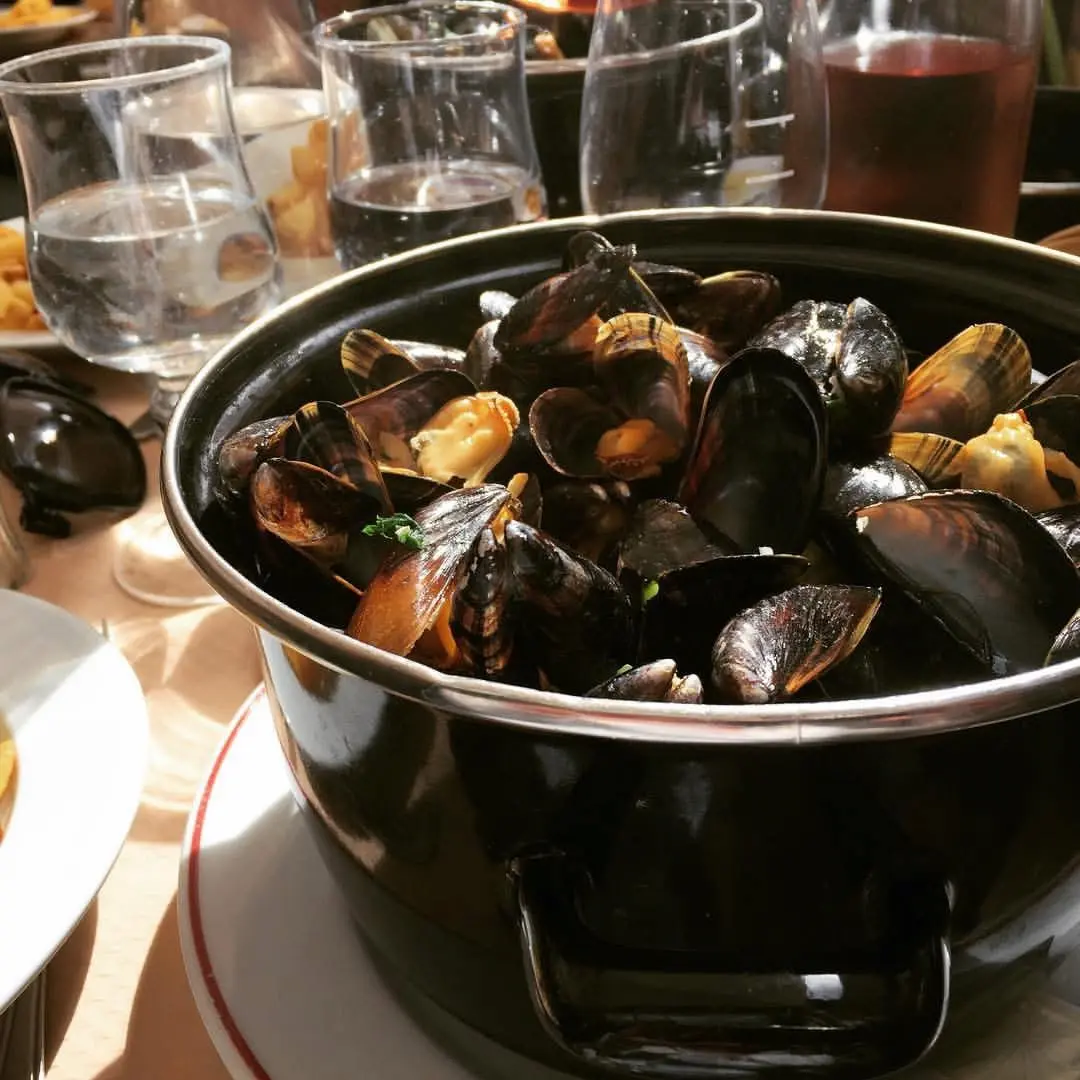
A plate of moules-frites, shared with strangers
I am not a historian here, just someone who has queued for a table more times than I can count. Close to 500 tonnes of mussels are eaten across the week-end, and four tas de coquilles, the piles of empty shells, still appear in the centre-ville. No new mussel-shell benches this year though: last year’s stock is holding up fine, so the city is saving its budget.
La Braderie de Lille, c’est le vrai esprit du nord où toutes les générations se côtoient pour faire la fête.
Restaurants set long wooden tables straight onto the pedestrianised streets, from Lille Flandres towards the Grand Place and into Vieux-Lille. Nobody reserves. You simply find a gap, sit down, and end up sharing moules-frites with whoever landed in the seat next to you, Lillois, Belgian, or a Brit three pints in. And yes, there is beer everywhere, that is the Nord for you, but nobody comes to the Braderie for a beer festival. It is a backdrop, not the main event.
The little things you only notice if you’re local
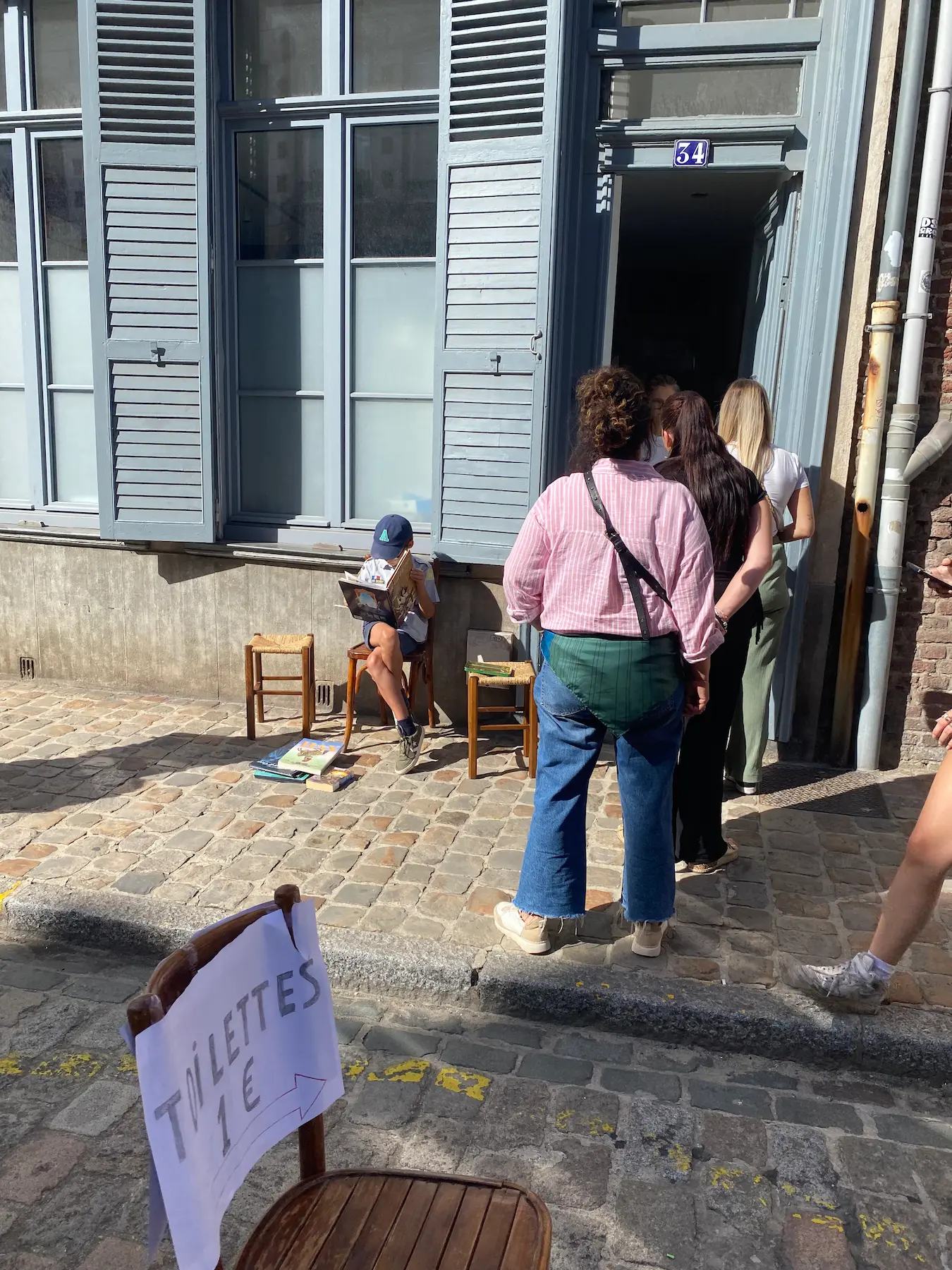
Do not be surprised to see someone grab a microphone and start singing in the middle of the street, or to hear a concert bouncing from one apartment to another as the night goes on. Nothing about that is strange at the Braderie de Lille. It is simply a gathering, joy and sharing, the way the esprit lillois works. One year I even saw a small boy offering the use of his family’s toilets for 1 euro, entrepreneurial spirit at its finest, and yes, I have the photo to prove it.
I remember being about 18 and telling my parents I was walking a friend to the station and coming straight back. I came home the next morning at 7am instead. The trams run all night during the Braderie, so I bumped into friends along the way, and that was that, I stayed out until sunrise.
The affiche officielle de la Braderie 2026, revealed on 16 July, features northern humoriste du Nord Thomas Deseur, a deliberately playful choice from the city. It went on sale on 17 July at the office de tourisme on place Rihour for 5 euros, with proceeds going to the association Les Clowns de l’espoir. Last year’s poster raised 20,000 euros for the CCAS, so this small souvenir does more than decorate a wall.
Where to hunt for treasure: routes, districts and events
The chine route every regular walks first
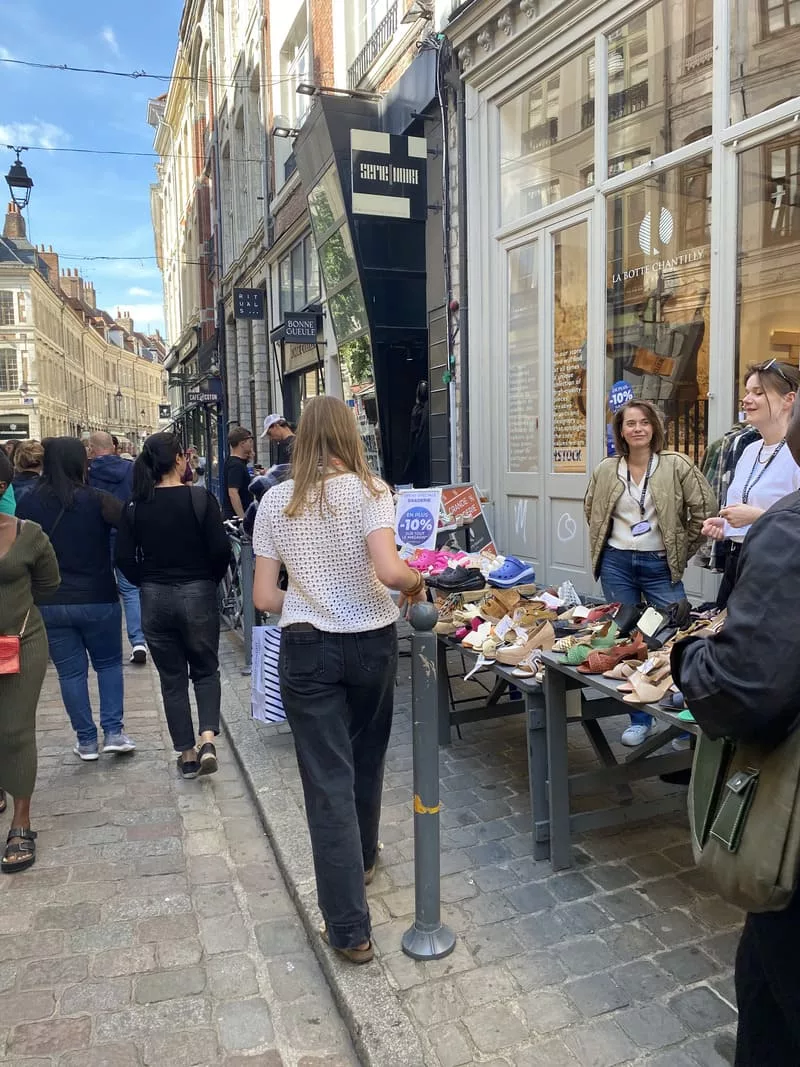
Ask any Lillois where to start and the answer is always the same stretch: boulevard Louis XIV, boulevard de la Liberté, avenue du Président Kennedy and the side streets running through to the Esplanade, with façade de l’Esplanade and boulevard Victor Hugo thrown in for the antiques crowd. This is the axe de la chine, and it is where the serious brocanteurs et antiquaires set up.
3,511 exhibitors were already confirmed for this year’s Braderie de Lille as registrations closed in mid-July. (Ville de Lille)
Roughly 500 professional brocanteurs work this route each edition, alongside more than 2,400 private sellers laying out their own finds on the pavement, and around 2,000 shopkeepers cutting prices by as much as 50% for the week-end.
But what does that actually mean once you start browsing? From vintage signs and furniture to second-hand clothes, old comics and some wonderfully bizarre objects, see what you can actually buy at the Lille Braderie in my photo-filled guide from the stalls.
Family stalls and the quieter corners
Not everything happens on the main drag. The quartier de Wazemmes keeps its own rhythm, and several dedicated spaces run alongside the main market:
- Braderie des enfants at Gare Saint-Sauveur, Saturday 5 September, 8am to 7pm
- Broc’à vélos on place de la Nouvelle Aventure
- Foire aux manèges on esplanade du Champ de Mars, running 31 August to 27 September
Open-air markets at place du Concert and place de la Nouvelle Aventure stay open throughout, so there’s no shortage of stalls even away from the main axe de la chine.
Registering a stall, and why locals pay nothing
Anyone wanting a pitch, resident or trader, registers online between 11 June and 18 August, or in person at the counter from 7 July to 18 August. Lille residents keep a genuine rarity in France: their spot costs nothing, an exception most other braderies do not offer. Only non-resident brocanteurs, antiquaires, food trucks and friteries pay for their emplacement.
Whatever the entry point, whether Louis XIV or a side street off rue Léon Gambetta, the same advice holds: keep walking. The best pieces rarely sit at the first stall.
Getting to the Braderie, on foot, by Eurostar, or with the car boot in mind
From London, it’s closer than you think
Lille sits about 1h20 from London on the Eurostar, which makes the Braderie an entirely realistic weekend, not just a fantasy you scroll past. If you’re planning to stay for the whole weekend, book your hotel for the Lille Braderie as early as you can: rooms in and around the city centre tend to go quickly. Once you’re here, forget the car. The whole perimeter, Centre and Vieux-Lille, is built for walking, and honestly, that’s half the pleasure: wandering with no real plan, a tote bag over your shoulder, following whichever street looks busiest. A V’Lille bike works too if your feet need a break between stretches of the axe de la chine.
But if you’re planning to fill a boot
Now, if the goal is to come home with actual finds, furniture, a mirror, a stack of vinyl too heavy for a suitcase, then driving genuinely makes more sense than the train. That’s where the free park and ride options come in. Leave the car outside the centre and take the metro in.
| Park and ride | Metro line | Time to centre |
| St Philibert (Lomme) | Line 2 towards CH Dron, alight Gare Lille Flandres | 15 minutes |
| 4 Cantons Stade Pierre Mauroy | Line 1 towards Gare Lille Flandres or Rihour | 15 minutes |
One word of caution though: these parkings relais gratuits are free precisely because everyone knows about them, and they fill up fast on the Saturday morning. Arrive early, or arrive resigned to circling for a while.
The dates, the perimeter and the safety essentials
The Braderie de Lille sits on the calendar for Saturday 5 and Sunday 6 September, exactly where it belongs: the premier week-end de septembre, as it does most years. The Ville de Lille confirms the event runs from 8am Saturday through 6pm Sunday, a stretch locals simply call the 34 heures non-stop.
The perimeter is mainly concentrated in the Centre and Vieux-Lille districts, with an extension covering part of rue Gambetta and place de la Nouvelle Aventure. (Ville de Lille)
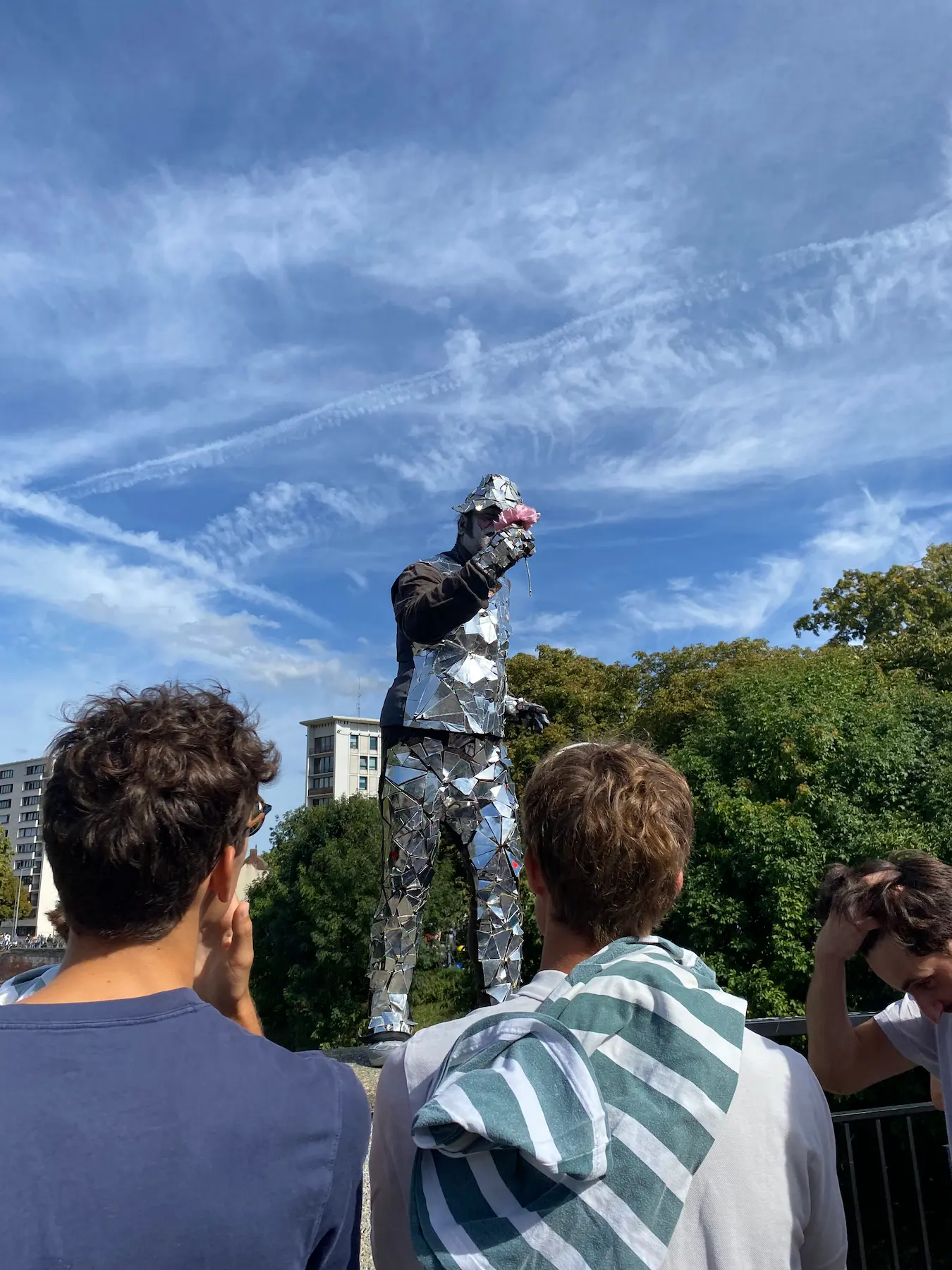
The Grande Braderie de Lille pulls in a scale of crowd few French events can match. The Mairie de Lille counts nearly three million visitors across the week-end, while more recent municipal figures point closer to two million, still enough to make it, without argument, the capitale des Flandres for two days straight.
Cars are banned from the centre from 7pm on the Friday until 1am on Monday 7 September, aside from a limited number of vehicles authorised through a laissez-passer issued on prior registration. On the safety side:
- Over 600 municipal agents on duty across the week-end
- 16 postes de secours, including 3 nautical units, plus a dedicated lost-children point
- A Safe Zone “Angela!” at place Sébastopol: Saturday 5pm to 2am, Sunday 2pm to 5pm
Closing times shift for the occasion too: 3am Friday into Saturday, 5am Saturday into Sunday, 1am Sunday into Monday, with terraces stopping at midnight that final night. Acoustic music runs freely all day, amplified sound only between 6pm and 2am. 150 bars have already applied to extend their terraces this year.
It was not always 34 heures non-stop, though. When I was younger, the Braderie started on Friday evening and only really wound down on the Monday. The mairie eventually trimmed it back, the Lillois’ taste for partying being exactly what it is, and honestly, I understand why.
Living the Lille Braderie 2026, one plate and one bargain at a time
Two days, one hundred kilometres of stalls, and a city that trades its usual rhythm for something louder and warmer. That is the Lille Braderie 2026 in a nutshell: an easy hop from London, a familiar route through Vieux-Lille and the Centre, and traditions, mussels, shared tables, spontaneous singing, that outlast every passing trend. Come on foot for the atmosphere, come with a car if you plan to leave with a full boot, but either way, come. What never changes is the reason people keep coming back: a genuine, shoulder-to-shoulder celebration where chine and conviviality share the same pavement.
Delphine was born and raised in the Lille metropolitan area — close enough to hear the “Mongy” tram rattle past her childhood home. After more than 20 years promoting the Nord department to British visitors, first through press trips, trade shows and tour operator partnerships, then as a digital marketing consultant specialising in tourism, she’s spent her career building bridges between her home city and the UK.
Along the way, she’s picked up a genuine soft spot for both sides of the Channel: London’s Spitalfields market and a good bagel from Brick Lane are as close to her heart as the passageways behind Lille’s cathedral or a plate of Merveilleux from her favourite bakery. She was even honoured at the British Guild of Travel Writers’ dinner at the Savoy for her work bringing Cambrai’s Tank 1917 museum to life.
On Tour de Lille, Delphine writes as the local who never left — sharing the quiet corners of her city and the stories behind them, for visitors who want to see Lille the way a Lilloise does.