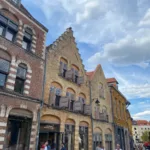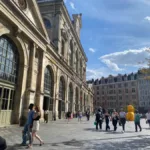
From a city born among marshy islands to Flemish merchants, legendary giants, Louis XIV and a rather cheeky cannonball, Lille has quite a few stories to tell.
Next time you walk through the cobbled streets of Old Lille, I want you to imagine something rather different.
Water. Canals. Boats carrying goods through a busy trading city.
Because the Lille you see today is built on a much older landscape of islands, waterways and marshes. And here’s something else that might surprise you: Lille wasn’t always French.
For centuries, the city belonged to the County of Flanders. It later came under Burgundian and Habsburg rule before becoming part of France under Louis XIV. If you’ve ever wondered why Lille sometimes feels more like Bruges or Ghent than Paris, that’s part of the explanation.
I’ve spent twenty years working in tourism in Lille, and over the years I’ve joined quite a few guided tours. Some of the stories I’ve heard have stayed with me. Others have sent me looking for the history behind them.
Because Lille’s past isn’t just in its museums. It’s written all over the buildings, hidden beneath the streets and, occasionally, disguised as a rather cheeky cannonball. Let me show you a few of my favourite details.
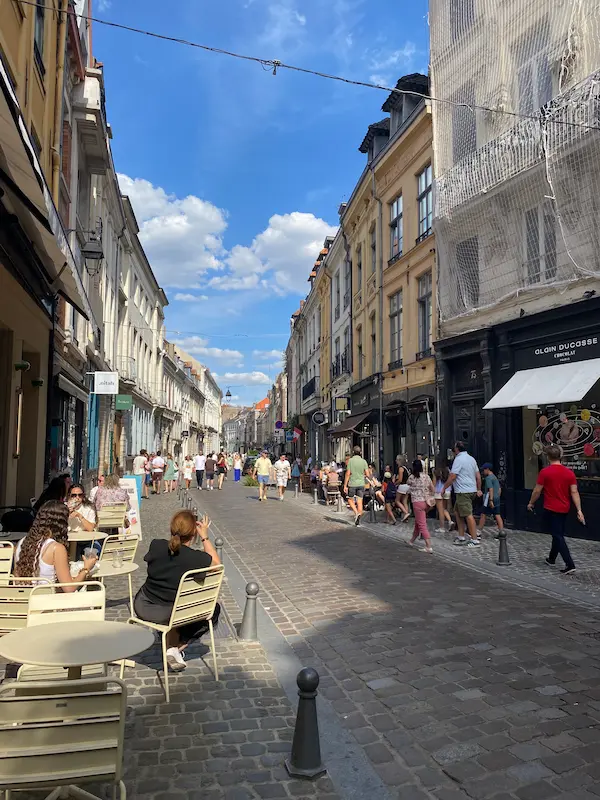
Lille: a city whose name means ‘the island’
The name Lille comes from the idea of l’île, meaning ‘the island’ in French. And no, that’s not just a charming story invented for tourists.
In a document dating from 1066, the town was called Isla, derived from the Latin insula, meaning island.
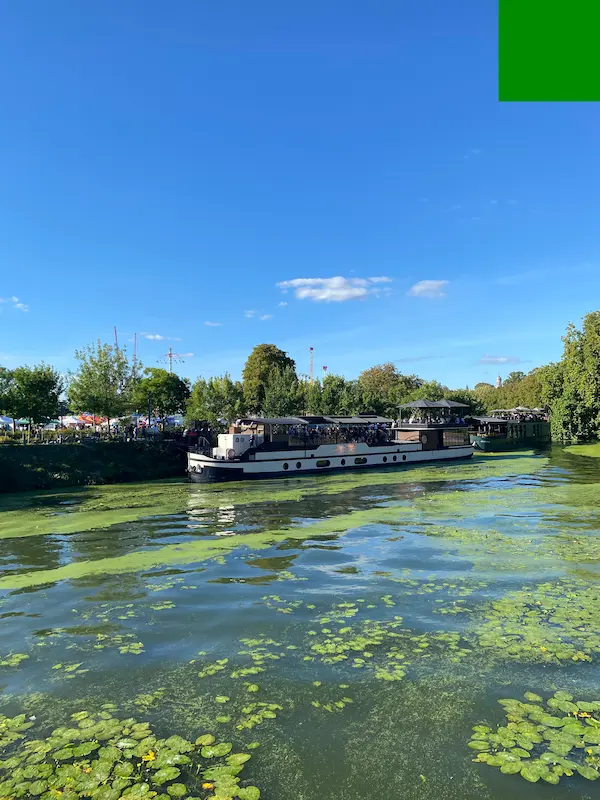
Back then, the landscape looked nothing like the Lille we know today. Imagine a marshy valley, with the River Deûle winding through wetlands, dividing into different branches and creating little islands of dry land.
The original settlement wasn’t necessarily a single island surrounded by water. It was a landscape of islands, river channels and marshes. And water wasn’t simply part of the scenery: it was one of the reasons Lille became an important trading centre.
The Deûle connected the town with a wider commercial network. Where navigation was difficult, goods had to be unloaded and transferred, creating opportunities for merchants, warehouses and markets.
So, long before the magnificent Vieille Bourse was built, and long before Louis XIV arrived, Lille was already developing around trade. And there was water. Lots of it.
The two giants who supposedly founded Lille
Now, historians will tell you that Lille developed on the marshy islands of the River Deûle. But according to local legend, the city owes its existence to two giants. And their story is rather dramatic.
Back in the seventh century, a terrifying giant called Phinaert supposedly ruled over the marshes around Lille. He lived in a castle and terrorised travellers passing through a forest known as the Bois Sans Mercy — the Forest Without Mercy. Not exactly somewhere you’d stop for a picnic.
One day, a nobleman called Salvaert was travelling towards England with his pregnant wife, Ermengaert. Unfortunately, they encountered Phinaert. The giant murdered Salvaert, but Ermengaert managed to escape into the forest, where she gave birth to a son named Lydéric.
The boy was raised by a hermit, who, according to some versions of the story, fed him with milk from a deer. When Lydéric grew up, he discovered what had happened to his parents.
He travelled to England to learn how to fight, then returned to challenge Phinaert. In 640, according to the legend, the two fought a duel. Lydéric defeated the giant, rescued his mother and was rewarded with Phinaert’s lands by King Dagobert.
People began settling in the area, and Lille was born. A rather spectacular founding story, don’t you think?
Of course, there’s no historical evidence that any of this actually happened. Lille’s documented history begins several centuries later. But the legend has survived, and you can still meet its two main characters today.
Look for the giants at Lille’s Town Hall Belfry
Next time you’re near Lille’s Hôtel de Ville, take a look at the base of its enormous belfry. You’ll see two monumental figures: Lydéric and Phinaert. They were sculpted directly into the concrete by the artist Carlo Sarrabezolles.
And while you’re there, look upwards. Because the belfry itself is worth discovering.
Completed in 1932, it stands 104 metres tall, making it the tallest belfry in the region. Built using reinforced concrete, with brick facing, it combines modern construction techniques with the architectural traditions of Northern France.
It’s also part of the UNESCO World Heritage listing of the Belfries of Belgium and France.
And here’s the best part: you can visit it. After climbing the first 109 steps, you can take a lift towards the top and enjoy a magnificent panoramic view over Lille.
I rather like the idea that your visit begins with two legendary giants and ends with a bird’s-eye view of the city they supposedly helped create.
And if you want to see the giants in a rather different form, their enormous traditional procession figures are also kept inside the Hôtel de Ville. They’re part of a wider tradition of giants found throughout Northern France and Belgium. Because up here, we do like our giants.
Before Lille was French, it was Flemish
Today, Lille is the capital of the Hauts-de-France region and one of the largest cities in northern France. But go back several centuries and the political map looks completely different.
Lille developed within the County of Flanders, a wealthy territory whose towns were closely connected by trade, waterways and the textile industry. The city belonged to a commercial world that included places such as Bruges, Ghent and Ypres.
During the Middle Ages, Lille was ruled by the Counts of Flanders. Later, it came under the Dukes of Burgundy and eventually the Habsburg dynasty. By the early seventeenth century, Lille was part of the Spanish Netherlands.
Yes, Spanish.
Although the city remained culturally and geographically connected to Flanders, it was governed by the Spanish branch of the Habsburg family. And that brings us to one of the most beautiful buildings in Lille — one constructed when Lille wasn’t French at all.
The Vieille Bourse: Lille’s magnificent trading exchange
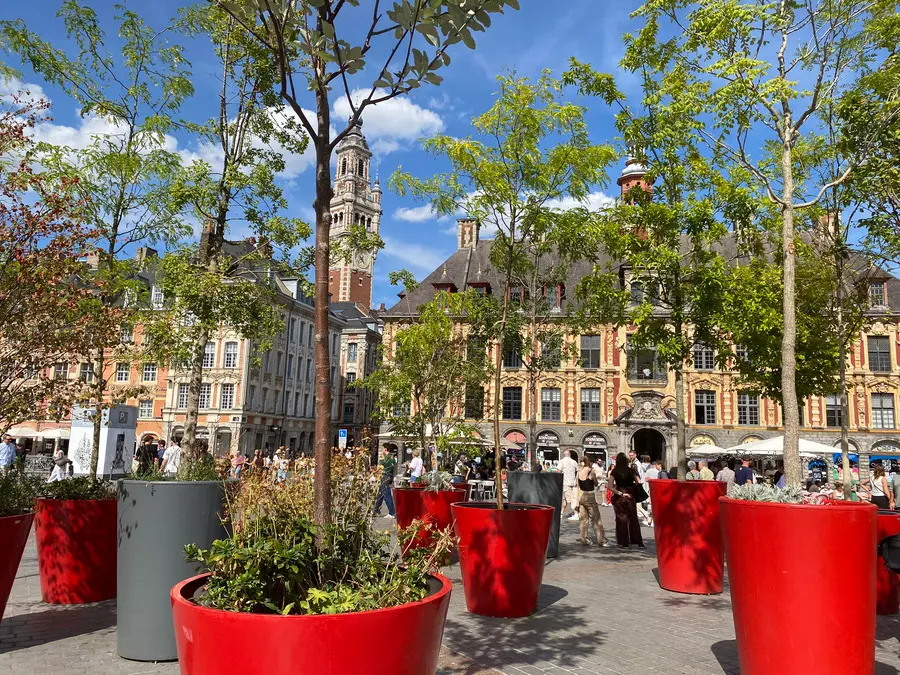
If there’s one building I always encourage visitors to take a proper look at, it’s the Vieille Bourse, between the Grand’Place and Place du Théâtre.
Its richly decorated façades, colourful details, sculpted figures and Flemish Renaissance architecture make it one of Lille’s most recognisable landmarks. But here’s something you might not realise when you first see it: the Vieille Bourse is actually made up of 24 individual houses, six on each side, arranged around a central courtyard.
It was built between 1652 and 1653, when Lille was still under Spanish rule. The architect was Julien Destrée, and the project gave the city’s merchants a proper place to conduct business.
Think of it as Lille’s great commercial exchange. This wasn’t quite a modern stock exchange where people trade shares on computer screens. It was a place where merchants met, negotiated and exchanged information in a city whose prosperity depended on commerce.
Don’t just admire it from outside
One of the things I love about the Vieille Bourse is that you can walk through its monumental entrances and discover the courtyard inside.
Today, you’ll find second-hand booksellers, old books, prints and posters. Depending on when you visit, the courtyard can also become a lively meeting place.
But before browsing the books, take a moment to look upwards. Admire the galleries, the decorative stonework, the windows and the extraordinary symmetry of the building. It’s a little world of its own, right in the middle of Lille.
Look carefully at the coats of arms
Here’s a detail that many visitors miss. During the Vieille Bourse’s major restoration at the end of the twentieth century, companies from Northern France helped finance the work.
And their contribution is still visible today. Look at the colourful coats of arms painted in the decorative panels above the upper windows. They represent businesses that supported the restoration.
I find that rather wonderful. A building originally created for the merchants of Lille was restored with the help of modern businesses from the same region. More than three centuries later, commerce was still helping to preserve the city’s heritage.
It’s a lovely connection with the stories of Lille’s great industrial families and the retail businesses that grew out of the North.
Beneath the streets of Old Lille: canals, merchants and a royal mint
Whenever I walk through Old Lille, I find myself thinking about the city that existed here centuries ago. One of my favourite stories from guided tours is the story of Lille’s forgotten waterways.
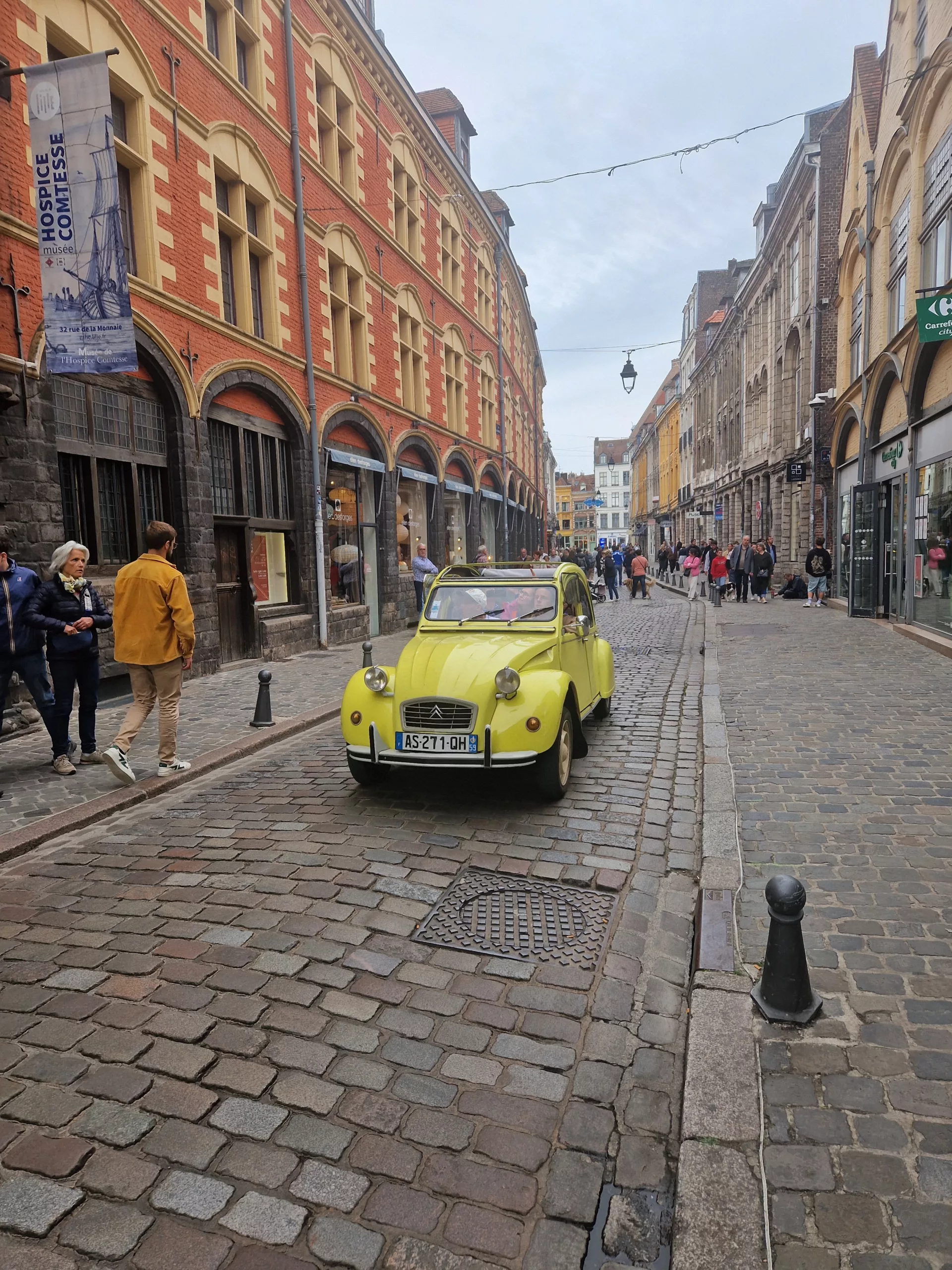
When you wander along Rue de la Grande-Chaussée, Rue Lepelletier or Rue de la Monnaie, you’re walking through the heart of what was once a busy Flemish trading city.
Now, I should explain something: not every cobbled street was once a canal. Grande-Chaussée and Rue Lepelletier were historic streets in their own right. But canals ran through and around this neighbourhood, carrying goods between Lille and the wider trading networks of Flanders.
Imagine boats moving along narrow waterways, merchants negotiating prices, carts loaded with textiles and the noise of a busy market town. A very different Lille from the one we know today.
Grande-Chaussée: almost a thousand years of shopping
Rue de la Grande-Chaussée is one of Lille’s oldest streets. It was already mentioned in 1066, when it was known as Grande-Cauchie, referring to a major paved road.
Today, it’s lined with boutiques and elegant buildings. But its commercial history goes back centuries.
And here’s a connection for film lovers. If you’ve watched Bienvenue chez les Ch’tis, you may recognise this street. It’s where the characters drive before arriving at the famous estaminet scene filmed at Morel & Fils, on Place du Théâtre.
Nearly a thousand years of history, and a little bit of French cinema thrown in.
Rue Lepelletier: the old merchants’ quarter
Just around the corner, Rue Lepelletier is another historic street that takes you back to medieval Lille. It was once known as Rue des Prêtres.
At the entrance to the street, a seventeenth-century merchant named Jean-Baptiste Cardon decorated his façade with sculpted figures and a stag, creating something rather like an elaborate shop sign.
It’s a lovely reminder that merchants were using their buildings to advertise their businesses long before anyone had heard of modern marketing.
Rue de la Monnaie: where money really was made
Now, here’s a story I particularly like. Walk along Rue de la Monnaie, one of the most charming streets in Vieux-Lille. Its name literally means Money Street. And there’s a very good reason for that.
Lille once had its own mint.
Coins were already being produced in medieval Lille, although historians haven’t established the exact location of the earliest mint.
Then, after Louis XIV conquered the city in 1667, a royal mint was established. In 1685, equipment was transferred from Tournai and a new mint began operating in Lille.
The street, previously known as Rue Saint-Pierre, became Rue de la Monnaie. And the name has survived ever since.
The mint closed in 1857, and the original building was demolished the following year. But there’s still something to see.
At number 61, you can find the former residence of the judge responsible for supervising the mint, built in 1781.
So next time you’re strolling along Rue de la Monnaie, admiring the historic façades or looking for somewhere to have lunch, remember that money was once quite literally being made here. And not just by the shopkeepers.
The canals that disappeared beneath Lille
Close to Rue de la Monnaie and the Musée de l’Hospice Comtesse, the canal Saint-Pierre once flowed through the historic centre. Other waterways, including the canals of Weppes and the Cirque, formed part of a network connecting different parts of the city.
Some were eventually filled in. Others were covered over. Their traces can still be found in historic maps, surviving structures and the layout of the old town.
It’s remarkable how much of Lille’s commercial history is connected to water. The city began among islands and marshes, and it grew through trade.
The Hospice Comtesse and Jeanne of Flanders
Just a few steps away, the Musée de l’Hospice Comtesse takes you straight back to medieval Flanders.
The museum occupies a former hospital founded in 1237 by Jeanne, Countess of Flanders. Think about that date: 1237. More than four centuries before Lille became French.
The hospital was established to care for the sick, the poor, pilgrims and travellers. Today, the museum is a wonderful place to discover Lille’s history, particularly the way people lived in the city during the Flemish period.
I particularly like the atmosphere of the building itself, with its historic rooms and beautiful courtyard. If you’re exploring Old Lille, it’s well worth making time for a visit.
The lost port of Lille: could the water return?
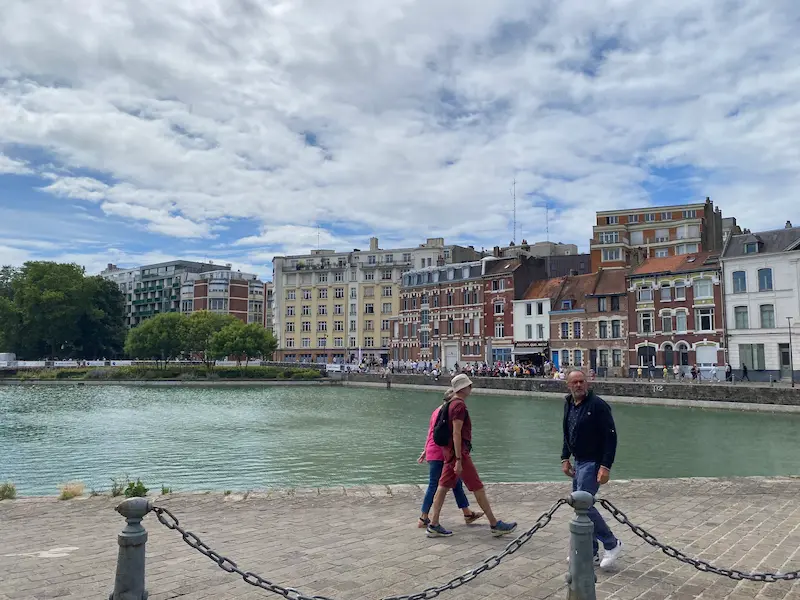
Have you ever walked along the Avenue du Peuple Belge, that broad avenue at the northern end of Old Lille? Today, it’s a major urban thoroughfare. But it used to be water.
The avenue occupies the site of a former navigable section of the Basse-Deûle, once part of Lille’s historic port. What looks like a broad city avenue today was once a waterway connected to the commercial life of Lille.
The old port disappeared from the landscape during the twentieth century, as waterways were gradually filled in or covered. For years, people have discussed whether the water could return.
So, is Lille going to get its old port back?
Not quite, at least under the plans announced in July 2025. The City of Lille presented a project to transform the Avenue du Peuple Belge into a large urban park covering approximately 5.5 hectares.
The idea is to introduce more greenery, pedestrian spaces and cycling routes, while bringing the area’s historic relationship with water back into the landscape. The plans include a water feature near the Palais de Justice, along with improvements around Pont-Neuf.
However, this is not the same as fully reopening the historic navigable canal. At the time of the announcement, construction was expected to begin in the second half of 2027.
So, for now, visitors will have to use a little imagination. But I love the idea that Lille might one day make its forgotten waterways more visible again.
The day Louis XIV decided Lille should be French
Now, back to the seventeenth century. Remember that magnificent Vieille Bourse, completed in 1653? At the time, Lille was still part of the Spanish Netherlands.
Just fourteen years later, everything changed.
In 1667, Louis XIV launched the War of Devolution, claiming territories in the Spanish Netherlands. His army besieged Lille, and the city capitulated on 27 August 1667.
The following year, the Treaty of Aix-la-Chapelle confirmed Lille’s transfer to France. And just like that — well, after a military campaign and a peace treaty — Lille became French.
But changing the flag didn’t instantly erase the city’s Flemish character. You can still see that heritage everywhere today.
Vauban and the Queen of Citadels
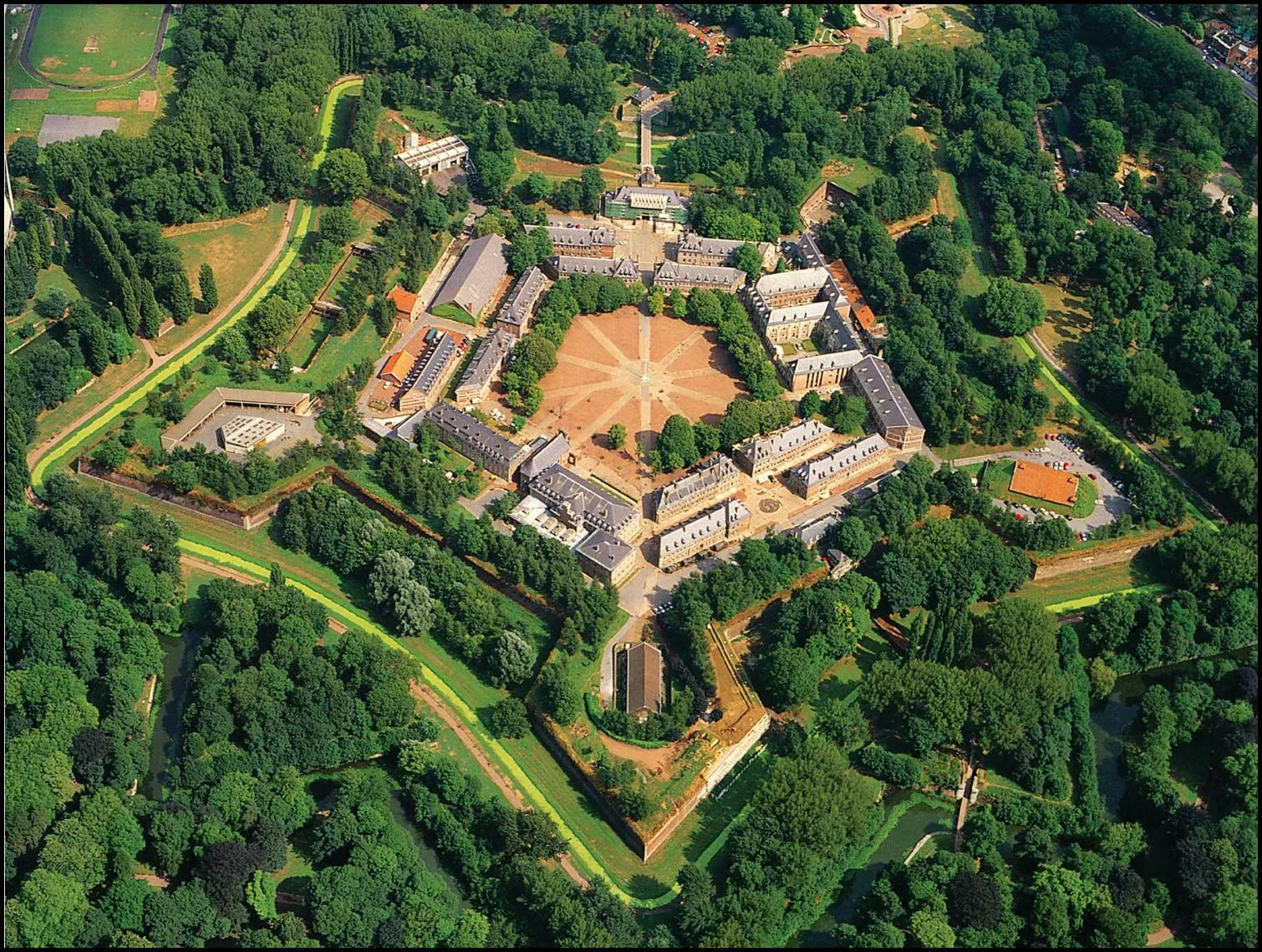
Louis XIV wanted to secure his newly acquired city. And who better to do that than his famous military engineer, Vauban?
Construction of Lille’s Citadel began in 1667, with the first stone laid in June 1668. The result became known as the Queen of Citadels.
It’s a remarkable example of seventeenth-century military engineering, designed to protect one of France’s most strategically important northern cities.
Today, the Citadel remains a military site, so you can’t simply wander around its interior whenever you like. But the surrounding park is one of Lille’s most pleasant green spaces, and guided visits to the military site are sometimes organised.
A city with several architectural identities
Walk from the Grand’Place towards the Citadel and you’ll notice something interesting: Lille’s architecture changes.
The exuberant Flemish façades of the old commercial centre gradually give way to more restrained French classical influences. The Royal Quarter, developed after the French conquest, reflects that change.
You don’t need to visit a history museum to see the city’s changing political identity. You can see it simply by walking through its streets.

Cannonballs, Austrian soldiers and a rather cheeky detail
Now for one of my favourite little architectural stories. Head back towards Place du Théâtre, next to the Vieille Bourse, and look at the beautiful row of historic houses known as the Rang du Beauregard.
The buildings are elegant, with richly decorated façades. But take a closer look. You may notice what appear to be cannonballs embedded in the walls. What’s that all about?
Lille under Austrian bombardment
In 1792, during the French Revolutionary Wars, Lille was besieged and bombarded by Austrian forces. The city resisted the attack, and the bombardment became an important episode in its history.
The cannonballs visible on the façades today commemorate that event. But here’s the twist: they’re not the original cannonballs. They are decorative replicas, added to recall the historic bombardment.
So, no, you’re not looking at eighteenth-century projectiles that have miraculously remained stuck in the brickwork for more than 200 years. Still, they’re a lovely detail to spot.
A cannonball with a nipple. Yes, really.
Look above the former Morel hosiery shop on Place du Théâtre. Among the cannonballs, you may notice one that looks suspiciously like a breast. A pink breast, complete with a nipple.
I promise I’m not making this up.
The building was once home to a hosiery and lingerie business, and the unusual decoration is a playful reference to that history. During a later restoration, one of the cannonballs was apparently given a rather cheeky makeover.
And I rather approve. After all, how many historic city centres can boast an architectural joke like that?
Have you seen Bienvenue chez les Ch’tis?
If you’ve seen the hugely popular French comedy Bienvenue chez les Ch’tis — known in English as Welcome to the Sticks — you’ll remember the scene where Kad Merad’s character discovers the local Ch’ti dialect during a meal.
Well, part of that scene was filmed right here, at the establishment associated with the former Morel hosiery shop.
In one little corner of Lille, you have elegant historic architecture, a reminder of an Austrian bombardment, an old lingerie shop, a rather cheeky architectural detail and a location from one of France’s biggest cinema hits.
All within a few metres. That’s exactly why I encourage visitors to look up when they’re exploring Lille. You never know what you’ll discover.
How to discover Lille’s history on foot
The wonderful thing about all these stories is that you don’t need a car or an elaborate itinerary to explore most of them. Much of Lille’s history is concentrated in and around its historic centre.
I would start at the Grand’Place, then walk through the Vieille Bourse into Place du Théâtre. Spend a few minutes looking at the Rang du Beauregard and see whether you can spot the cannonballs — including the unusual one above the former Morel shop.
Then wander into the cobbled streets of Vieux-Lille. Head towards Rue de la Monnaie and the Musée de l’Hospice Comtesse, where the city’s medieval Flemish history becomes much easier to imagine.
Continue north towards the Avenue du Peuple Belge and picture the old canal and port that once occupied this part of Lille.
If you have more time, make your way towards the Citadel and the Royal Quarter to discover how the city changed after the arrival of Louis XIV.
And if the story of Lille’s giants has captured your imagination, look for Lydéric and Phinaert at the Hôtel de Ville, where their figures are part of the city’s architectural and popular heritage.
For more inspiration, have a look at my guide to Lille Old Town and my top ten things to see in Lille.
Lille has never been just one thing
One of the reasons I love telling stories about Lille is that the city has so many layers.
It began among the islands and marshes of the Deûle. According to legend, it was founded by a young hero who defeated a giant. It became a Flemish trading city. It belonged to the Burgundians and the Habsburgs. It was part of the Spanish Netherlands. Then Louis XIV arrived, and Lille became French.
Its waterways helped merchants trade, its textile industry made families wealthy, and centuries later the surrounding region produced some of France’s most successful retail businesses.
And all these different chapters have left their mark: in the Vieille Bourse, in the old canals hidden beneath the streets, in the Citadel, in the giants at the Hôtel de Ville — even in a fake cannonball above a former lingerie shop.
So next time you’re walking through Old Lille, don’t just admire the pretty façades. Look a little closer. Look upwards. And occasionally, imagine what’s beneath your feet.
Because Lille’s history is much more surprising than you might expect. And that’s part of what makes this city so special.
Discover more Lille stories
If you’ve enjoyed discovering Lille’s surprising past, there are two more stories I’d love you to read:
- The great industrial families of Lille — how textile fortunes shaped the city, its architecture and its society.
- From La Redoute to Decathlon: how Lille became the birthplace of France’s biggest retail brands — the extraordinary businesses that grew out of the region’s commercial and industrial heritage.
Because Lille’s history didn’t end when Louis XIV arrived. In many ways, that was just another beginning.
More on Lille’s heritage
- For the full picture, see our guide to Lille’s culture and history.
- History on two wheels: the history of the Tour de France Grand Départ in Lille.
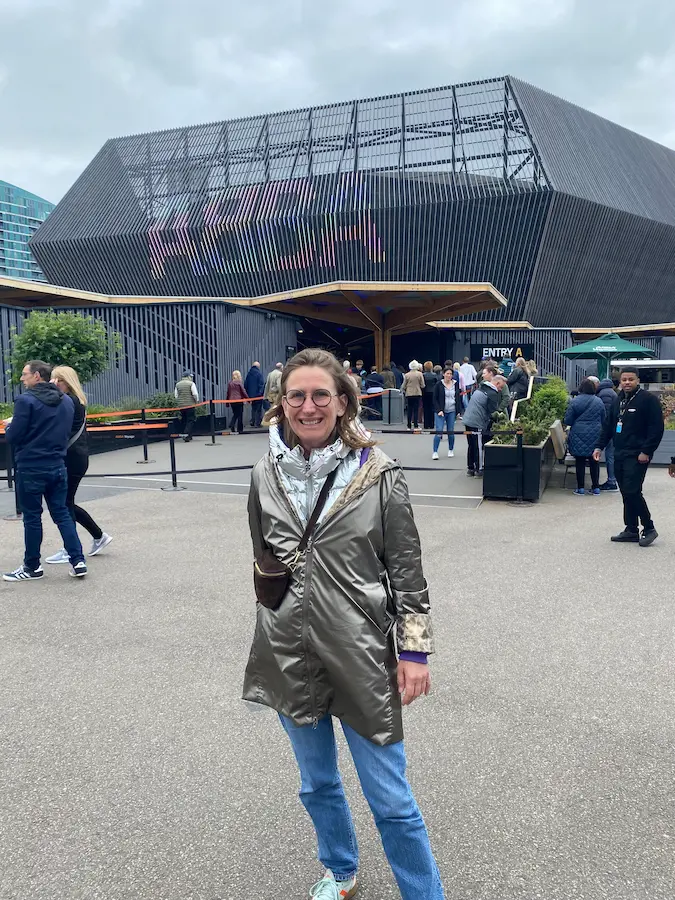
Delphine was born and raised in the Lille metropolitan area — close enough to hear the “Mongy” tram rattle past her childhood home. After more than 20 years promoting the Nord department to British visitors, first through press trips, trade shows and tour operator partnerships, then as a digital marketing consultant specialising in tourism, she’s spent her career building bridges between her home city and the UK.
Along the way, she’s picked up a genuine soft spot for both sides of the Channel: London’s Spitalfields market and a good bagel from Brick Lane are as close to her heart as the passageways behind Lille’s cathedral or a plate of Merveilleux from her favourite bakery. She was even honoured at the British Guild of Travel Writers’ dinner at the Savoy for her work bringing Cambrai’s Tank 1917 museum to life.
On Tour de Lille, Delphine writes as the local who never left — sharing the quiet corners of her city and the stories behind them, for visitors who want to see Lille the way a Lilloise does.