Lille is one of the easiest cities in Europe to fall for without spending a euro. Cobbled lanes, a working cathedral, free museums on Sunday mornings and a market that never stops all sit within a short walk of each other. This guide gathers the best free visits in Lille from someone who has lived every one of these streets.
Vieux-Lille on foot : the free heart of the city
The passage nobody puts on a map
I was seventeen the first time someone showed me the shortcut between rue Esquermoise and the cathedral. No signpost, no plaque, just a narrow gap between two houses that spits you out right behind Notre-Dame de la Treille. Locals still use it every day. Tourists walk straight past it. That is the whole point of exploring historic Old Lille on foot: the best of it was never built for visitors.
Follow rue Lepelletier instead and you will find a second, quieter cut-through, then a hidden terrace tucked behind the cathedral itself, Terrasse de l’Imaginaire, where I used to sit with a book and nobody ever found me. These corners cost nothing. They just ask you to slow down.
Grand-Place, Vieille Bourse and the cathedral
Officially it is Place du Général de Gaulle. Everyone calls it the Grand-Place. At its centre, the Goddess column recalls the siege of Lille in 1792, standing guard over the square where the whole city seems to gather in the evening.
A few steps away, the Vieille Bourse opens its seventeenth-century inner courtyard to anyone who wanders in, no ticket required. Second-hand booksellers set up stalls there most days, and flicking through their tables is one of the cheapest pleasures in the city.
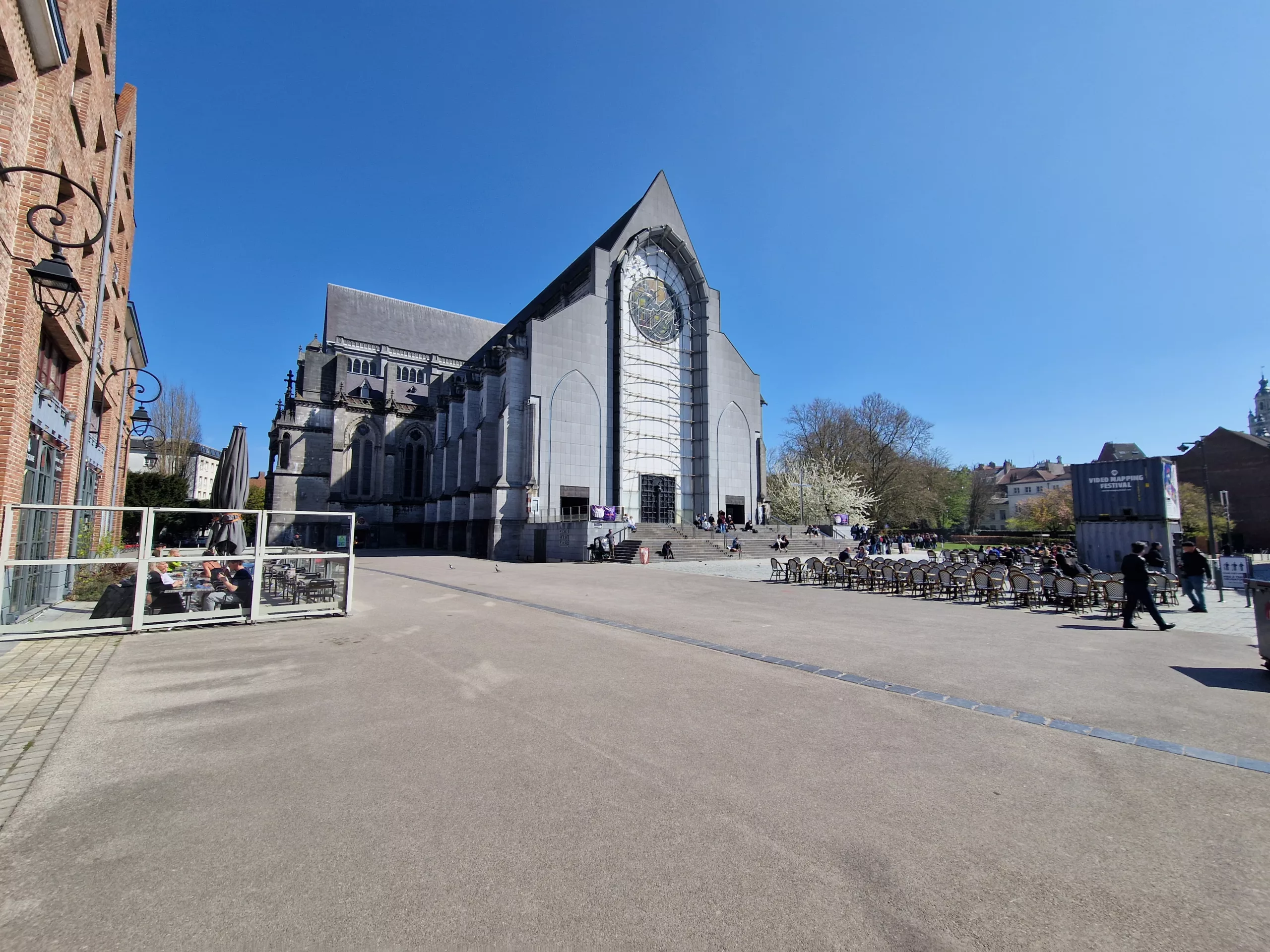
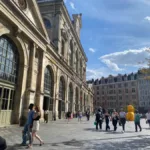
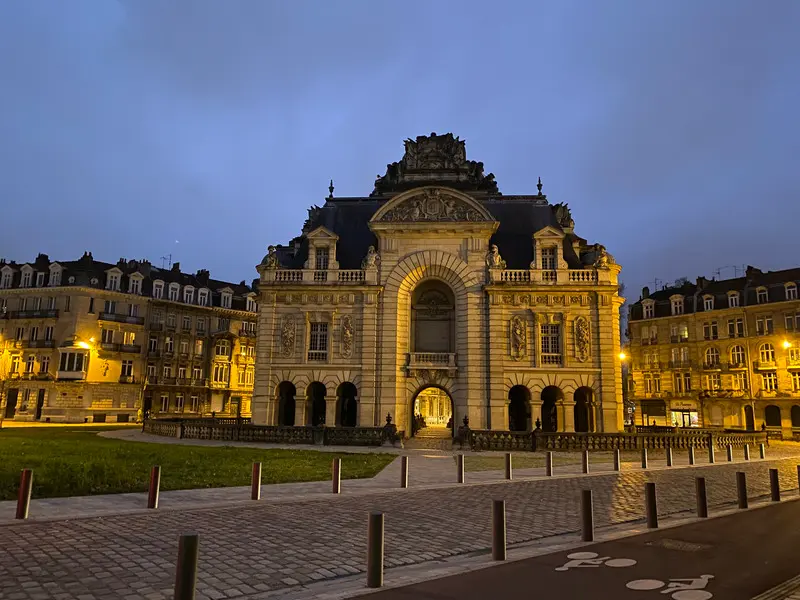
The Cathédrale Notre-Dame de la Treille grants free access to its main nave, where a strikingly modern facade meets a gothic interior built over more than a century. Nearby, the Porte de Paris still stands as the triumphal arch raised to mark Louis XIV’s conquest of the city.
I never get tired of watching a British visitor stop dead in front of that cathedral facade, trying to work out which century they are looking at. Neither one, and both.
Free Vieux-Lille landmarks at a glance
| Site | What it costs | Best access |
| Vieille Bourse courtyard | Free, daily | Rue de la Bourse |
| Cathédrale Notre-Dame de la Treille (nave) | Free | Place Gilleson |
| Grand-Place | Free, always open | Place du Général de Gaulle |
| Porte de Paris | Free, exterior view | Place Simon Vollant |
A first free walk through Vieux-Lille
- Slip through the passage from rue Esquermoise to the cathedral
- Rest a while on the Terrasse de l’Imaginaire
- Cross the Grand-Place and find the Goddess column
- Step into the Vieille Bourse courtyard
- Finish at the Porte de Paris
One more thing worth knowing before you carry on towards the museums:
- The Beffroi of Lille’s city hall climbs 104 metres above the rooftops
- It is free to climb on the first Wednesday of every month
- The view stretches well beyond Vieux-Lille on a clear day
Once you have caught your breath after all that walking, Lille still has plenty more to offer without touching your wallet.
Free museums and guided tours : Lille’s culture without spending a penny
Museums that open their doors for nothing
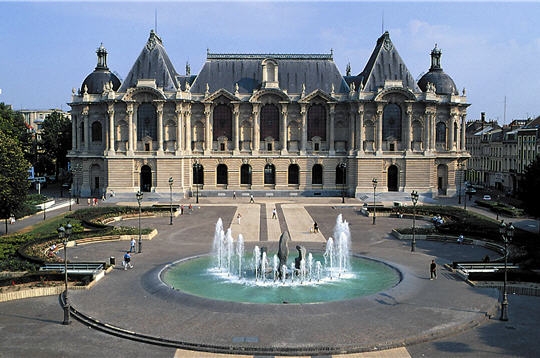
Three of Lille’s finest museums hand over free admission on the first Sunday of every month: the Palais des Beaux-Arts, the Musée de l’Hospice Comtesse and the Musée d’Histoire Naturelle. Turn up early. Locals plan their Sundays around it too.
Gare Saint-Sauveur tells a different story. This former goods station was transformed in 2009 during the Lille 3000 festival into a cultural and exhibition space, and it has stayed wonderfully alive ever since. Exhibitions, concerts and film screenings often cost nothing to attend, and a free guided family tour of the exhibitions runs on Saturdays and Sundays, booking required.
For contemporary art without the crowds, the Centre d’Arts Plastiques et Visuels (rated 4.1) and the Espace Édouard Pignon (rated 4.0) are two free galleries that rarely make it onto a first-timer’s list, which is exactly why I keep sending people there.
Greeters, guides and the art of the tip
A Greeter is not a professional guide. They are simply someone from Lille or the surrounding area who wants to show you their city, on a themed walk they design themselves, booked in advance, and free from start to finish.
Commercial free walking tours work differently. You book a slot with a professional guide, the tour itself costs nothing, and at the end you tip whatever you feel is fair. Several Lille tours run this way, with strong local guide explore-the-city ratings, including one rated 4.9 from nearly eight hundred reviews.
Two ways to explore Lille’s history for free
| Format | Who leads it | How it works |
| Greeter tour | Local volunteer | Free, booking required, no tip expected |
| Free walking tour | Professional guide | Free to book, tip what you feel is fair |
Before you book a free tour
- Check the meeting point in advance, most start near the Grand-Place
- Bring cash for the tip, cards are rarely convenient on the street
- Arrive a few minutes early, groups fill up fast in summer
A free tour is never really free, and that is exactly how it should be. You are paying with a fair tip for someone’s knowledge, not a museum’s overheads.
Keep the Journées Européennes du Patrimoine in mind too. Every September, sites that usually charge an entry fee across the city open their doors free of charge, and it is one of the best excuses I know to discover a corner of Lille you have walked past a hundred times without ever going in.
- Palais des Beaux-Arts, Hospice Comtesse and Musée d’Histoire Naturelle: free on the first Sunday of the month
- Gare Saint-Sauveur: free exhibitions and a bookable family tour at weekends
- European Heritage Days in September: paid sites open for free
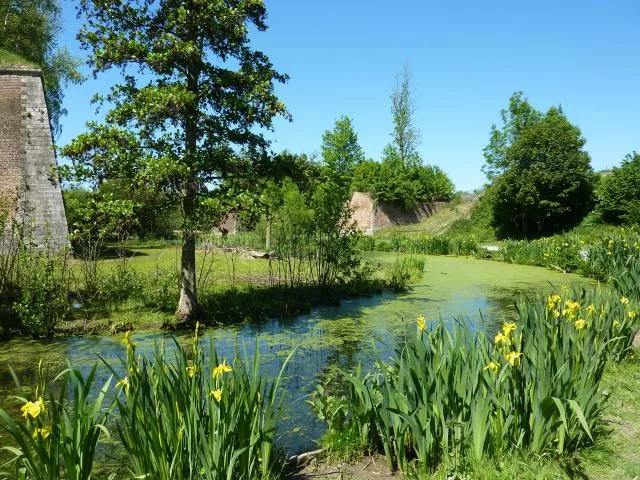
Green spaces, markets and hidden corners : free Lille beyond the centre
Parks, water and a Sunday market
The Parc de la Citadelle, also known locally as the Bois de Boulogne, wraps around Vauban’s seventeenth-century fortress and gives you room to walk, jog or simply spread out a picnic blanket without another soul in sight. At its heart sits Lille Zoo, entirely free, home to more than one hundred animal species across six themed zones.
Jardin Vauban offers something softer: an English-style garden built for slow strolls, all lawns and old trees. Parc Jean-Baptiste Lebas suits a quieter afternoon, while the walk along the Quais du Wault, tracing the Deûle river, is one I have been doing since I was a child and still find calming every single time.
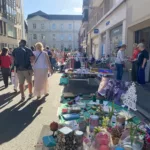
On a Sunday morning, head to the Wazemmes market instead. It is loud, crowded, and completely free to wander through, which makes it one of the most vibrant free things to do in the whole city.
A different kind of free visit
I am not a historian. I am a passer-on of stories, and some of the ones I carry are heavier than a market stall or a garden bench. Just outside Lille, the region holds outdoor sites of remembrance that cost nothing to visit and stay with you far longer than any monument. I helped secure official recognition for the first Australian soldier known to have died in the First World War, work tied to memorial ground you can walk through for free. The Cambrai Tank 1917 museum, built around the Deborah tank and a project I was proud to be part of, does charge for entry, but it remains one of the most moving detours in the region for anyone with a ticket to spare.
You do not need a ticket to stand somewhere that changed the course of a war. You just need to know where to look, and I am always glad to point the way.
Free green spaces at a glance
| Place | What makes it worth the walk |
| Parc de la Citadelle | Vauban’s fortress, long walks, free zoo with 100+ species |
| Jardin Vauban | English-style garden, peaceful strolls |
| Quais du Wault | Riverside walk along the Deûle |
| Wazemmes market | Free to browse, best on Sunday mornings |
Getting here without the hassle
- Lille sits just 1 hour 20 minutes from London by Eurostar
- The whole city centre is walkable, no car needed
- Only bring a car if you plan to drive home with a full boot of market finds
- The park and ride fills up fast on Saturday mornings, so arrive early if you do drive
Come and see it for yourself. Lille does not need your money to show you who it really is, just a bit of your time and a good pair of shoes.
Why free visits in Lille are worth planning around
Free visits in Lille prove that a city does not need an entry fee to leave a mark. Between the hidden passages of Vieux-Lille, a Sunday at the Palais des Beaux-Arts, a walk through the Citadelle park and a market morning in Wazemmes, a full weekend costs nothing but a Eurostar ticket and comfortable shoes. New free events appear every year, from Heritage Days openings to fresh exhibitions at Gare Saint-Sauveur, so the city keeps giving visitors fresh reasons to come back without spending a penny.
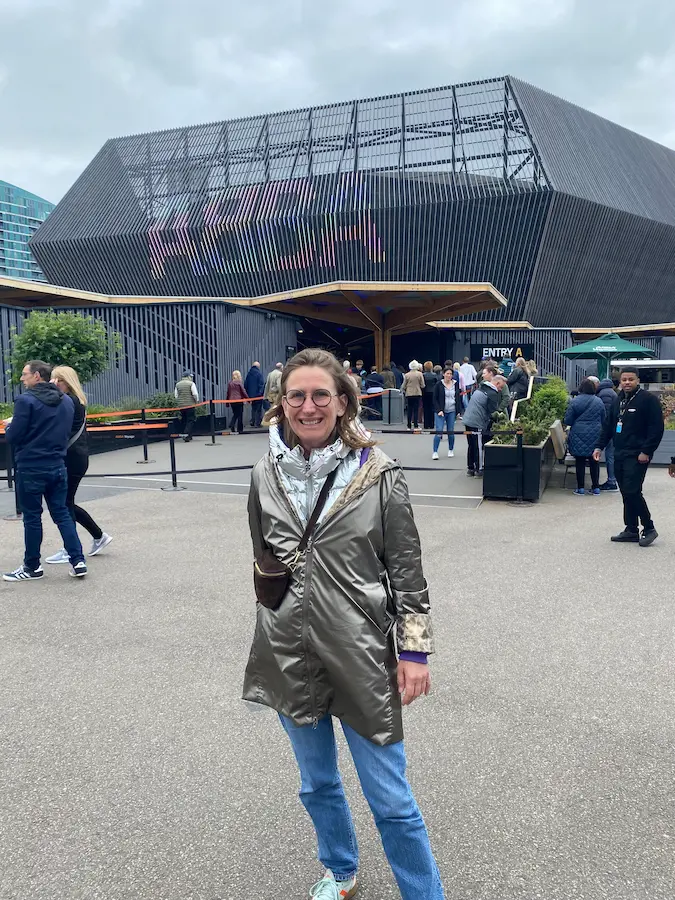
Delphine was born and raised in the Lille metropolitan area — close enough to hear the “Mongy” tram rattle past her childhood home. After more than 20 years promoting the Nord department to British visitors, first through press trips, trade shows and tour operator partnerships, then as a digital marketing consultant specialising in tourism, she’s spent her career building bridges between her home city and the UK.
Along the way, she’s picked up a genuine soft spot for both sides of the Channel: London’s Spitalfields market and a good bagel from Brick Lane are as close to her heart as the passageways behind Lille’s cathedral or a plate of Merveilleux from her favourite bakery. She was even honoured at the British Guild of Travel Writers’ dinner at the Savoy for her work bringing Cambrai’s Tank 1917 museum to life.
On Tour de Lille, Delphine writes as the local who never left — sharing the quiet corners of her city and the stories behind them, for visitors who want to see Lille the way a Lilloise does.