Having spent hours walking through the Braderie this year, camera in hand, I can give you a fairly simple answer: almost anything you can imagine – and quite a few things you probably can’t.
The scale alone is difficult to grasp until you experience it. The official figures give some idea:
- 51 km of stalls spread across the streets of Lille.
- Around 2.5 million visitors expected over the weekend.
- More than 5,200 official sellers, with the total number of people selling sometimes estimated much higher when informal participants are included.
- And traditionally around 500 tonnes of mussels eaten during the weekend.
If this is your first visit, start with our complete guide to the Lille Braderie for dates, practical information and everything you need to know before you go.
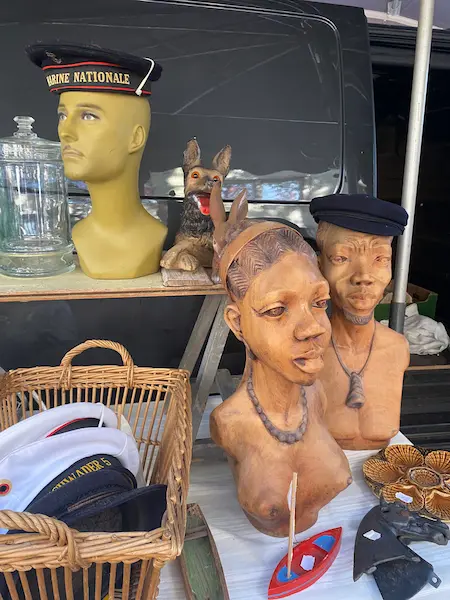
I spoke to visitors who had travelled from Orléans and were seeing the Braderie for the first time. They were amazed by the atmosphere and the sheer size of it. One of them laughed that where they lived, a braderie could be walked around in five minutes. Lille is an entirely different experience.
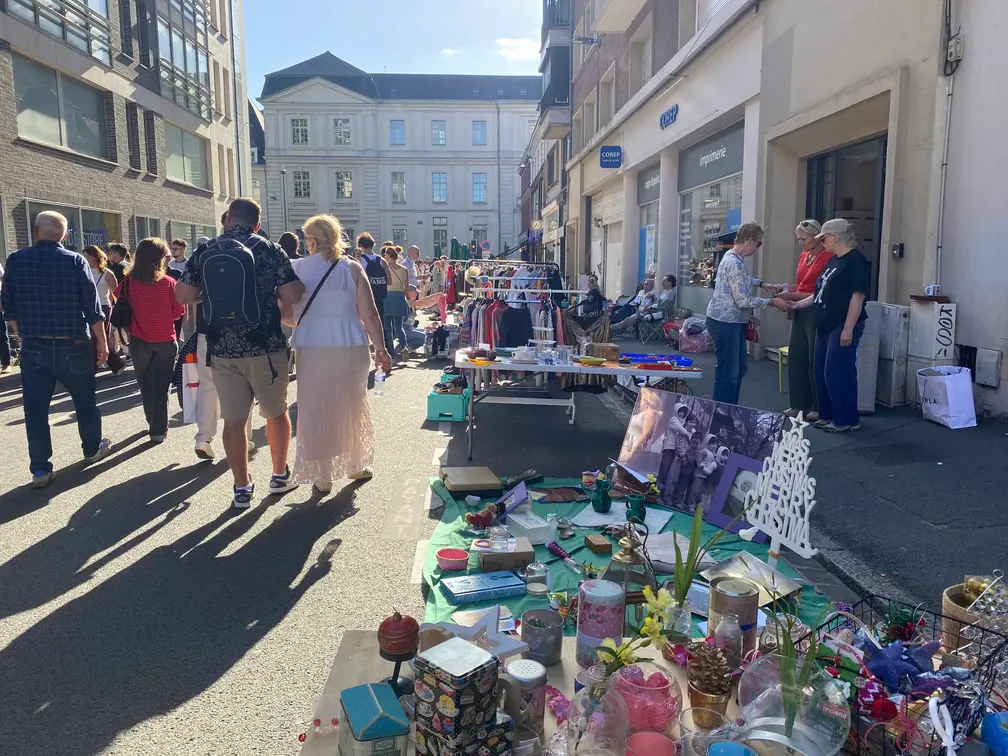
So I walked the stalls to see what was actually for sale. Here is what you can expect to find – from genuine bargains and vintage treasures to glittery mussel earrings and things that are frankly impossible to categorise.
First, understand that there isn’t just one type of seller
Part of the fun of the Lille Braderie is that a professional antiques dealer can be selling only a few streets away from somebody who has simply decided that it is finally time to empty the attic.
And that makes a huge difference to what you find.
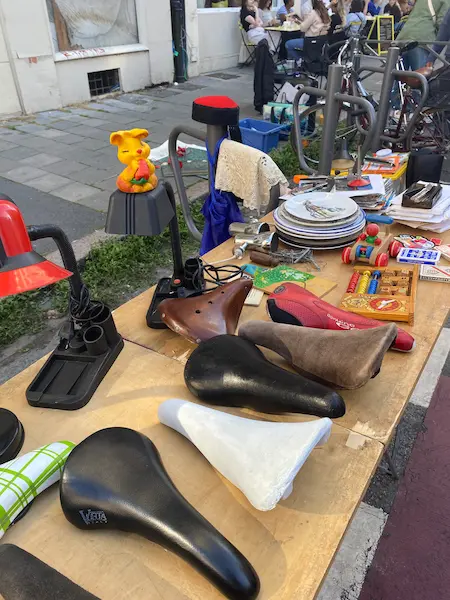
On the stalls run by local residents, you really do get a little bit of everything. Second-hand games, worn shoes, old crockery, toys, pictures, books, lamps and assorted household objects that have probably spent the last twenty years gathering dust in somebody’s attic.
Think of the lamp nobody in the family wants to inherit, the old painting that has survived three house moves, or the box of glasses that somebody has finally decided needs to go.
I even spotted bicycle saddles.
Nothing particularly extraordinary about that, perhaps – except that at the Lille Braderie, after a few hours, you stop being surprised by anything.
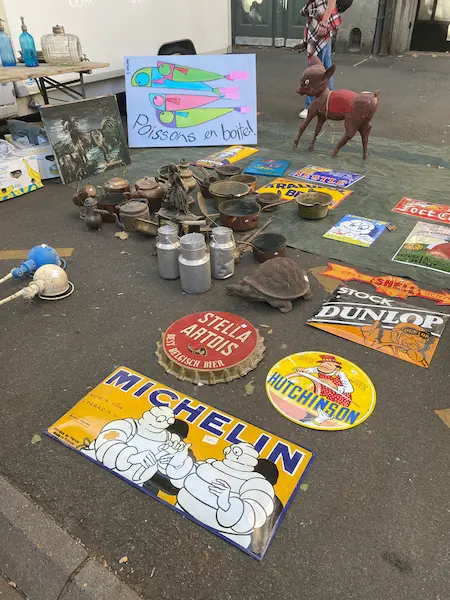
Vintage signs, beer glasses and wonderfully random objects
If you enjoy rummaging rather than looking for one specific item, these are some of the most entertaining stalls.
There were plenty of beer glasses, which feels particularly appropriate in northern France, alongside old advertising objects and enamel signs.
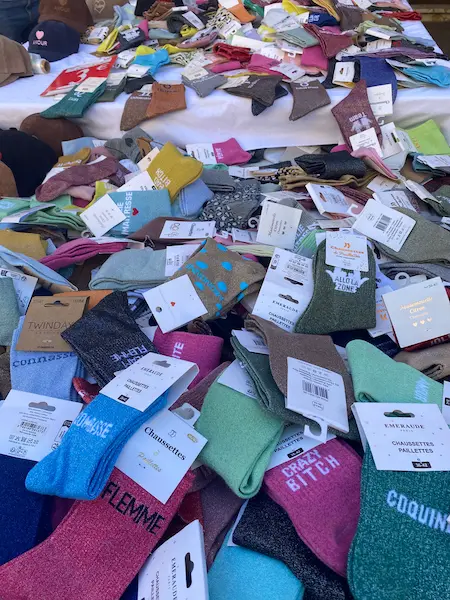
Then there are the things that make you stop and wonder who is going to buy them.
I came across piles of miscellaneous household objects, old decorations and even large batches of glittery patterned socks that appeared suspiciously less like the contents of someone’s wardrobe and more like somebody had bought them wholesale with the thought: “We could make some money at the Braderie.”
That’s part of the experience too. Not everything here is antique, rare or even particularly old.
For antiques and unusual pieces, head towards Boulevard de la Liberté
If your idea of the Lille Braderie involves antiques, vintage furniture and more substantial pieces, the type of stall changes as you explore the city.
Along the long Boulevard de la Liberté, running towards the Citadelle and the funfair, you will find many more professional dealers and brocanteurs.
This is where things become particularly interesting.
Among the objects I spotted were:
- antique and vintage furniture;
- old wooden clogs;
- vintage statues;
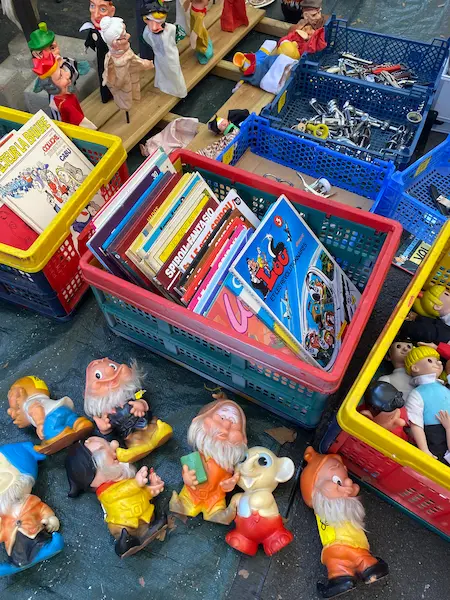
- garden gnomes;
- old comics and bandes dessinées;
- second-hand and vintage clothing;
- enamel advertising signs;
- boxes and boxes of collectable pins;
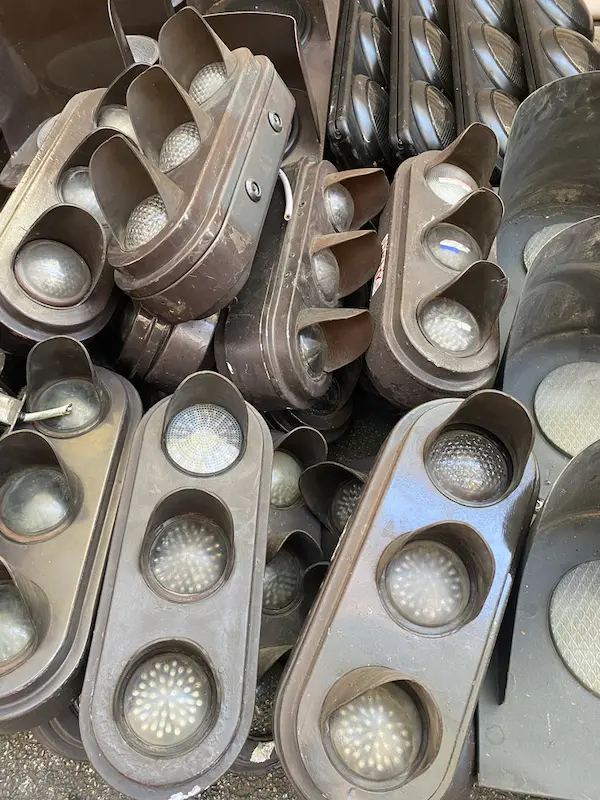
- and even old traffic lights and road-signalling equipment.
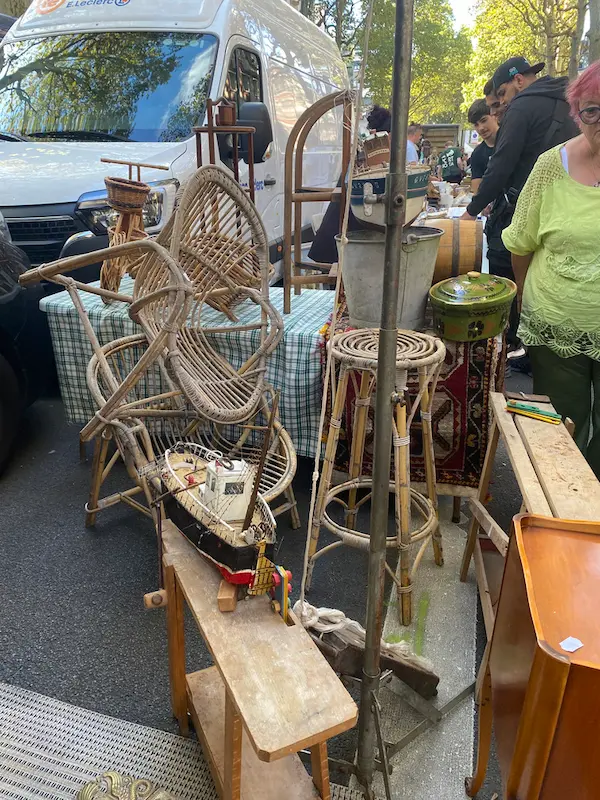
Yes, traffic lights.
So if you’ve always felt your living room was missing a piece of French road infrastructure, Lille may finally solve the problem.
Collectors could spend the entire weekend here
Some stalls are less about browsing randomly and much more about collecting.
I saw pins everywhere. Boxes of them. Boards of them. Rows and rows of tiny badges covering every possible theme.
The same goes for old signs, comics, glassware and other small collectables. These are probably among the easiest Braderie purchases if you are visiting Lille from Britain or elsewhere in Europe: they are relatively easy to carry home and you can spend a very long time searching for something unusual.
With thousands of sellers, two apparently similar stalls can also have completely different prices, so there is little reason to buy the first thing you see.
Second-hand clothes and shoes can offer some real bargains
Clothing is everywhere at the Braderie, but again the quality varies enormously.
Some stalls resemble the second-hand selection you might find in a charity shop such as Oxfam: jackets, dresses, shirts, shoes and accessories in every possible style and condition.
Elsewhere, I spotted shoes that appeared to be new or virtually unworn, with one pair priced at around €45 when the normal new price was approximately €110.
These are the finds that make rummaging worthwhile, but check the condition carefully before buying. A low price isn’t necessarily a bargain if the item is damaged or something you would never normally have bought.
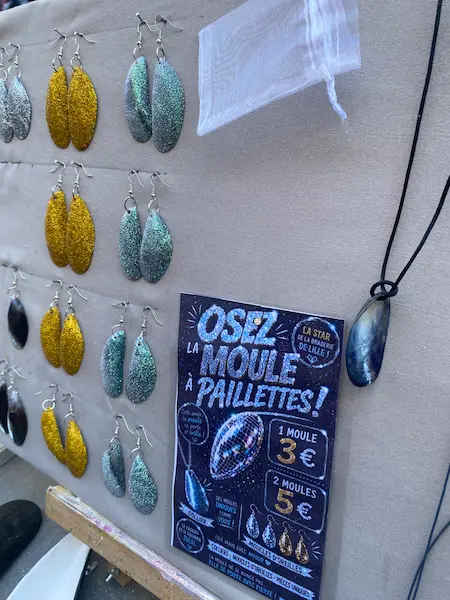
The most Lille souvenir possible? Glittery mussel earrings
Then there are the things you will probably never find anywhere else.
Mussels and chips – moules-frites – are inseparable from the Lille Braderie. Restaurants serve mountains of mussels throughout the weekend and traditionally pile the empty shells outside their doors.
Some local sellers have taken the symbol one step further.
I found people selling glittery mussel-shell earrings.
And I mean that literally: actual mussel shells, painted and covered in glitter, transformed into earrings.
It is wonderfully ridiculous, completely impractical and somehow absolutely perfect for the Braderie de Lille.
If you want a souvenir that will require an explanation every time you wear it back home, you have found it.
Don’t assume every ‘Braderie price’ is a bargain
The Braderie isn’t limited to flea-market stalls. Lille’s permanent shops also join the event, bringing rails, boxes and tables of discounted stock out onto the pavement.
You will see plenty of signs announcing special prices and supposed bargains.
Personally, I would keep a little perspective here.
I visit some of these shops outside Braderie weekend and, in several cases, I couldn’t see a dramatic difference between the prices I normally encounter and the supposedly exceptional Braderie prices.
That doesn’t mean there aren’t bargains to be found. It simply means that a large discount sign doesn’t automatically make something a bargain.
If you’re buying something expensive, checking the usual retail price on your phone takes thirty seconds.
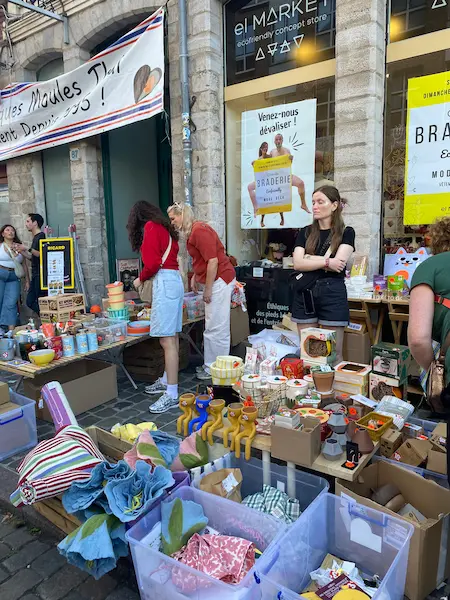
The Braderie doesn’t stop at the official stalls
One of my favourite things about the Lille Braderie is the way it seems to take over spaces that normally have nothing to do with shopping.
Look through an open carriage entrance and you may discover stalls set up in the courtyard or garden of a private hôtel particulier.
Residents sell from doorways, courtyards and garages. I even saw young women attempting to sell objects directly from the window of their house.
It is worth looking beyond the obvious main streets. Some of the most enjoyable discoveries are hidden just a few metres away.
Sometimes the best part is seeing what other people have bought
As the day goes on, another form of entertainment begins: watching people carry their discoveries through Lille.
You’ll see furniture being manoeuvred through crowds, enormous bags filled with purchases and objects whose purpose isn’t immediately obvious.
I spotted one man happily walking through Lille carrying a large fishing net he had apparently just acquired.
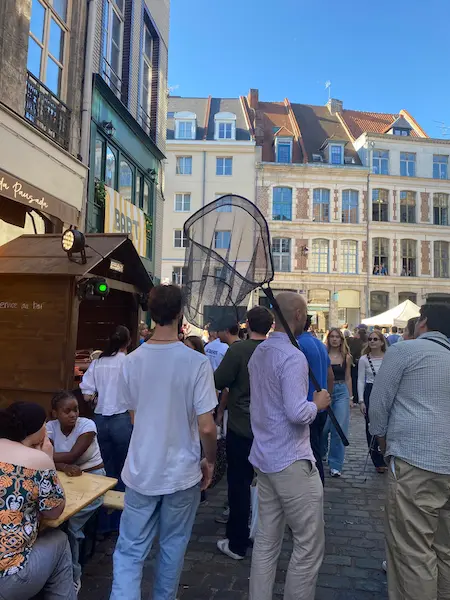
Where was he going with it? No idea.
But he looked pleased with his purchase, and that is really the spirit of the Braderie.
You can even get a freebie with your beer
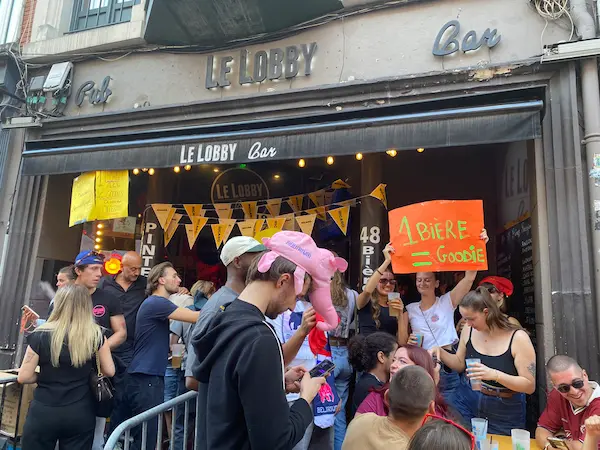
Shopping isn’t the only competition taking place during the weekend. Lille’s bars and cafés also have to attract attention among thousands of potential customers.
Beer pumps move outside, temporary bars appear on pavements and terraces expand into the streets.
Some businesses go a step further and offer small branded goodies with a beer purchase.
It isn’t exactly antique hunting, but after several kilometres of walking through the Braderie, a cold beer and a free souvenir may suddenly seem like a very good deal.
So, what should you buy at the Lille Braderie?
I wouldn’t arrive with too precise a shopping list. The pleasure of the Braderie is not knowing what will appear on the next stall.
If you’re travelling and need something you can easily take home, I would concentrate on small vintage objects, old French advertising signs, pins, comics, glassware, second-hand clothing or an unusual Lille souvenir.
If you’re driving, the possibilities obviously become much greater. Furniture, larger decorative objects and some of the truly bizarre finds suddenly become realistic purchases.
But the best advice is simply to walk, rummage and keep your eyes open. With 51 kilometres of stalls, buying the first interesting object you see may result in discovering something you like even more ten minutes later. And shopping is only part of the challenge: read our 10 tips for visiting the Lille Braderie before tackling the crowds.
And remember: the Braderie is much more than shopping
You may come to Lille hoping to find a vintage treasure and leave with an old beer glass, a pair of shoes, a garden gnome or a glitter-covered mussel hanging from your ear.
Or you may buy absolutely nothing.
It doesn’t really matter.
The real attraction is the extraordinary atmosphere created when an entire city turns itself into one enormous flea market for a weekend. Shops spill onto pavements, residents empty their attics, professional dealers arrive with antiques, bars move their beer pumps into the street and millions of people wander through Lille looking for something they didn’t know they wanted.
And somewhere among those 51 kilometres of stalls, it is probably there.
And if you’re making a weekend of it, location matters more than you might think. With much of central Lille taken over by the event, choosing the right area can save a lot of walking. See our guide to where to stay for the Lille Braderie, including hotels, neighbourhoods and practical alternatives.
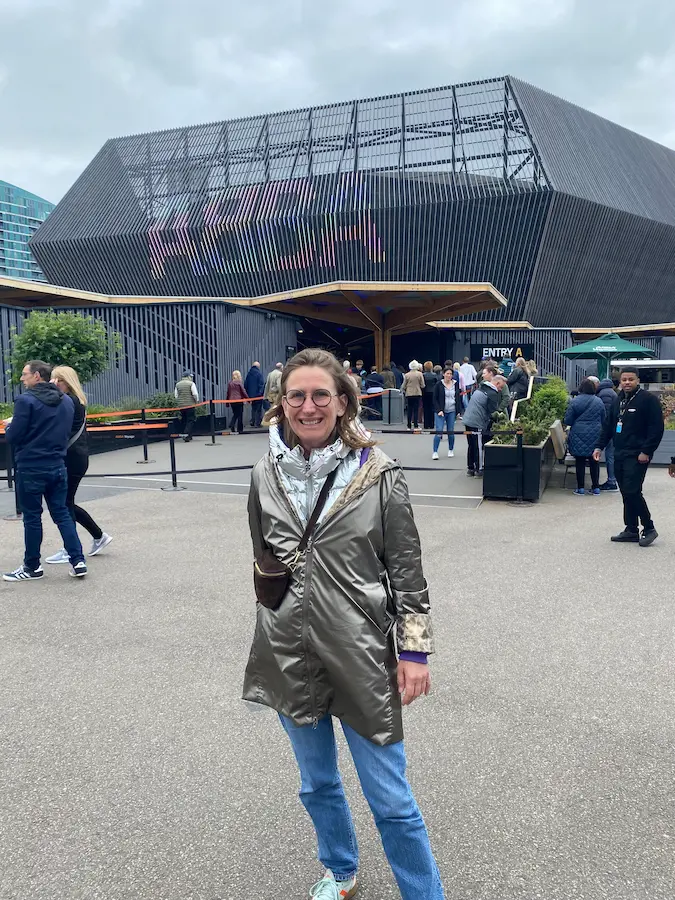
Delphine was born and raised in the Lille metropolitan area — close enough to hear the “Mongy” tram rattle past her childhood home. After more than 20 years promoting the Nord department to British visitors, first through press trips, trade shows and tour operator partnerships, then as a digital marketing consultant specialising in tourism, she’s spent her career building bridges between her home city and the UK.
Along the way, she’s picked up a genuine soft spot for both sides of the Channel: London’s Spitalfields market and a good bagel from Brick Lane are as close to her heart as the passageways behind Lille’s cathedral or a plate of Merveilleux from her favourite bakery. She was even honoured at the British Guild of Travel Writers’ dinner at the Savoy for her work bringing Cambrai’s Tank 1917 museum to life.
On Tour de Lille, Delphine writes as the local who never left — sharing the quiet corners of her city and the stories behind them, for visitors who want to see Lille the way a Lilloise does.