Carbonnade, welsh, Maroilles, a waffle with a secret recipe and one sausage that makes my British friends say “awful”: this is what to eat in Lille, as told by a Lilloise.
I was born and raised in the Lille area, and I spent more than twenty years showing the North to British visitors. So when people ask me what to eat in Lille, I don’t hand them a list copied from a guidebook. I tell them about the dishes I grew up with, the ones I only learned to love as an adult, and the one or two I still can’t face.
Food up here is generous, unpretentious and, let’s be honest, rarely light. Beer finds its way into the sauces, brown sugar into the stews, and chips onto almost every plate. Bring an appetite.
What to eat in Lille: my shortlist
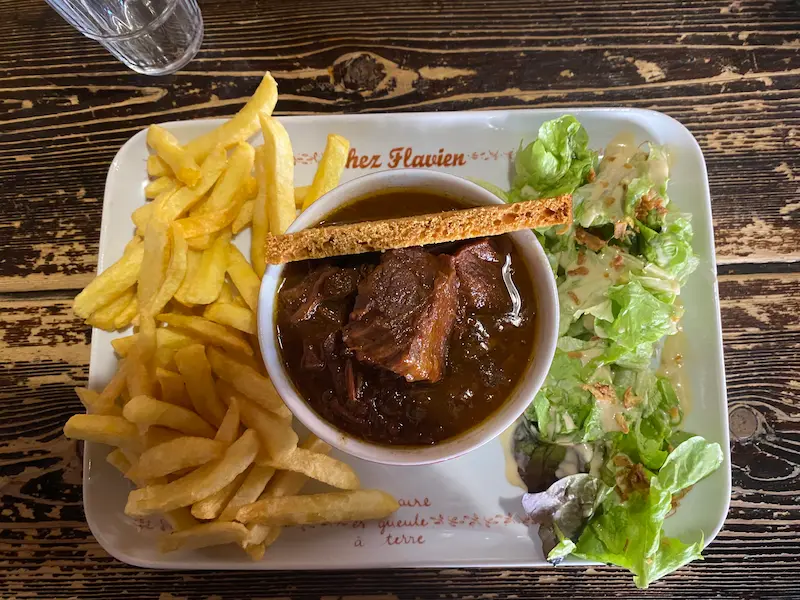
- Carbonnade flamande: beef slow-cooked in beer and brown sugar.
- Welsh: cheddar melted with beer over ham and bread, with chips.
- Anything cooked with Maroilles: our strong cheese turns gentle in a sauce.
- Moules-frites: a summer pleasure and the Braderie classic.
- Méert’s vanilla waffles and a merveilleux for something sweet.
- Andouillette, if you’re feeling brave.
The Northern classics
Carbonnade flamande: the Flemish answer to boeuf bourguignon
Confession first: carbonnade isn’t a childhood dish for me. My father couldn’t stand meat that had been cooked “to death”, so it never appeared on our table. I discovered it later, in estaminets, and it was love at first forkful.
The recipe I still use today was given to me by the manager of ’t Kasteelhof, the estaminet perched at the very top of Mont Cassel and said to be the highest in Flanders, back in my tourism days. And it’s wonderfully simple. Brown chunks of beef in butter, then set them aside. Soften your onions in the same pan, and set those aside too. Now comes the most Northern bit of all: a spoonful of cassonade, our brown sugar, left to caramelise, with a splash of vinegar to stop it in its tracks. Put everything back in, cover it with beer (an amber beer from the North, ideally), and add a slice of stale bread or, even better, gingerbread. Then leave it to bubble away gently for three hours.
Here’s the real secret, though: the best carbonnade is the one you eat the next day, reheated. The meat falls apart, and the sauce turns sweet, sour and deep all at once. Think boeuf bourguignon, dressed for the North.
Welsh: a British import we made our own
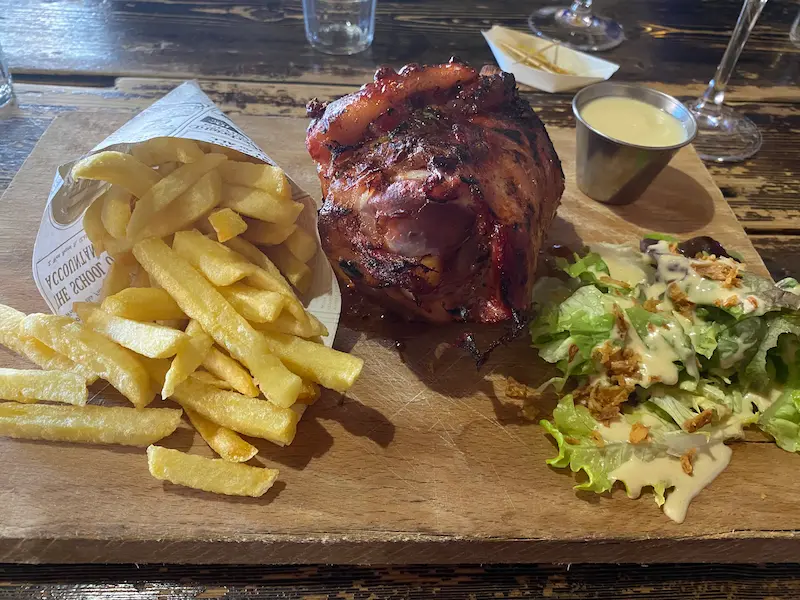
Here’s one for my British readers: the welsh is yours, originally. It’s our version of Welsh rarebit, and the North has adopted it so wholeheartedly that you’ll find it on every estaminet menu. A slice of bread, a slice of ham, then cheddar melted down with beer and poured over the top before the whole thing goes under the grill. Ask for a fried egg on top, and it comes with chips, of course: this is the North.
I love it, but a word of warning: you need a cast-iron stomach and a wolf’s appetite. A good welsh is glorious; a bad one is a brick. My favourite is at Au Paon d’Or, the brasserie on Place de Béthune, which has been feeding Lillois (and plenty of British school trips) for more than 25 years.
Potjevleesch: the “little pot of meat”
The name is Flemish and simply means “little pot of meat”: white meats, already cooked, set together in a jelly and served cold, usually with chips. Honestly, it’s not the dish I’d order in a restaurant. But the one my butcher makes is excellent, and that’s the potjevleesch I go back for.
Maroilles: the cheese that smells worse than it tastes
Let’s address the elephant in the fridge. Maroilles is strong. Open one at home and the whole kitchen knows about it, and so does everything else in the fridge for days. It’s a soft, square, washed-rind cheese with a bright orange crust, made around the little village of Maroilles in the Avesnois, south-east of Lille. That green corner of the region is well worth a day trip in its own right.
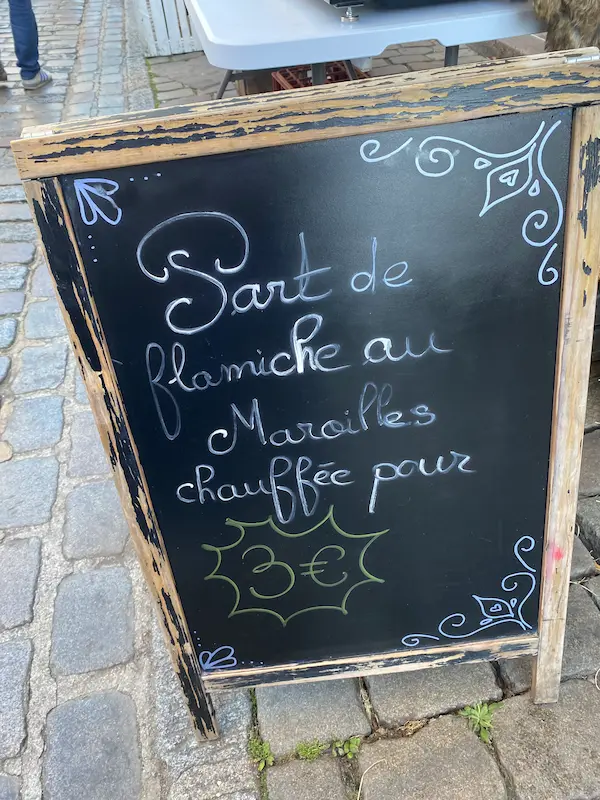
What most visitors don’t realise is that cooked Maroilles is a different animal. The smell is still there, but the taste softens into something rich, creamy and surprisingly gentle. Locals call it “the finest of the strong cheeses”, and once it’s melted, you’ll see why.
I adore it in a sauce, over a steak or with chicken. At Au Vieux de la Vieille, in the old town, I ordered the poulet au Maroilles so often that Raphaël would see me walk in and say, “Delphine, ton petit poulet au Maroilles?” before I’d even sat down. My advice: don’t start with a raw slice on a cheeseboard. Start with it cooked, and work your way up.
Chicons au gratin: a dish you have to grow into
In the North, an endive isn’t an endive, it’s a chicon. And we take them seriously: France grows around 60% of the world’s endives, and almost all of them come from our region. Chances are the last endive you ate in Britain came from a field not far from Lille.
Our classic way of eating them is chicons au gratin. Cook the endives, roll each one in a slice of ham, smother the lot in béchamel, scatter grated cheese on top, and slide it into the oven for 15 to 20 minutes until golden and bubbling.
I’ll be honest: I hated it as a child. Hated endives, full stop. Today it’s my quiet Sunday-evening dish, the one I make when I want something warm and easy. My son hates it just as much as I did at his age, and Andy isn’t a fan either. Clearly this is a dish you have to grow into.
By the sea, and at the Braderie
Moules-frites: a taste of the seaside
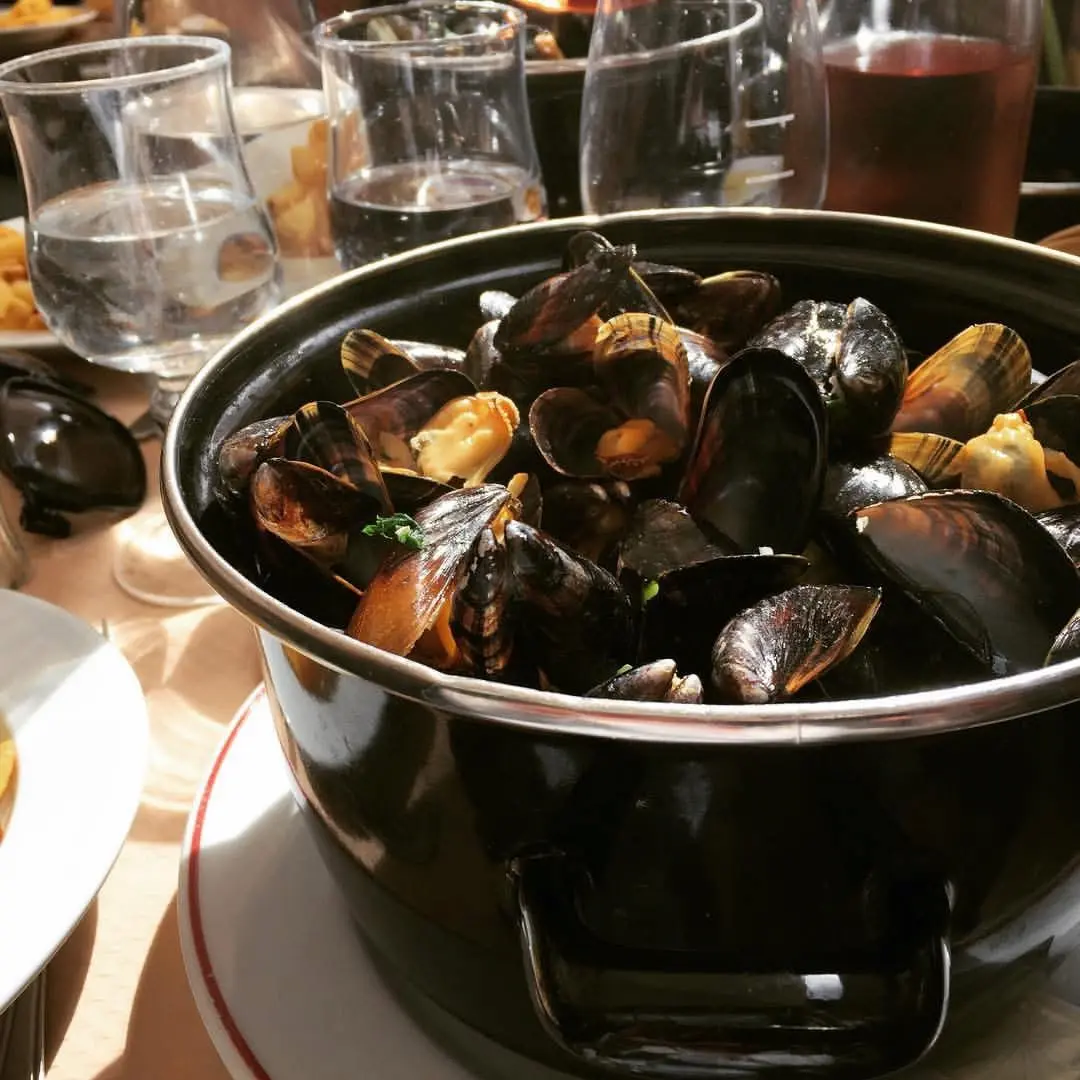
I’m a seafood girl through and through. I love the sea, and luckily it’s never far from Lille. Moules-frites is really a seaside dish, and one I think of as a summer pleasure.
You’ll also hear that moules-frites is the Braderie tradition, and it’s true: restaurants famously pile the empty shells outside their doors. But with mussels served by the tonne that weekend, it isn’t necessarily the best moment to judge them, and like all mussels, you can strike lucky or not. If you want to stay properly Northern, order them in a Maroilles sauce. Absolutely delicious.
The ones that scare the Brits
Andouillette: “awful”, say my British friends
I only have to explain what andouillette is for British friends to pull a face and say the same word: “awful”. That tells you everything about its reputation across the Channel.
Andouillette is a sausage made from offal, pork or veal intestines packed into a casing, and yes, it has a smell to match. Everyone in France knows the andouillette from Troyes, but up here in the North we have our own: the andouillette de Cambrai and the andouillette d’Arras.
Here’s my honest opinion: it’s offal, but it’s very, very good. Have it braised, with a Maroilles sauce to keep things properly regional, or with a classic mustard sauce. Order it once, and you’ll have a great story to tell when you get home.
At the chip shack: frites, fricadelle and the infamous américain
Every Northern town has its baraque à frites, the roadside chip shack. The one thing you must order there is the chips themselves, ideally cooked the traditional way, in beef dripping. They’re in a different league from chips fried in oil, and once you’ve had them, there’s no going back.
What comes with them is another story. The classic is the fricadelle, a long, deep-fried sausage made from a mix of meats whose exact recipe nobody seems keen to discuss. I’ve tried one, exactly once. Then there’s the américain: half a baguette stuffed with meat, chips and sauce, all in one. Personally, I find it revolting. But it’s a genuine Northern tradition, and some people swear by it. My advice: go for the chips, add a sauce, and skip the rest. For the newer side of eating on the go, see my guide to street food in Lille.

Sweet things
Méert’s waffles: my guilty pleasure since childhood
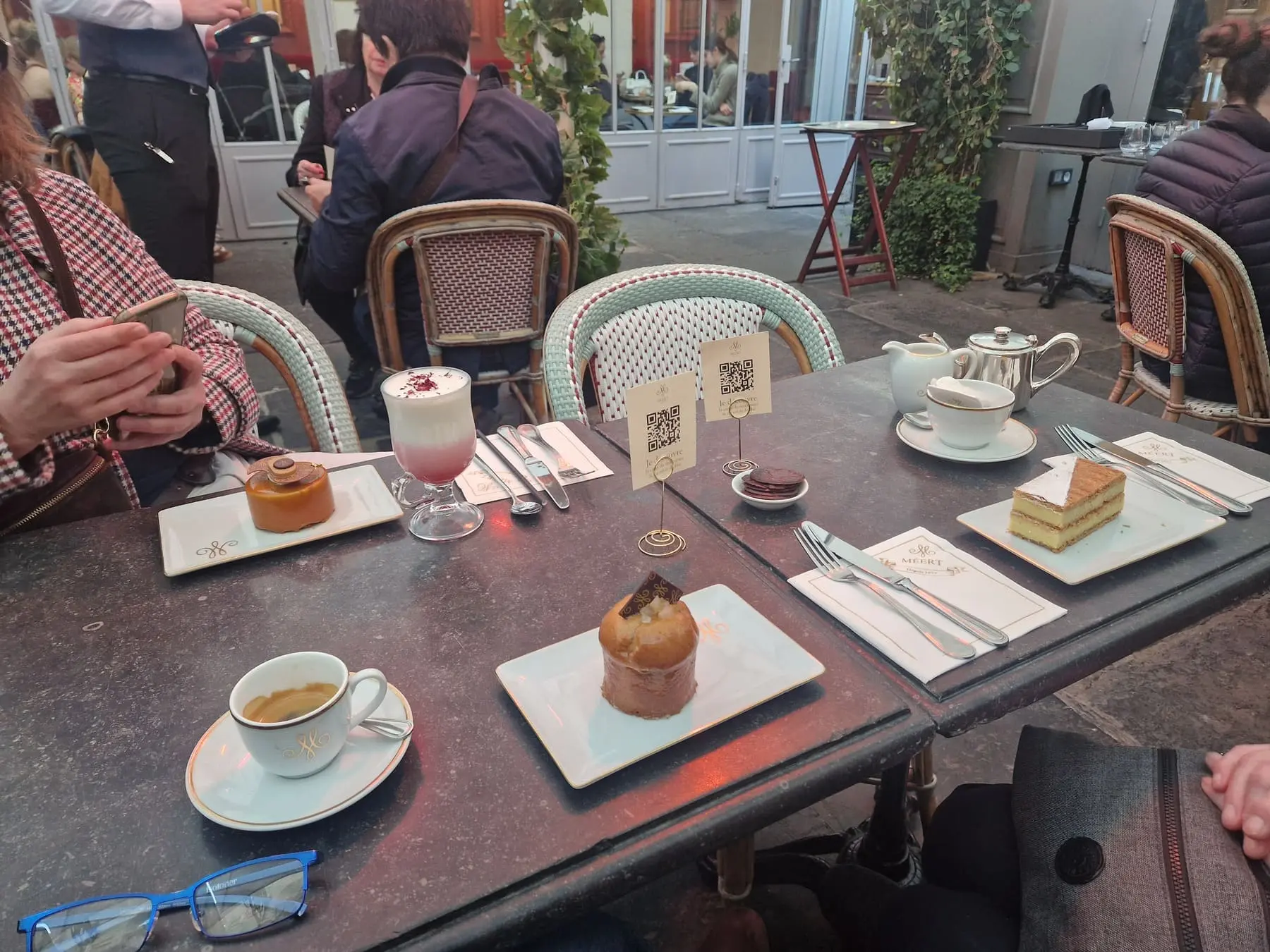
Some places are part of your family history. For me, Méert is one of them: I was already going there as a little girl, holding my grandmother’s hand. The house has been in business on rue Esquermoise, in the old town, since 1761, and walking in still feels like stepping into another century.
You’ll find thin vanilla-filled waffles all over the North of France. Méert’s are something else entirely: they’re filled with Madagascar vanilla, and the recipe is a closely guarded secret that nobody is about to tell you. In my opinion, they’re simply the best waffles in Lille. They aren’t cheap, but do yourself a favour and at least sit down in the tea room, order a pot of tea and a waffle, and take your time.
Merveilleux: Lille’s little meringue goes global
The merveilleux, the “marvellous” one, lives up to its name: a light meringue coated in whipped cream, then rolled in chocolate shavings. The best-known address is Aux Merveilleux de Fred, whose original shop is on rue de la Monnaie in the old town. Pastry chef Frédéric Vaucamps started out in the North, and his merveilleux have since travelled all the way to New York, where the shops go by the name Marvelous by Fred. I popped into one on a trip there and was served by Zach, a Frenchman from Lille, no less. We ended up chatting about home over a box of meringues. So if you’re ever in New York, drop in and say hello from Lille.
Cramique: the brioche everyone knows
Walk into any bakery in the North and ask for un cramique: everyone will know exactly what you mean. It’s our soft brioche loaf, traditionally studded with raisins, though in Lille you’ll also find it scattered with crunchy pearl sugar, which is my favourite. Sliced and buttered for breakfast or with an afternoon coffee, it’s delicious, and you’ll see even more of it around Christmas.
Tarte au sucre: the sweetest way to finish
For dessert, look for tarte au sucre, sugar tart. It’s exactly what the name promises: a tart built around brown sugar, our beloved cassonade again. Simple, and very Northern.
Where to try them
Most of these dishes are on the menu of any good estaminet, the cosy Flemish taverns that are the beating heart of eating out in Lille. Start with my pick of the best estaminets in Lille, then browse our guide to where to eat in Lille for everything else, from brasseries to Michelin stars.
A last word
Northern food is comfort food, made for grey days, long lunches and good company. Andy will tell you to skip the chicons. I’ll tell you to try everything at least once, even the andouillette. Then come and tell us which one won you over.
Frequently asked questions
What is the most famous dish in Lille?
Carbonnade flamande, beef slow-cooked in beer with brown sugar and gingerbread, is the dish most people associate with Lille. The welsh, cheddar melted with beer over ham and bread, comes a close second.
What is a welsh in Lille?
It is the Northern version of Welsh rarebit: a slice of bread and ham covered in cheddar melted with beer, grilled, often topped with a fried egg and always served with chips. It is very filling.
Is Maroilles cheese very strong?
Raw, yes: it has a powerful smell. Cooked in a sauce, a tart or with chicken, its taste becomes much gentler and creamier, which is the best way for visitors to start.
What should I eat at the Braderie de Lille?
Moules-frites are the Braderie tradition, and restaurants pile the empty shells outside. With so many served that weekend, quality varies, so a Maroilles sauce or a good estaminet are worth seeking out.
Where can I buy the famous Lille waffles?
At Méert, on rue Esquermoise in the old town, in business since 1761. Their thin waffles are filled with Madagascar vanilla using a secret recipe.
Delphine was born and raised in the Lille metropolitan area — close enough to hear the “Mongy” tram rattle past her childhood home. After more than 20 years promoting the Nord department to British visitors, first through press trips, trade shows and tour operator partnerships, then as a digital marketing consultant specialising in tourism, she’s spent her career building bridges between her home city and the UK.
Along the way, she’s picked up a genuine soft spot for both sides of the Channel: London’s Spitalfields market and a good bagel from Brick Lane are as close to her heart as the passageways behind Lille’s cathedral or a plate of Merveilleux from her favourite bakery. She was even honoured at the British Guild of Travel Writers’ dinner at the Savoy for her work bringing Cambrai’s Tank 1917 museum to life.
On Tour de Lille, Delphine writes as the local who never left — sharing the quiet corners of her city and the stories behind them, for visitors who want to see Lille the way a Lilloise does.