Lille landmarks
Porte de Gand and Porte de Roubaix: Lille's twin Spanish-era gates
Two brick gates from the days when Lille answered to Spain, still standing at the edge of Vieux-Lille
In short: The Porte de Gand is a brick city gate at the end of rue de Gand in Vieux-Lille, built around 1620 when Lille belonged to the Spanish Netherlands. Its near twin, the Porte de Roubaix, stands by Euralille. Both are listed historic monuments and free to see from the street. They are among the oldest gates still standing in Lille.
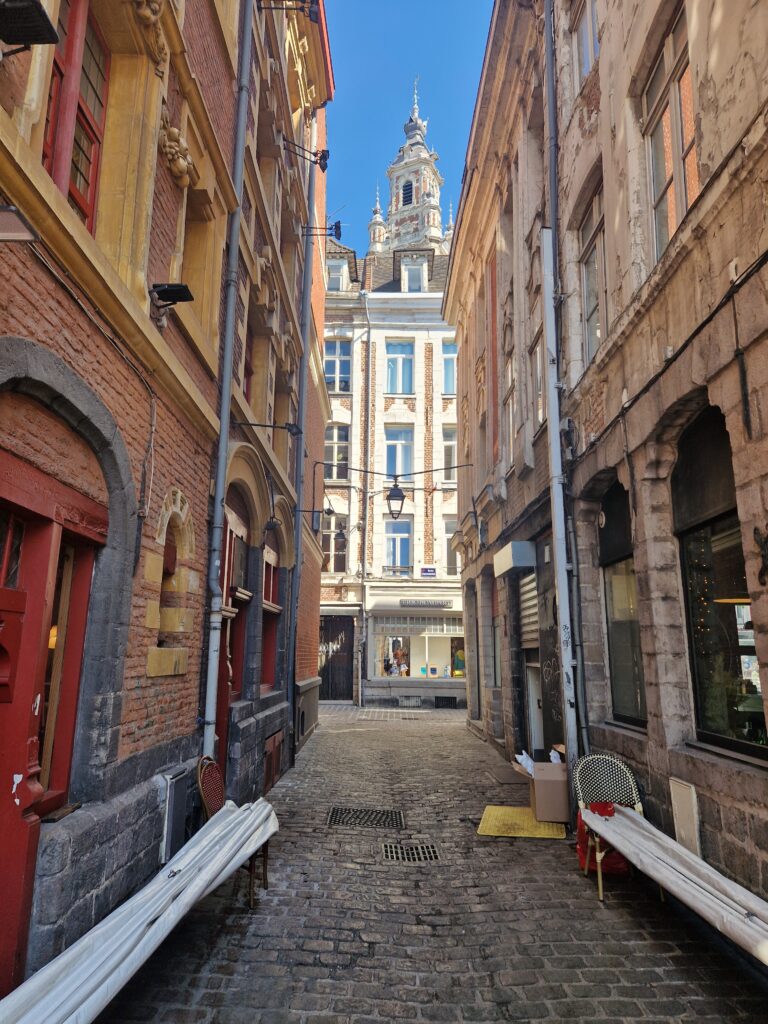
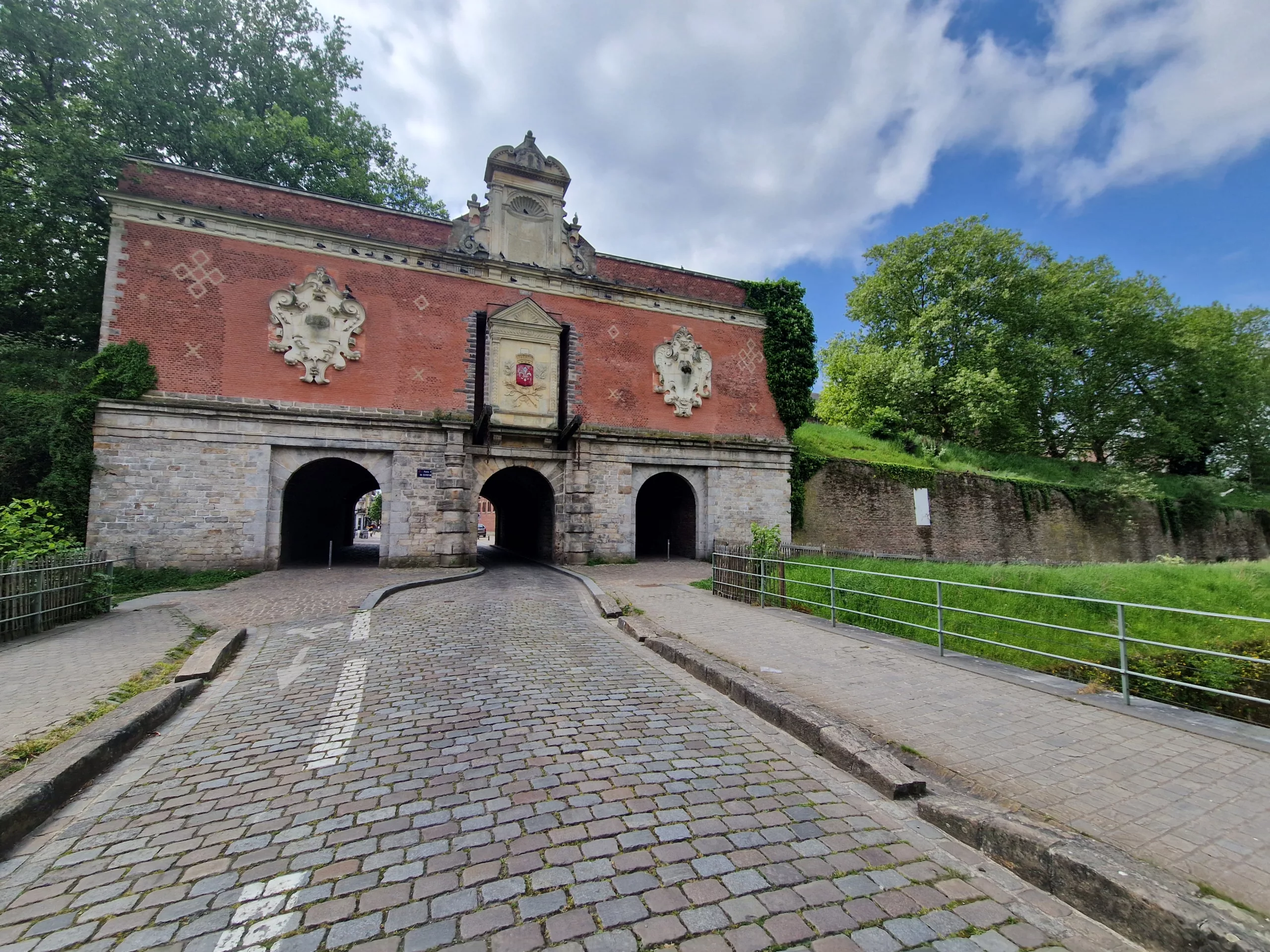
Walk to the end of rue de Gand, past the estaminets, and the street runs into a wall of red brick and stone arches. This is the Porte de Gand, once the north-eastern way out of Lille. A ten-minute walk away, the Porte de Roubaix looks almost identical. They were built at the same time, for the same reason.
Gates from the Spanish Netherlands
In the early 17th century, Lille was part of the Spanish Netherlands, ruled by the Archdukes Albert and Isabella. In 1617 they decided to enlarge the city towards the north-east, and a new stretch of ramparts was built between 1617 and 1621. The two gates were part of it.
- 1617 to 1621: the city is extended and new ramparts are built.
- Around 1620: the Porte de Gand is built, first called the Porte de la Madeleine.
- 1620 to 1625: the Porte de Roubaix is built to a design by Michel Watrelos and Jean Lesur.
- After the Revolution: the Porte de la Madeleine is renamed Porte de Gand, after the road to Ghent.
- 1875: two side passages are cut through the Porte de Roubaix to let the tram through.
- 1929: both gates are listed as historic monuments.
What to look for
- The town side and the country side: walk through and look back. The two faces of each gate are different.
- The brick and stone: red brick with pale stone details, typical of Flemish building.
- The empty niche on the Porte de Gand. It once held a statue, and nobody seems sure why it disappeared.
- The ramparts beside the Porte de Gand, now part of a small garden.
Compare the two gates on the same walk. They look like twins, which is exactly what they were meant to be.
Seeing the two gates
- Price: free, viewed from the street.
- Porte de Gand: at the end of rue de Gand, Vieux-Lille.
- Porte de Roubaix: by rue de Roubaix, between Euralille and boulevard Carnot.
- Time needed: twenty minutes for both, on foot.
Rue de Gand is lined with estaminets serving Flemish dishes; see our guide to the best estaminets in Lille.
Lille’s other gates
The Porte de Gand and Porte de Roubaix come from the Spanish period. The grander Porte de Paris, near the town hall, was built later, after Lille became French, as a triumphal arch for Louis XIV. Seeing all three tells the story of a city that changed hands.
The Porte de Gand, a doorway to Vieux-Lille
The Porte de Gand and its twin, the Porte de Roubaix, were built around 1620 when Lille answered to Spain. They are free to see, listed since 1929, and a short walk apart. Start at the Porte de Gand, walk back up rue de Gand, and you are in the heart of Vieux-Lille.
Where to find it
Frequently asked questions
When was the Porte de Gand built?
Around 1620, during the extension of Lille between 1617 and 1621, when the city belonged to the Spanish Netherlands.
Is the Porte de Gand the same as the Porte de Roubaix?
No, but they are near twins. Both were built in the same extension of the ramparts, and the Porte de Roubaix stands about ten minutes' walk away, near Euralille.
Can you visit the Porte de Gand?
Yes, it is free to see from the street, at the end of rue de Gand in Vieux-Lille.
Why is it called the Porte de Gand?
It was first called the Porte de la Madeleine. After the Revolution it was renamed after the road to Ghent, Gand in French.