Lille landmarks
Rue de la Monnaie and Place aux Oignons: the heart of Vieux-Lille
Flemish brick, a royal mint and a square that has nothing to do with onions
In short: Rue de la Monnaie is the best-known street in Vieux-Lille, lined with 17th and 18th-century brick houses and named after the mint that stood here after 1685. It leads past the Hospice Comtesse towards the cathedral. Just behind it lies Place aux Oignons, a small cobbled square whose name comes not from onions but from an old castle keep.
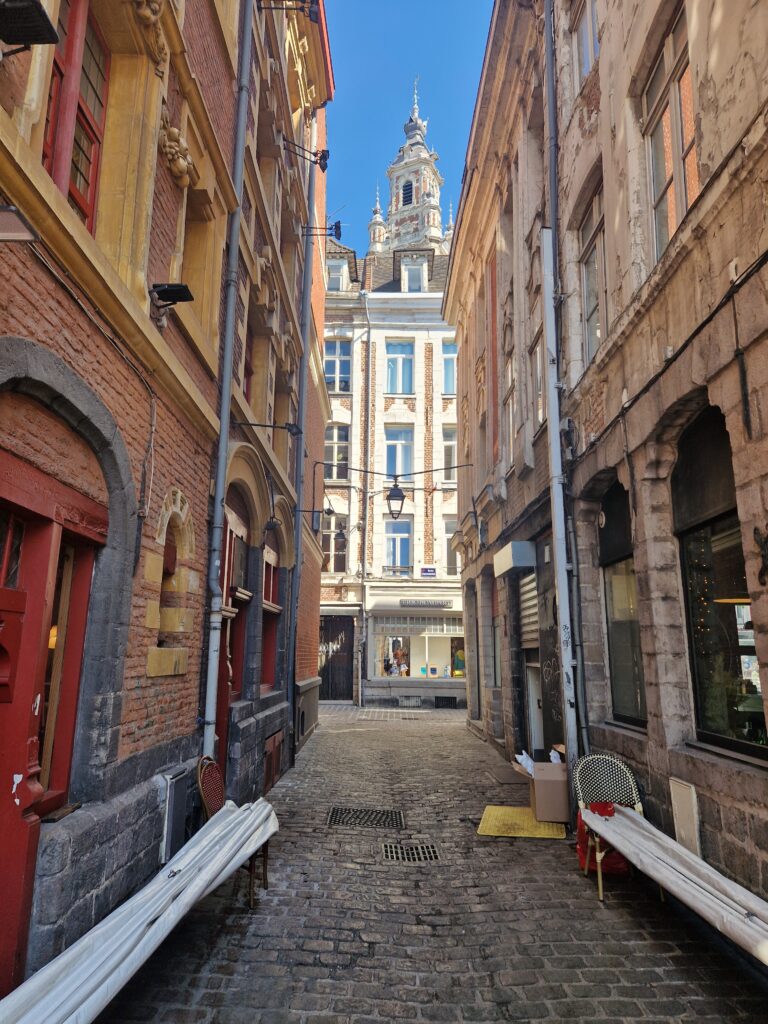
If you have seen a photo of Vieux-Lille, there is a good chance it was taken here. Rue de la Monnaie curves gently between rows of brick and stone houses, their ground floors now shops and cafés, their upper floors much as they were three centuries ago.
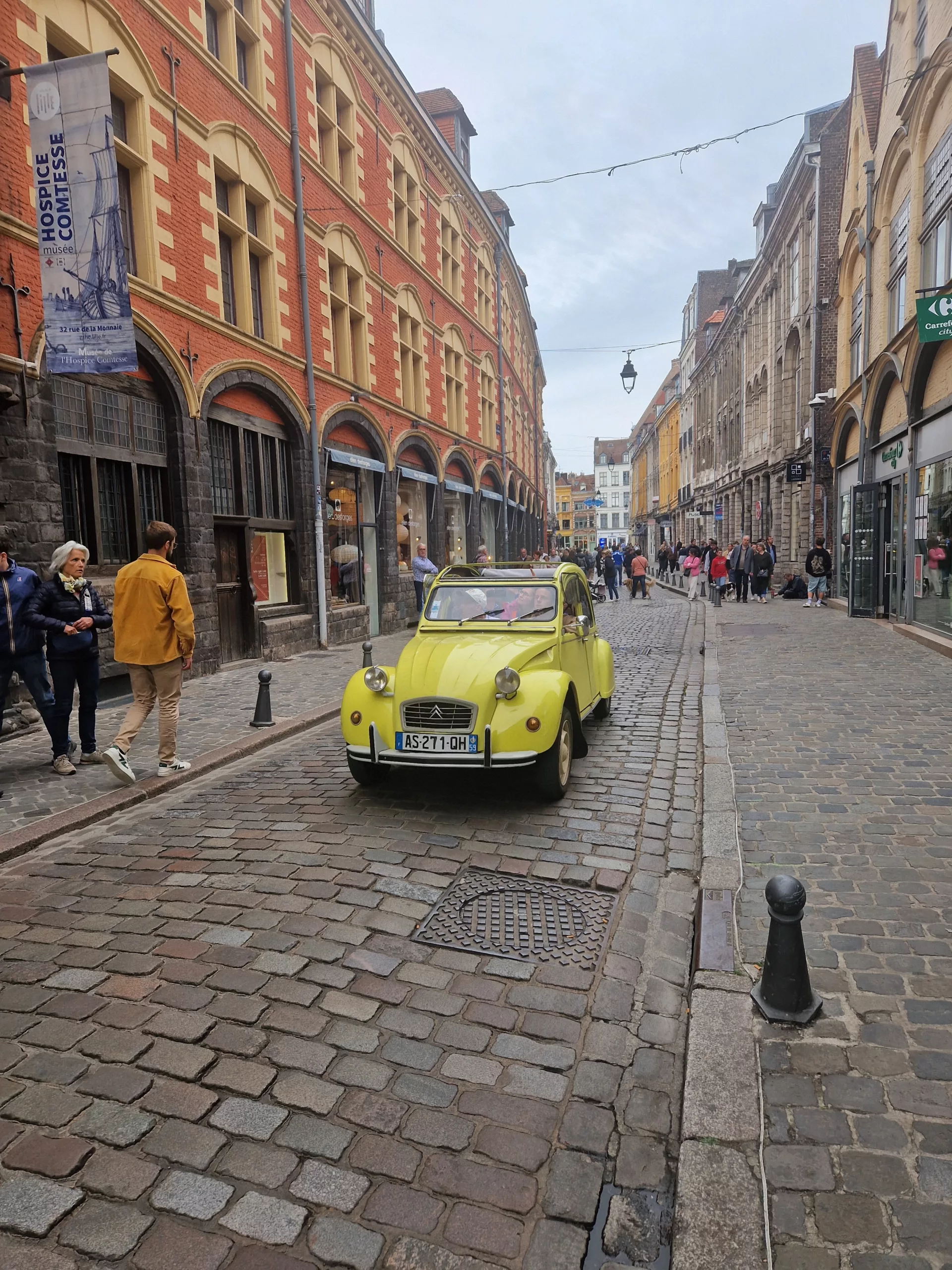
Rue de la Monnaie
The street takes its name from the Hôtel de la Monnaie, the mint where coins were struck, which stood here after 1685. It is one of the oldest streets in the city, close to the mound where Lille began.
- The houses: 17th and 18th-century façades in brick and carved stone, typical of Flemish Lille.
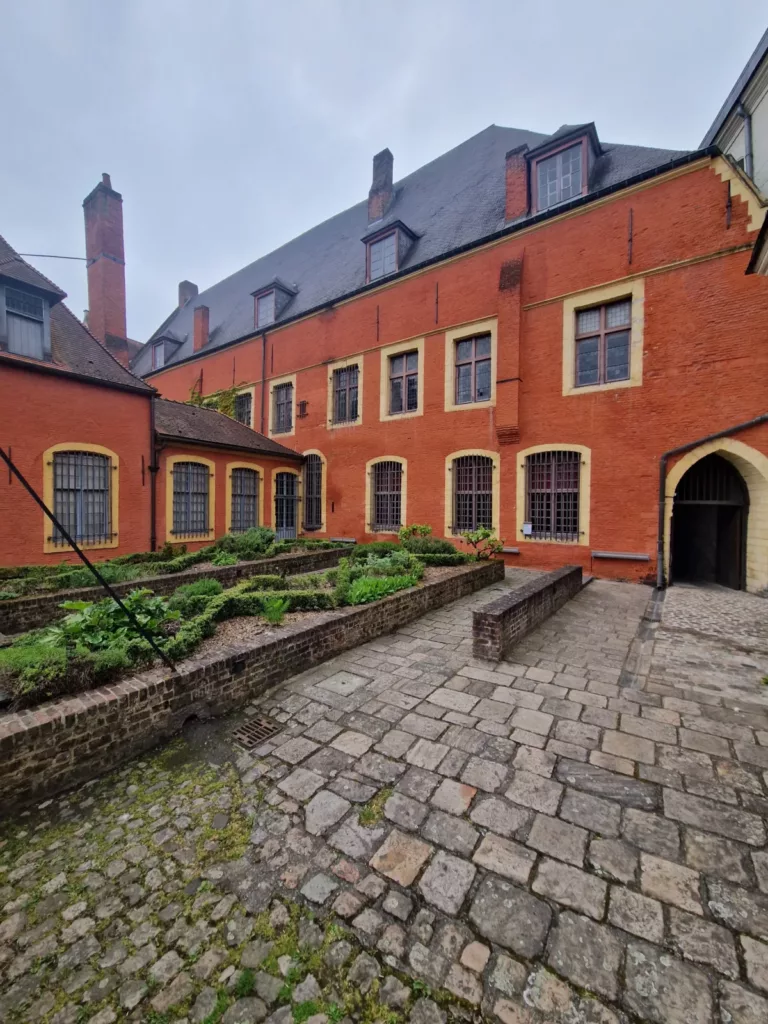
- The Hospice Comtesse, the medieval hospital turned museum, at number 32.
- Protection: the street lies within Vieux-Lille’s safeguarded heritage area.
- Summer: it becomes even more pleasant when it is closed to traffic.
Place aux Oignons
A few steps away, small streets such as rue de Pétérinck lead to Place aux Oignons, often called the prettiest square in Lille.
- The name: not about onions. It is thought to come from a castle keep that once stood nearby, the word changing over the centuries until it sounded like “oignons”.
- The 18th century: weavers lived and worked around the square.
- Hard times: until the 1980s the area was neglected and poor.
- Today: colourful brick houses, cobbles and café terraces.
Come early in the morning to photograph rue de la Monnaie without the crowds.
Walking the area
- Price: free.
- Starting point: from the Grand Place, walk north through Place du Lion d’Or into rue de la Monnaie.
- Time needed: thirty minutes for the street and the square, longer with the Hospice Comtesse.
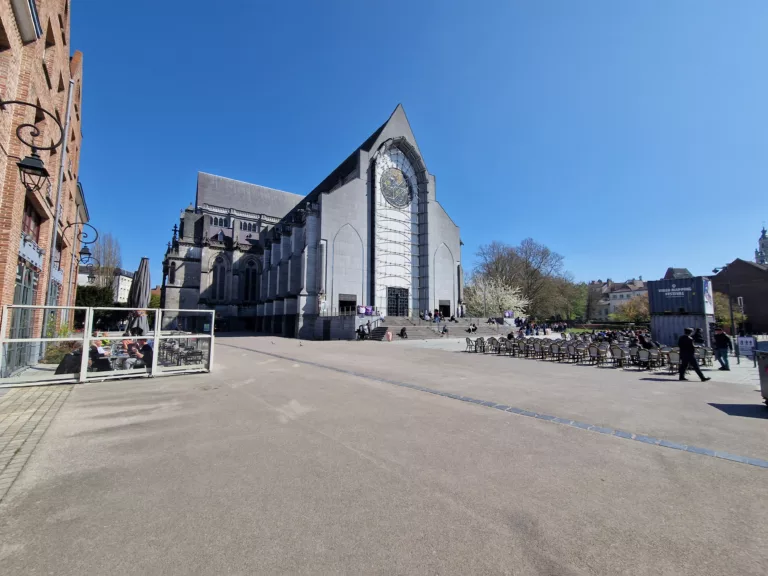
- Nearby: Notre-Dame-de-la-Treille cathedral, two minutes away.
For a drink in the sun, see our guide to the best terraces in Lille.
The rest of Vieux-Lille
Rue de la Monnaie is the obvious place to start a walk in the old town. Visit the Hospice Comtesse, step into Notre-Dame-de-la-Treille cathedral, then follow our guide to Vieux-Lille for the rest.
Rue de la Monnaie, Vieux-Lille in one street
Rue de la Monnaie, named after the mint built here after 1685, sums up Vieux-Lille: Flemish brick, old houses and a medieval hospice. Place aux Oignons, behind it, owes its name to a castle keep, not a vegetable. Both are free, five minutes from the Grand Place, and best seen early.
Where to find it
Frequently asked questions
Why is it called rue de la Monnaie?
It is named after the Hôtel de la Monnaie, the mint where coins were struck, which stood in the street after 1685.
Why is it called Place aux Oignons?
Not because of onions. The name is thought to come from an old castle keep nearby, the word changing over the centuries.
Where is rue de la Monnaie?
In Vieux-Lille, about five minutes' walk north of the Grand Place, close to Notre-Dame-de-la-Treille cathedral.
What is there to see on rue de la Monnaie?
17th and 18th-century brick houses, the Hospice Comtesse museum at number 32, and Place aux Oignons a few steps away.