Lille landmarks
La Condition Publique: Roubaix's wool-testing house turned creative hub
A giant textile warehouse from 1902, rebuilt as a place for concerts, exhibitions and makers
In short: La Condition Publique is a former textile building in Roubaix, built in 1900 to 1902, where wool and other fibres were tested to set their fair weight and price until 1972. Restored by the architect Patrick Bouchain for Lille 2004, it is now a free cultural venue with exhibitions, concerts and workshops, a short walk from the Eurotéléport metro and tram stop.
Roubaix built its fortune on wool, and wool is tricky: it soaks up water, and wet wool weighs more. Before buyers paid for a batch, someone had to check how much of it was water. In Roubaix, that someone worked here.
What a “condition” did
A “conditionnement” tested textile fibres. Staff measured how much moisture a batch held, so that buyers paid a fair price for its real weight. They also tested yarn for its count, strength and elasticity. Roubaix’s public testing house was one of the first in France.
- 1893 to 1899: the old testing house is too small, and a new branch is approved.
- 1900 to 1902: the architect Albert Bouvy builds the new Condition Publique for the Chamber of Commerce.
- 1902 to 1972: it tests and stores wool for Roubaix’s textile industry.
- 1998: the building is protected as a historic monument.
- 2004: restored by Patrick Bouchain, it reopens as a cultural venue for Lille 2004.
What to see today
The building covers about 10,000 square metres, with a covered central street running through it.
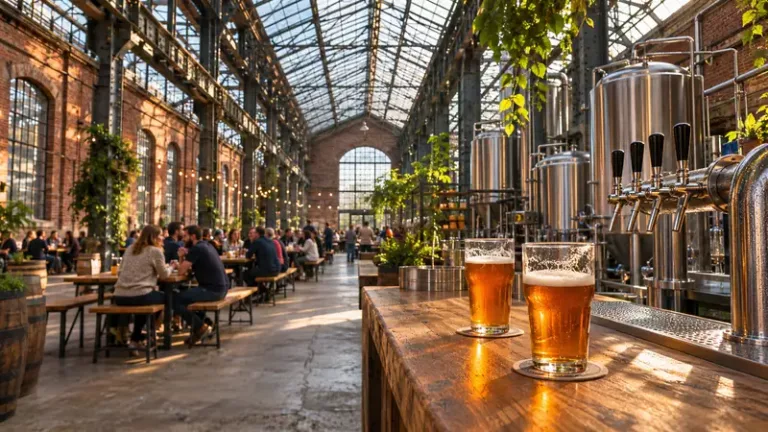
- The architecture: brick halls built for heavy industry, now open to the public.
- Exhibitions and concerts through the year.
- Workshops, from sewing sessions to events for families.
- Guided tours telling the story of the building, on booking.
Walk down the central street even if nothing is on. The building is the show.
Practical information
- Address: 14 place du Général Faidherbe, Roubaix.
- Getting there: metro line 2 or tram R to Eurotéléport, then a short walk.
- Entry: the building is free to enter at opening times; some events and tours are paid.
- Opening: usually weekdays from 10am to 7pm, Saturday afternoons, and the first Sunday of the month. Check before you go.
Programme and opening times are on the official Condition Publique website.
Make a Roubaix day of it
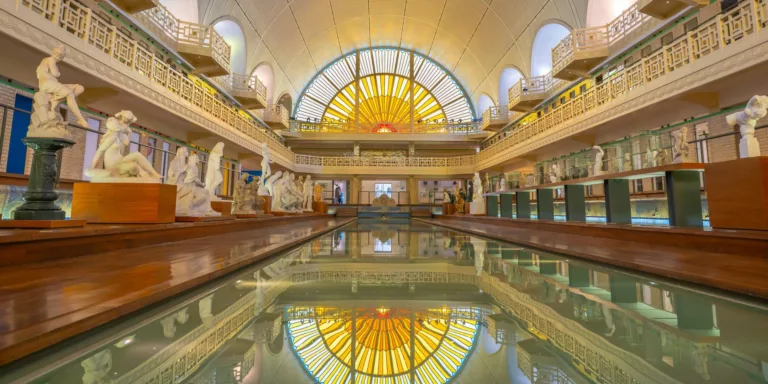
La Condition Publique fits into a day of Roubaix’s textile heritage. Combine it with La Piscine, the art museum in a 1930s swimming pool, and read our guide to Lille’s industrial places reborn for more factories turned into venues.
La Condition Publique, Roubaix’s story in one building
La Condition Publique tested Roubaix’s wool from 1902 to 1972, then came back to life for Lille 2004. It is free to enter, close to the Eurotéléport stop, and a fine example of how the metropolis reuses its factories. Look in on your way to La Piscine.
Where to find it
Frequently asked questions
What was La Condition Publique?
A testing house for textile fibres. From 1902 to 1972, it measured the moisture in wool to set its fair weight and price for Roubaix's industry.
Is La Condition Publique free?
The building is free to enter during opening times. Some events, workshops and guided tours are paid.
How do I get to La Condition Publique from Lille?
Take metro line 2 or tram R to Eurotéléport in Roubaix, then walk a few minutes to place du Général Faidherbe.
Who restored La Condition Publique?
The architect Patrick Bouchain, for Lille 2004, European Capital of Culture.