Textile fortunes, famous surnames, school aprons and summer holidays on the Opal Coast. This is a little history of Northern France — and quite a lot of personal memories.
I didn’t discover Lille’s industrial families in a museum. I grew up around them. Not because I belonged to one of those grand dynasties — I most certainly didn’t — but because my father worked in textiles and I went to school with some of their children.
La Redoute, Pimkie and Camaïeu were among my father’s customers. He sold fabrics, including Italian and Lyon textiles, and the names of the families behind Northern France’s businesses came up regularly at home. To me, Pollet, Cavrois, Bonduel and Holder weren’t just names in local history books. I went to school with some of their children, and the Bonduels in particular were also friends of mine.
I didn’t discover Lille’s textile history in a museum. I grew up surrounded by it.
My father worked in the textile industry. La Redoute, Pimkie and Camaïeu were among his customers, and he knew many of the industrial families whose names were part of everyday conversation at home. I knew perfectly well that these businesses were helping shape the region.
Then there was school. I went to the Institution libre de Marcq-en-Barœul, better known locally as le collège de Marcq. Among my school friends were members of the Bonduel family (with one ‘l’) and descendants of the Cavrois family. They weren’t just familiar names from Lille’s industrial history. They were my friends, people I grew up with, went to school with and, in some cases, spent summers with in Hardelot. And just to avoid any confusion, Bonduel is not Bonduelle (with two ‘l’s), the famous food company, which also has its roots in Northern France. Different families, different businesses!
From textile mills to family fortunes
Roubaix and Tourcoing were once among Europe’s great textile centres. Wool, cotton, spinning mills and weaving factories brought immense wealth to some families — and hard, often poorly paid work to many others. The old brick factories are reminders of both sides of that history.
One of the most spectacular is the former Motte-Bossut mill in Roubaix, a factory that looks remarkably like a castle. It now houses the Archives nationales du monde du travail. The Motte family helped shape the region’s textile industry; the Pollets were behind La Redoute; and the Prouvost family built a wool empire around La Lainière de Roubaix.
The Mulliez family also had textile roots, through Phildar, before becoming associated with Auchan, Decathlon and many other familiar retailers. But that story deserves more than a paragraph, so I’ve told it separately in my article about the famous French retail brands born around Lille.
What interests me here is less the size of their fortunes than the surprisingly small world these families inhabited.
The Livre des grandes familles: a world of familiar surnames
I remember a book we called the Livre des grandes familles. It was rather like a who’s who of the region’s prominent families, with names and family connections. I haven’t yet found the precise edition, so I won’t pretend to give you a bibliographical reference.
But I remember the idea behind it very well. The same surnames appeared again and again. Families knew one another, their children attended the same schools, and friendships sometimes became marriages. It wasn’t quite an exclusive club with a membership card — but there were certainly plenty of shared connections.
In the nineteenth century, marriages could also link businesses, fortunes and properties. By the time I was growing up, the connections I noticed were rather more ordinary: school, parties, mutual friends and summer holidays.
The collège de Marcq and those dreadful aprons
I went to the Institution libre de Marcq-en-Barœul, known locally as le collège de Marcq, and later to Saint-Paul in Lille. At Marcq, I went to school alongside descendants of the Pollet, Cavrois, Bonduel and Holder families.
And a small but important distinction: Bonduel, with one “l”, is not Bonduelle, with two. The Bonduels I knew were connected to the textile world. Bonduelle, the well-known vegetable company, has its own roots in the Lille region, but it is a different family.
There is one detail I remember more vividly than any famous surname: the girls had to wear aprons. The boys didn’t.
They were horrible. Thankfully, the rule disappeared when I was about thirteen or fourteen. I can’t say I mourned their passing.
Many of these families lived around Marcq-en-Barœul, Bondues, Wasquehal and Croix, in the leafy residential areas linked to Lille by the Grand Boulevard. Locals sometimes jokingly call Bondues, Marcq and Wasquehal “BMW”. Not the car, obviously. It is a useful little shorthand for the geography of the world I grew up around.
Rallyes, rock’n’roll and the same familiar faces
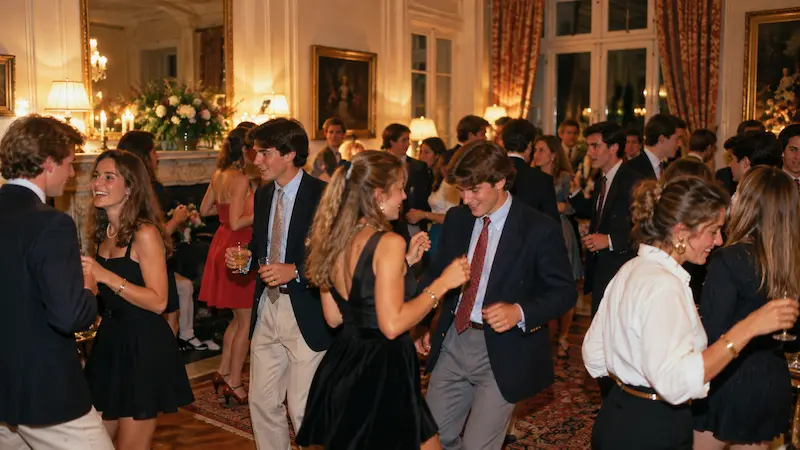
Then there were the rallyes. If you’re British, don’t picture cars racing along country roads. These were social groups that organised parties and dances for teenagers and young adults, often through family connections.
There was rock’n’roll, plenty of dancing and, inevitably, the same familiar faces. Some friendships became romances, and some romances eventually led to marriages. Not because parents were secretly arranging weddings, but because people kept meeting within the same circles.
Looking back, I can see how that world reinforced social boundaries. At the time, though, it mostly felt like school friends, parties and dancing.
Hardelot, Le Touquet and my golden summers
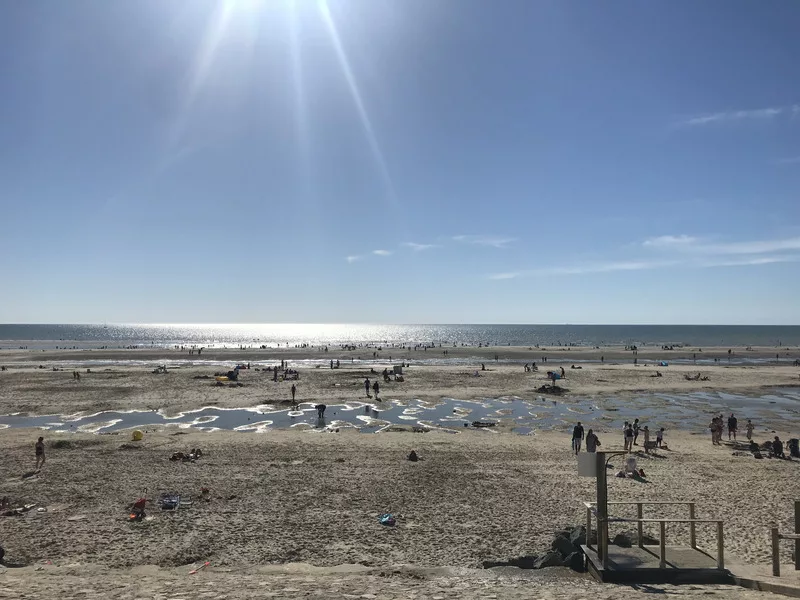
And when the school year ended, many of those familiar faces reappeared on the Opal Coast. For families from Lille, Roubaix and Tourcoing, Le Touquet and Hardelot were favourite places for the summer.
My maternal grandparents had a villa in Le Touquet. My paternal grandparents had a house in Hardelot. But I didn’t divide my holidays equally between them: I spent two months in Hardelot and about a week in Le Touquet. I’m very much Team Hardelot.
Hardelot was my childhood and teenage years, my golden summers. I spent an enormous amount of time at the sailing club, where I met some of the same families I knew from the Lille area, including the Bonduel and Cavrois families. The school aprons had finally given way to sailing gear. The boys, of course, had never needed aprons in the first place.
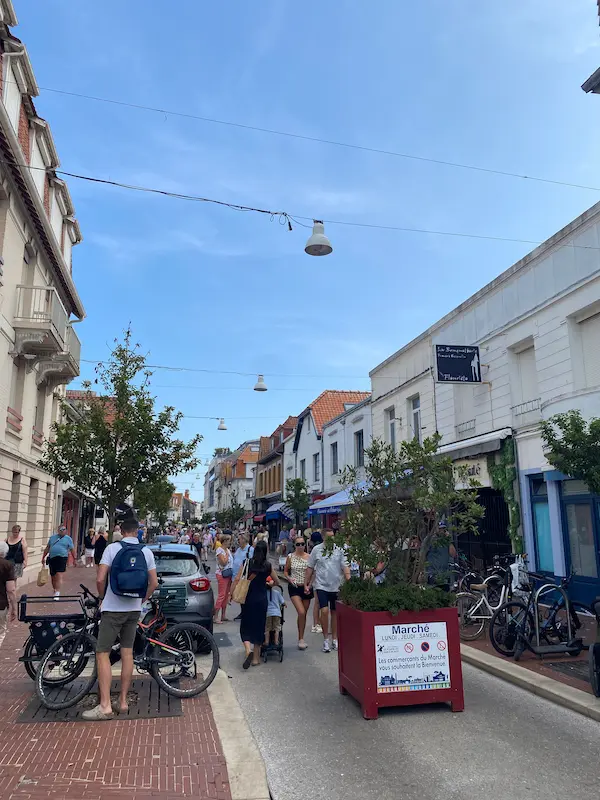
Le Touquet has a different atmosphere. To my mind, it’s a little posher, a little more concerned with being seen. Hardelot always felt more relaxed and family-oriented. Both seaside resorts have long-standing connections with British visitors, visible in their villas, sports and seaside traditions.
My grandparents’ villa in Le Touquet was called Cottage Fleury, on Avenue Saint-Louis. It’s still there, and whenever I go back, I can’t resist walking past it. My grandfather later lived on Rue de Londres — an appropriate address for a story written for British readers.
The Cavrois family and a house that looked like a petrol station
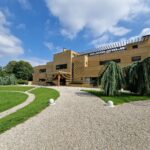
One of the best places to see what a textile fortune could build is Villa Cavrois in Croix. The industrialist Paul Cavrois commissioned architect Robert Mallet-Stevens to create this extraordinary modernist house, completed in 1932.
There’s a personal connection here too. My maternal grandfather was the Cavrois family’s doctor, and my grandmother knew the family. She had a rather unflattering description of their astonishing new house: she thought it looked like a petrol station.
I couldn’t disagree more. I love it. If you’re visiting Lille, it’s well worth making the journey to Croix. I’ve included it among my top ten places to visit around Lille, along with La Piscine museum in Roubaix.
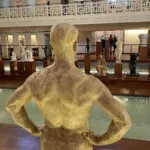
La Piscine has its own place in my family history: my mother learnt to swim there, long before the Art Deco swimming pool became a museum. Today, it’s one of my favourite examples of how the region has given its industrial heritage a new life.
Where to discover this history for yourself
You don’t need a family connection to enjoy this heritage. Start with La Piscine in Roubaix, visit Villa Cavrois in Croix, and admire the extraordinary Motte-Bossut factory that now houses the national archives. For the working side of textile history, there’s also La Manufacture textile museum in Roubaix.
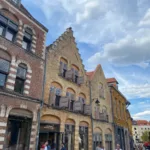
If you’re staying in Lille itself, wander through the streets of Vieux-Lille. Its trading history began long before Roubaix’s industrial boom, and the contrast between merchant Lille and factory Roubaix tells you a great deal about the region.
And if the names La Redoute, Auchan or Decathlon sound familiar, read how Northern France became the birthplace of so many famous French retail brands. It’s the business side of the same family story.
The factories have changed. The memories haven’t.
Many of the textile mills have closed, but their legacy is still visible in museums, buildings, businesses and family names. For me, it is also there in memories of my father’s work, school friends, dancing at rallyes and summers spent sailing in Hardelot.
Before you get the wrong idea, though, let me make one thing clear: you won’t find my name in the Livre des grandes familles.
I went to school with some of them, danced with some of them and spent my summers alongside them. But I’m not one of them. Not even remotely.
I just happened to have a rather good seat from which to watch a little piece of Northern France’s social history unfold.
Keep exploring Lille’s past
- Where it all started: the surprising history of Lille, from marshy islands to Louis XIV.
- More on the city’s heritage in our guide to Lille’s culture and history.
Delphine was born and raised in the Lille metropolitan area — close enough to hear the “Mongy” tram rattle past her childhood home. After more than 20 years promoting the Nord department to British visitors, first through press trips, trade shows and tour operator partnerships, then as a digital marketing consultant specialising in tourism, she’s spent her career building bridges between her home city and the UK.
Along the way, she’s picked up a genuine soft spot for both sides of the Channel: London’s Spitalfields market and a good bagel from Brick Lane are as close to her heart as the passageways behind Lille’s cathedral or a plate of Merveilleux from her favourite bakery. She was even honoured at the British Guild of Travel Writers’ dinner at the Savoy for her work bringing Cambrai’s Tank 1917 museum to life.
On Tour de Lille, Delphine writes as the local who never left — sharing the quiet corners of her city and the stories behind them, for visitors who want to see Lille the way a Lilloise does.