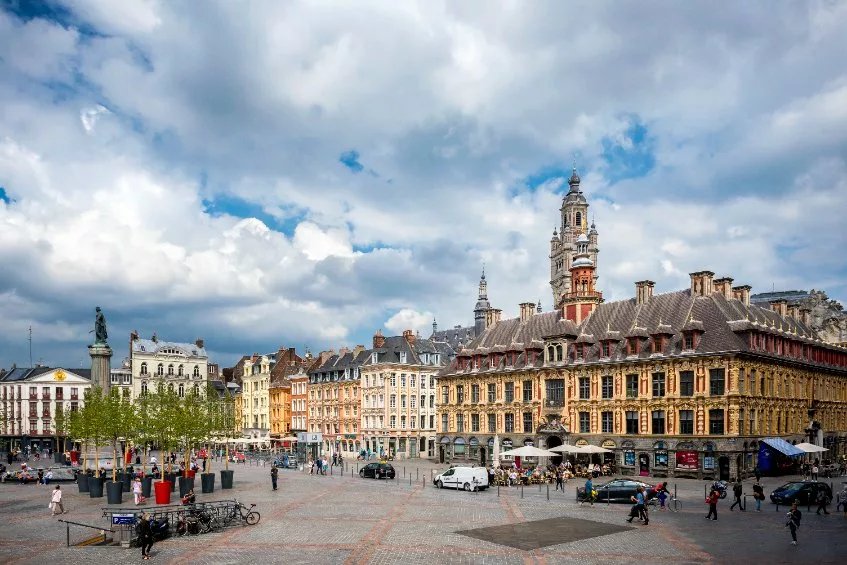
Lille is the kind of city that surprises people. They expect a grey northern industrial town and find, instead, cobbled squares, a roaring food scene, and a train that puts Brussels 35 minutes away and Paris in under an hour. What they don’t expect is how fast the practical side of settling in can overwhelm them. A beautiful city and a smooth move are two very different things.
France ranks in the top 10 countries worldwide for quality of health services according to the World Health Organization, and Lille itself is the fourth-largest urban region in the country, with a metropolitan population just above one million. But size doesn’t make administration easier. If anything, it makes the paperwork thicker.
This guide cuts through the generic advice. It’s written for people who want real answers, not a tourist brochure.
Understanding what kind of city Lille actually is
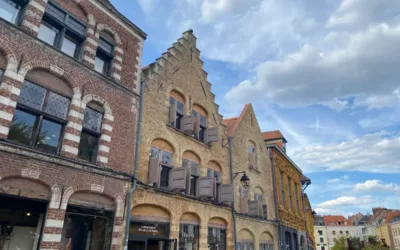
Lille sits in French Flanders, pressed against the Belgian border, shaped by centuries of textile trade, Flemish architecture, and a stubborn local identity that resists Parisian centrism. The city proper holds around 230,000 residents, but the Métropole Européenne de Lille sprawls across more than a million people and dozens of communes.
The climate won’t win awards. Winters are damp and grey, with temperatures hovering around 4°C on average. Summers are mild, rarely exceeding the low 20s. If you’re arriving from a sunny country, pack a proper coat and recalibrate your expectations. What the city lacks in sunshine it compensates for in character.
Locals speak French, naturally, but English is more widely understood here than in many French cities, partly because of the student population and partly because of the cross-border professional culture. Still, learning basic French before you arrive isn’t optional, it’s survival. Administrative services, landlords, and daily interactions will be in French. No workaround exists for that.
Visas and administrative paperwork: start earlier than you think
EU citizens can move to Lille without a visa and work freely. Those staying longer than three months should register their residence with local authorities, though enforcement is inconsistent. Non-EU citizens face a more structured process.
If you’re Canadian, Australian, or between 18 and 30 years old from New Zealand, working holiday visa agreements allow up to a year of legal work in France. For everyone else outside the EU, a work visa is required before arrival, typically sponsored by a French employer. This means securing a job contract before you board your plane, not after you’ve already unpacked.
One thing that catches people off guard: France does not issue visas from within the country for employment purposes. Applications go through French consulates abroad. Budget four to eight weeks minimum for the process, and assume delays will happen.
Finding a place to live: the rental market is competitive
Renting in Lille is not cheap, and it moves fast. A small studio or one-bedroom apartment in the city centre will cost around 550 EUR per month, while suburban options in areas like Marcq-en-Barœul or Wasquehal drop to around 420 EUR. Family-sized three-bedroom apartments in less central zones average roughly 950 EUR monthly.
If you’re buying, expect to pay above 3,000 EUR per square metre for central properties, with prices falling to around 2,000 EUR per square metre outside the core. The market is strong. Properties go quickly, and landlords have their pick of applicants.
French landlords typically require a dossier: proof of income (usually three months of payslips), a French guarantor or the Visale guarantee scheme for those without one, a copy of your ID, and sometimes your last three rental receipts. Non-residents without French income history often struggle here. One practical workaround: relocation companies can smooth the process, and some of their fees are reimbursable through the MOBILI-PASS scheme under certain conditions.
For neighbourhoods, Wazemmes is vibrant, diverse, and full of life but genuinely noisy. The Vieux-Lille area is beautiful and expensive. Families often head to Marcq-en-Barœul for calmer streets and good transport links back into the centre.
Getting around on day one (and beyond)
This is where most moving guides gloss over something critical. Your furniture hasn’t arrived. Your metro card isn’t set up. Your phone plan is still attached to your home country. And you have a 7 AM appointment at the prefecture.
On your first days in Lille, before you’ve decoded the transit system, a reliable taxi service is not a luxury, it’s a necessity. Rapid’Taxi Lille, available at taxislille.com, operates 24 hours a day, seven days a week, and covers both urban trips and airport transfers. Lille-Lesquin Airport sits 7 km south of the city centre, and having a professional driver who knows the city removes one variable from a day that will already have too many. You can reach them directly at 07 600 661 61. When everything around you is unfamiliar, knowing your transport is handled is worth more than it sounds.
Once you’re settled, Lille’s public transport network is genuinely excellent. The Transpole system (now rebranded as ilévia) runs two metro lines, trams, and an extensive bus network. Cycling is also viable: the city has invested seriously in bike infrastructure, and many residents go entirely car-free. Parking in Lille is notoriously tight, and most spaces are parallel-only, so if you’re planning to bring a car, factor in the daily frustration of finding a spot.
Healthcare: better than you expect, slower than you’d like
France’s healthcare system is among the best in the world, and Lille benefits fully from it. As an EU resident or registered worker, you access care through the Sécurité Sociale system after registering with the Caisse Primaire d’Assurance Maladie (CPAM). This takes time to set up, sometimes several months, so arranging private travel health coverage for your initial period in France is strongly advised.
Finding a médecin traitant, a registered general practitioner who coordinates your care, is essential. Without one, you pay higher rates for specialist consultations. The catch: GPs in Lille are often fully booked, and getting on a new doctor’s patient list can take weeks. Start this process before you actually need a doctor.
Dental care works differently: you pay upfront and claim reimbursement. Most pharmacies are well-stocked and easy to use, though language can be a barrier for less common medications or specific queries.
Schools, childcare, and family practicalities
Lille has a dense network of public and private schools, including several international options relevant to expat families. The French national curriculum is rigorous and starts early: maternelle (nursery school) begins at age 3 and is compulsory from that age. Childcare is largely available across the metropolitan area.
For English-speaking families, it’s worth researching whether a school offers bilingual or English-language tracks before committing to a neighbourhood. Not all districts have the same school options, and in France, school enrolment is often linked to your official address. Choose your flat with one eye on the catchment area.
Families with children who have special educational needs should contact schools directly and verify available support before signing any lease. Resources vary significantly between institutions.
Banking, phone plans, and the digital side of settling in
Opening a French bank account as a new arrival without a fixed address is a known obstacle. Many expats turn to online banks like N26, Revolut, or Wise as a bridge while they establish residency and collect the documents required by traditional French banks (a utility bill, a lease, an income proof). Once those are in place, Crédit Mutuel, BNP Paribas, and La Banque Postale all have strong local presence in Lille.
Phone and internet plans in France are among the most affordable in Europe. Operators like Orange, SFR, Bouygues Telecom, and Free Mobile offer competitive rates, and 4G or 5G coverage across Lille is reliable. Setting up a French SIM on arrival should be one of your first priorities: it gives you a local number, which most administrative forms will require.
The social side: what nobody warns you about
Lille has a large, active student population across several universities, including the Université de Lille with over 70,000 students. This keeps the city young, culturally alive, and reasonably open to newcomers. But social integration for adults, particularly non-French speakers, can be genuinely slow.
Language is the central variable. Those who arrive without French and don’t invest quickly in learning it report significant isolation, especially if they’re not working in an English-language environment. Groups like ANFEM (Accueil des Nouvelles Familles en Métropole) exist specifically to connect arriving families with local social networks, and their contact, anfemlille@gmail.com, is worth saving before you even land.
The city’s proximity to Brussels and Paris is a real comfort for expats who need occasional access to a larger international community. A 35-minute Eurostar connection to Brussels, or a 55-minute TGV to Paris-Nord, means Lille never feels truly isolated, even on its most overcast January days.
The practical checklist before your first week ends
There’s a sequence to settling in that most expat guides scramble. The order matters more than people realise. Before anything else: secure your address, because nearly every subsequent step depends on it. From there, register with the CPAM for healthcare, open a local bank account or activate a temporary digital one, get a French SIM card, and find a GP.
If you’re arriving with a car, an international driving licence is strongly recommended, and French road rules apply immediately. Speed limits are 130 km/h on motorways and 50 km/h in urban areas, and penalties for drink-driving are severe: the legal blood alcohol limit is 0.05%, lower than in many countries. If you’re bringing pets, they need to be microchipped and carry a valid rabies vaccination. Certain dog breeds face legal restrictions in France, so verify your pet’s status before travel.
One thing worth keeping in mind: Lille is not Paris. The pace is different, the culture is different, the prices are different. People who arrive expecting a smaller capital city are often pleasantly surprised. Those who arrive without having done their research are often overwhelmed by how much administration France quietly demands of newcomers. Prepare methodically, and the city will reward you generously.
Settling in
- Scouting the city first? See how to get to Lille from the UK and our boutique hotels shortlist for a first stay.
- Reassure family back home with is Lille safe to visit right now.
- Day-to-day practicalities: getting around Lille, safety and emergencies and where to stay in Lille.
Andy Sutcliffe is a British cycling journalist and former Editor-in-Chief of Cycling Weekly, where he also launched Cycle Sport and Mountain Bike Rider magazines. He later founded Cabal Communications, launching titles including Procycling. After decades covering the world’s biggest races from team cars, helicopters and press centres, Andy now lives in Templeuve-en-Pévèle, just south of Lille, where he teaches English and works in marketing for local businesses. He created Tour de Lille to help visitors make the most of their trip to the city and region he now calls home.