Why Lille is worth the trip (and why most people get it wrong)
Most people picture Lille wrong. They expect a windswept post-industrial city somewhere between Calais and Brussels, probably grey, probably dull, definitely not worth the detour. I moved here — well, just south of here, to Templeuve-en-Pévèle — and I can tell you the misconception is spectacular in its inaccuracy.
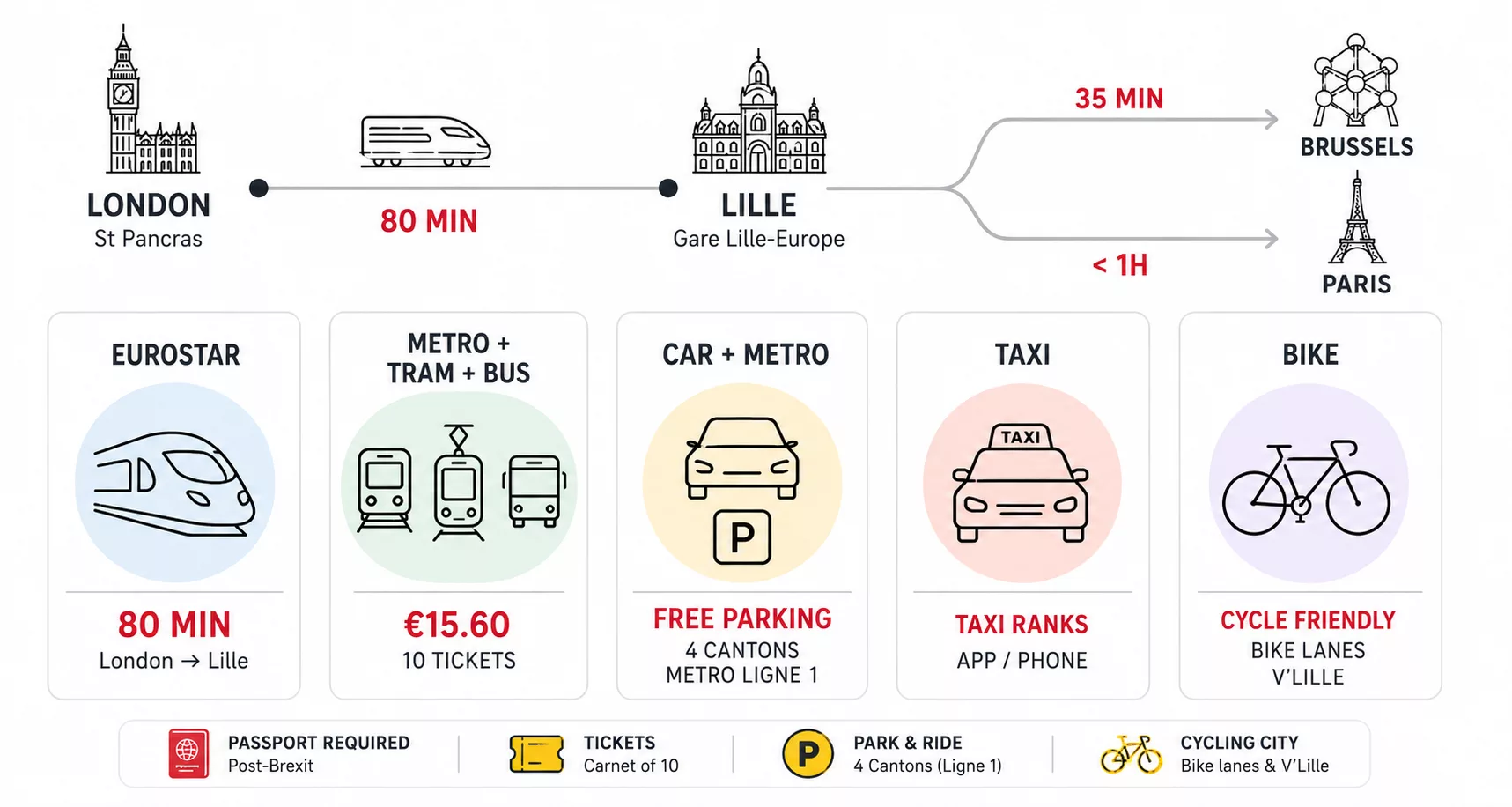
The Eurostar direct from London St Pancras reaches Gare Lille-Europe in around 80 minutes. That is less time than it takes to cross London by tube on a bad day. From Lille, Brussels sits 35 minutes away by TGV. Paris is under an hour. Lille stands at the junction of three high-speed rail routes, which makes it one of the best-connected cities in northern Europe — and one of the least appreciated by British visitors who tend to blow straight through on their way elsewhere.
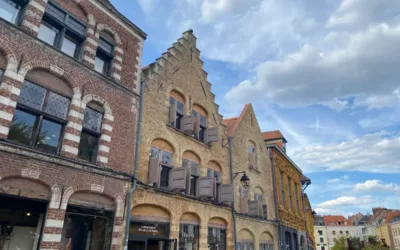
The city has a population of just over a million in the greater metropolitan area. It is the capital of Flanders on the French side of the border, and that dual French-Flemish identity shapes everything: the architecture, the food, the beer, the character of the streets. The old town — Vieux Lille — is all cobbled lanes, pastel Flemish baroque facades and ornate step-gabled buildings. It looks nothing like Paris. It looks, frankly, like a very good dream.
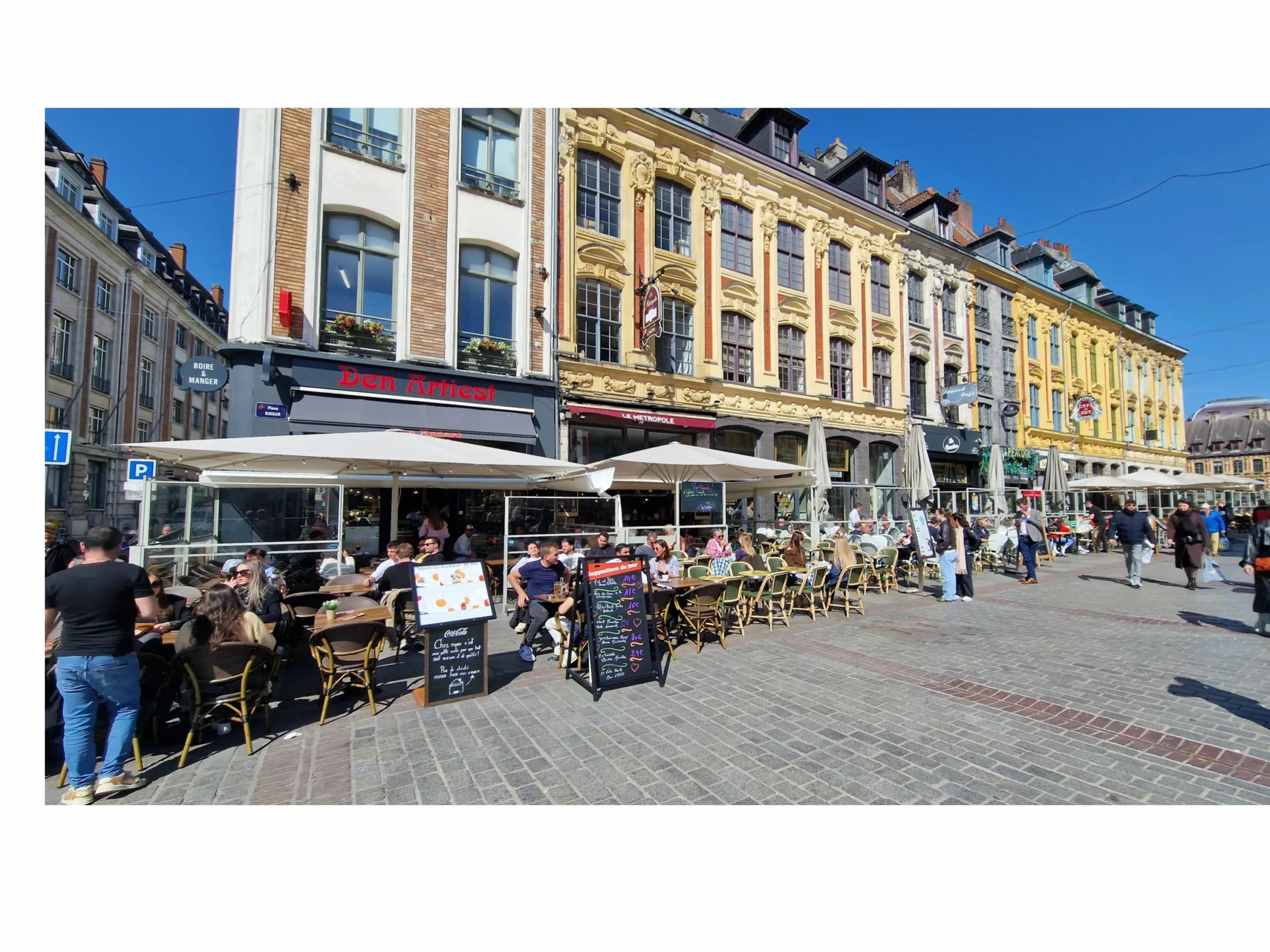
Add a large and permanently present student population — the Catholic University of Lille alone draws tens of thousands — and you get a city with genuine energy. The terraces fill up on Tuesday afternoons. The bars take their beer seriously. The food is unapologetically rich and very good.
« For us, people of Lille, it is the truth that counts, not the frills and fripperies. » — Charles de Gaulle, born in Lille, 1890
That quote, from a local boy made good, tells you something about the character of the place. No performance, no posturing. Just the thing itself, done well. The Lille city break rewards visitors who actually show up, and in winter Christmas in Lille is hard to beat.
Getting there and getting around : the practical bit
Getting to Lille
The Eurostar direct from London St Pancras to Gare Lille-Europe takes around 80 minutes. One thing competitors and official tourism sites never tell you: the gate does not open until 45 minutes before departure. If you arrive early, there is a decent bar-café — Noya Lille Europe — just outside the station building, past the hire car offices and up the stairs. Far better than standing in a draughty queue.
Post-Brexit passport rules apply at French border control, which happens at Lille-Europe before you board. Your passport must carry an issue date less than 10 years before your arrival date, and an expiry date at least 3 months after the date you plan to leave the Schengen area. Border officers also have the right to ask for proof of accommodation, travel insurance, a return ticket and evidence of sufficient funds. In practice, most British visitors pass through without issue — but check your passport dates before you travel, not at the gate.
The ETIAS/EAS pre-authorisation system keeps being delayed. There is no immediate concern for current visitors, but it is worth keeping an eye on before booking future trips.
Getting around Lille
The city has two Metro lines, two tram lines and a bus network run by Ilévia. The centre is almost entirely walkable and largely pedestrianised. For longer journeys, the Metro trains are small, driverless and very frequent — though the doors close with a ferocity that rewards attention.
A carnet of 10 tickets costs €15.60. Each ticket is valid across Metro, tram and bus, and transfers are free within one hour of first validation. Validate on every journey without exception. Lille operates more ticket inspectors per kilometre than anywhere else I have encountered in France. Fines are issued. Tickets and journey planning are available via the Ilévia website and app.
Transport at a glance
| Mode | Journey / route | Cost | Notes |
| Eurostar | London St Pancras → Gare Lille-Europe | From £39 standard | ~80 min; gate opens 45 min before departure |
| Metro / tram / bus | City-wide network | ~€16 carnet of 10 | Validate every journey; inspectors are frequent |
| Car + Metro | Park at 4 Cantons (Ligne 1) | Parking free | Then 1 ticket into the city centre |
| Taxi | Ranks at Gare Lille-Flandres and Gare Lille-Europe | Variable | Book a local firm; Uber exists but is limited and surge pricing is aggressive |
| Bike | Hire bikes — docked and dockless | Variable | Doable in the city; many streets are pedestrianised — dismount and push where required; police do stop cyclists |
Driving into Lille
Parking in the centre is paid and increasingly inconvenient. Pedestrianisation, new cycle lanes and dedicated bus routes make driving around the city steadily less practical. If you are arriving by car, park free at the 4 Cantons Metro station on Ligne 1 and take the Metro one stop into the centre. Much easier.
- Variable speed limits on approach roads: cameras change frequently from 130 to 110 to 90 to 70 km/h
- Waze is reasonably reliable for camera alerts
- Crit Air pollution sticker required if driving into the city — purchase online before travel
- Underground car parks exist under Grand’Place if you must drive to the centre
What to do in Lille : the honest top picks
Vieux Lille : the old town
Start here. Vieux Lille is the historic heart of the city — cobbled streets, pastel-coloured Flemish baroque facades, ornate step-gabled houses and a density of good food and interesting shops that rewards an aimless afternoon. Rue de Gand runs through it end to end and is lined almost entirely with estaminets (more on those in the next chapter). Place aux Oignons is the square locals tend to point to when asked where the real Lille is. There is a lively Sunday morning market in Place du Concert. Much of what makes the old town special costs nothing, as our guide to free visits in Lille shows.
The cathedral, Notre-Dame de la Treille, deserves a specific piece of advice. At first sight the exterior — completed only in 1999, with a contemporary translucent marble facade designed by Pierre-Louis Carlier and Peter Rice — looks underwhelming from the front. Walk inside, start down the nave and do not turn around for the first 15 to 20 metres. Then turn. The facade floods the interior with extraordinary amber light. It is one of the more quietly spectacular things in northern France.
La Vieille Bourse
Built between 1652 and 1653 by Julien Destrée, the old stock exchange consists of 24 identical houses arranged around a covered inner courtyard. Today the courtyard hosts second-hand booksellers, weekend chess players and an art installation that forms part of the Lille3000 cultural festival. For cycling fans, it is one of the better places in the city to hunt for old issues of Miroir de Cyclisme. Nothing tends to be overpriced. The building was classified as a historic monument in 1921.
Palais des Beaux-Arts
The Palais des Beaux-Arts is one of the largest provincial art galleries in France. Housed in a 19th-century palace, it holds works by Rubens, Delacroix, Goya, Courbet, Rembrandt and Manet across Flemish, French, Dutch, Italian and 20th-century galleries. The lower level holds the medieval and Renaissance collections plus the famous relief plans of Lille. If you have limited time and want one indoor cultural stop in the city centre, this is it. For more big-name sights, see our 10 must-see landmarks in Lille.
La Piscine, Roubaix
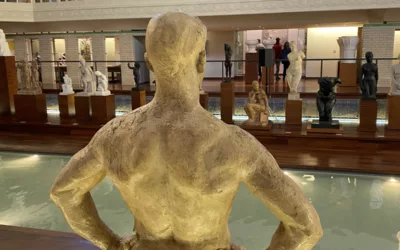
My personal favourite, and the one I would put top of the list for any visitor with half a day to spare. La Piscine — officially the Musée d’Art et d’Industrie André Diligent — is housed in and around Roubaix’s former Art Deco public swimming pool, built between 1927 and 1932. The pool itself remains the centrepiece: sculptures stand in the water, natural light streams in through stained-glass windows, and works by Camille Claudel, Picasso and Rodin line the poolside galleries. The on-site restaurant is operated by Méert, the celebrated Lille patisserie.
- Tuesday to Thursday: 11am – 6pm
- Friday: 11am – 8pm
- Saturday and Sunday: 1pm – 6pm
- Closed Mondays and 14 July
- Accessible by tram from Lille city centre
Villa Cavrois, Croix
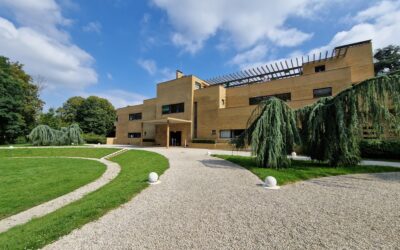
A short tram ride from Lille, Villa Cavrois was built in 1932 by the modernist architect Robert Mallet-Stevens for industrialist Paul Cavrois. The yellow-brick mansion was designed around rigorous clean lines, marble floors and Art Deco elegance — and was ahead of its time in practical terms too: central heating, electric lighting and a built-in sound system were all part of the original specification. The villa fell into disrepair over decades but has been fully restored. It is calm, beautiful and surprisingly moving.
The Citadel
Designed by Vauban and built in the 17th century on the orders of Louis XIV, the Citadelle de Lille is nicknamed the “queen of citadels” and remains an active French military base. The grounds around it are fully open to the public: moats, drawbridges, tree-lined paths and a small free zoo. It is a good 2 km walk around the outer ramparts. Worth it for the quiet, and particularly pleasant on a warm afternoon.
A note on the LaM
The LaM — Lille Métropole Musée d’art moderne, d’art contemporain et d’art brut — in Villeneuve d’Ascq is well worth a visit for modern and contemporary art: Braque, Picasso, Klee, Kandinsky, Miró and Modigliani are all represented, and many sculptures are placed in the landscaped grounds outside. Accessible on Metro Ligne 1.
Louvre-Lens : worth the 45-minute detour
Strictly speaking a day trip rather than a city attraction, but I mention it here because the Louvre-Lens should not be missed. The museum sits in Lens, a former mining town 45 minutes from Lille by train. It is a satellite of the Paris Louvre in a spectacular modern building, exhibiting major works that would otherwise never leave Paris. Genuinely world class. Really.
| Attraction | Type | Practical note |
| Vieux Lille / Notre-Dame de la Treille | Old town / cathedral | Free; turn around after 15m inside the cathedral |
| La Vieille Bourse | Heritage / book market | Free; classified historic monument since 1921 |
| Palais des Beaux-Arts | Fine art museum | City centre; one of France’s largest provincial galleries |
| La Piscine, Roubaix | Art / architecture | 1932 Art Deco pool; closed Mon and 14 July; Méert restaurant on-site |
| Villa Cavrois, Croix | Architecture / design | 1932, Robert Mallet-Stevens; short tram ride from centre |
| Citadel | History / park / zoo | Free zoo; 2+ km walk; still active military base |
| LaM, Villeneuve d’Ascq | Modern art museum | Metro Ligne 1; outdoor sculpture garden |
| Louvre-Lens | Major art museum | 45 min by train; day trip; satellite of the Paris Louvre |
Eating and drinking in Lille : from estaminets to Flemish beer
Estaminets : what they are and why you should go
The estaminet is the beating heart of Lille’s food culture, and the thing most British visitors remember longest. These are traditional Flemish-style taverns — not restaurants that have decided to be quirky, but places with genuine history and character. Wooden beams, lace curtains, mismatched chairs, copper pots on the walls, vintage clocks, enamel signs. It is like eating in a very good grandmother’s kitchen, if your grandmother brewed her own beer and slow-cooked beef in it.
The cooking is regional, robust and unapologetically filling. Estaminets specialise in exactly the kind of food this climate calls for. Book ahead. They fill up fast at the best of times, and a city full of cycling fans makes reservations non-negotiable.
Estaminets worth seeking out
- ‘T Rijsel, 25 rue de Gand — if you can only do one, make it this one. ‘T Rijsel is the Flemish name for Lille, which tells you where they stand. Carbonnade that falls apart on the fork, great local beers, irresistible desserts.
- Ch’tite Brigitte, 10 rue des Bouchers — small, lively, colourful, treats you like family. Traditional dishes with personality. Get there early or book.
- Estaminet Au Vieux de la Vieille, 2 rue des Vieux Murs — hidden in a small square behind Notre-Dame de la Treille cathedral. Candles, lace, the best tarte au Maroilles I have found in the city.
- Chez Raoul, 56 rue de Gand — a tribute to the singer Raoul de Godewarsveld, with a land-and-sea theme and excellent moules frites.
- L’Estaminet du Welsch, 45 rue de Gand — period tableware and 1900s-tavern atmosphere; reliable for all the classics.
What to eat
The menu across most estaminets follows the same satisfying logic. Here are the dishes to know:
| Dish | What it is | Note |
| Welsh | Beer-soaked bread, melted cheese (often mimolette), ham, fried egg on top — served with frites | Not the British version; richer, more molten, far more dangerous |
| Carbonnade flamande | Beef slow-cooked in dark beer with onions and gingerbread for sweetness | Spoon-soft; always with frites; the signature dish of the region |
| Tarte au Maroilles | Baked tart using Maroilles — a strong-smelling washed-rind cheese that mellows in the oven | Good vegetarian option; pungent aroma, surprisingly gentle flavour |
| Potjevleesch | Chilled terrine of pork, rabbit and chicken in vinegar jelly; served cold with frites | Pronounced “potch-vlesh”; a texture thing — surprisingly good in warm weather |
| Moules-frites | Mussels steamed with white wine, shallots and herbs; with crispy fries | Brasserie de la Paix on Place Rihour is the reliable choice |
Most bars also do planches — generous meat and cheese boards with bread, large enough for two people, at around €15. Reliably good and fairly priced.
Sweet things : Méert and Les Merveilleux
Méert, on rue Esquermoise in Vieux Lille, has been operating since 1761. The waffle recipe dates to 1849 — filled with Madagascan vanilla cream, golden and thin — and is famous enough that General de Gaulle reportedly had them delivered to the Élysée Palace. Napoleon and Churchill have also been customers, according to the house. Do the full tearoom experience: 19th-century surroundings, fragrant teas, pastries. It is not cheap, but it is worth it.
Aux Merveilleux de Fred, on rue de la Monnaie, produces the merveilleux — two meringue layers filled with whipped cream and coated in chocolate shavings. People queue for them. There is a second location at Gare Lille-Flandres, and they have recently opened at St Pancras in London, for those who cannot wait to get home.
Beer and bars
Flemish beer deserves a warning. La Chouffe sits at 8% ABV. Jupiler — the everyday “basic” beer — registers 5.2%. Paix Dieu is a popular choice at 10%. Tripel Karmeliet, Leffe and Anastoke are all widely available. Beer is served in 25cl, 33cl or 50cl (une pinte) measures. A 50cl of quality beer costs between €5 and €7 in most bars, with happy hours reducing that further. It is strong, it is good, and the second one arrives faster than you expect.
Bars worth knowing
- Au Paon d’Or, rue de Béthune — my favourite bar in Lille. Feels genuinely French bistro. Very close to Place de la République and the fan zone area.
- L’Abbaye des Saveurs, rue des Vieux Murs — over 200 beers. A serious institution for anyone who came to Lille partly for the beer.
- La Capsule, rue des Trois Mollettes — similar size selection; another beer-lover’s destination in the old town.
- Le Délirium Café, 50 rue Masséna — over 600 bottled beers and 42 on draft. Yes, 600.
One warning, offered with love: Flemish beer is absolutely fantastic, but very, very strong. Pace yourself accordingly.
Day trips and the wider region : what to do beyond the city
Find your day trip
9 destinations
Templeuve-en-Pévèle
Moulin de Vertain & Cysoing cobbled sectors — Paris-Roubaix route
Louvre-Lens
Satellite of Paris Louvre; UNESCO Bassin Minier surroundings
Ypres / Ieper (Belgium)
Menin Gate Last Post (nightly 8pm); In Flanders Fields Museum; Tyne Cot cemetery
Vimy Ridge
Canadian National Vimy Memorial, April 1917; managed by Veterans Affairs Canada
Brussels
Grand Place, Atomium, Belgian cuisine and beer
Ghent
Medieval city centre, Gravensteen castle, canal walks
Bruges
Canals, chocolate, medieval architecture
Cassel
Hilltop town; Jardins du Mont des Recollets
Oudenaarde (Belgium)
Tour of Flanders Centre
Riding the Paris-Roubaix cobbles
I live in Templeuve-en-Pévèle. The Moulin de Vertain cobbled sector of Paris-Roubaix runs through my town. If you are a cycling fan and you do not take the train out here, I will consider it a personal affront.
The Valenciennes line from Gare Lille-Flandres reaches Templeuve in around 15 minutes. If you are coming by car, there is free parking at the station. From there you can ride the Moulin de Vertain sector, the nearby Cysoing sector (the Gilbert Duclos-Lassalle cobbles), and position yourself close to the Carrefour de l’Arbre. The roads connecting the sectors are increasingly signposted with dedicated cycle lanes. Most towns along the route have estaminets for lunch and cafés for refuelling. The Tour of Flanders Centre in Oudenaarde, across the Belgian border, is worth adding for cycling fans who want the full picture.
Belgian day trips
Lille’s position means Belgium is not a day trip so much as a short commute. Brussels takes 35 minutes by TGV. Ghent is 1 hour 15 minutes. Bruges runs to around 1 hour 30. Kortrijk, just over the border, is 35 minutes. All are straightforward by train from Gare Lille-Flandres.
WW1 and WW2 sites
This part of northern France and southern Belgium is one of the most significant WW1 landscapes in the world. For British visitors, it tends to arrive as a surprise — the scale and number of CWGC cemeteries and memorials within an hour of Lille is genuinely moving.
Sites within reach
- Ypres / Ieper, Belgium (~1 hour): the Menin Gate Last Post ceremony takes place every evening at 8pm. I have watched it several times. It is moving in a way that is hard to prepare for. The In Flanders Fields Museum is also here.
- Vimy Ridge (~30 min): the Canadian National Vimy Memorial stands on ground taken by the Canadian Corps in April 1917. Managed by Veterans Affairs Canada. One of the finest WW1 memorials in Europe.
- Notre-Dame de Lorette / Ring of Remembrance: France’s largest military cemetery, with 40,000 names inscribed on an elliptical ring. Powerful and stark.
- Tyne Cot CWGC cemetery: the largest Commonwealth war graves cemetery in the world, near Ypres.
- Australian WW1 museum, Fromelles: dedicated to the Battle of Fromelles, July 1916.
- Thiepval Monument, the Somme: the largest British battle memorial in the world; the road from Péronne to Albert passes dozens of sites and cemeteries.
Cultural day trips
Louvre-Lens sits 45 minutes from Lille by train in the former mining town of Lens. It is a satellite of the Paris Louvre in a spectacular modern building, exhibiting major works that would not otherwise leave the capital. It is genuinely world class. The Bassin Minier UNESCO World Heritage Site surrounds it and gives the landscape a strange, post-industrial grandeur.
Cassel, 40 km northwest of Lille, is a hilltop town — one of the few hills in this part of France — with the Jardins du Mont des Recollets worth a visit in their own right. Rumoured, with various degrees of seriousness, to be the hill the Grand Old Duke of York marched his men up and down.
| Destination | Distance / time from Lille | What to see |
| Templeuve-en-Pévèle | 15 min by train (Valenciennes line) | Paris-Roubaix cobbled sectors: Moulin de Vertain, Cysoing |
| Louvre-Lens | 45 min by train | Satellite of Paris Louvre; spectacular modern building; UNESCO Bassin Minier |
| Ypres / Ieper (Belgium) | ~1 hour by car or train | Menin Gate Last Post (nightly, 8pm); In Flanders Fields Museum; Tyne Cot cemetery |
| Vimy Ridge | ~30 min | Canadian National Vimy Memorial; managed by Veterans Affairs Canada |
| Brussels | 35 min by TGV | Grand Place, Atomium, Belgian cuisine and beer |
| Ghent | 1h15 by train | Medieval city centre, Gravensteen castle, canal walks |
| Bruges | ~1h30 by train | Canals, chocolate, medieval architecture — deservedly popular |
| Cassel | 40 km northwest (~40 min by car) | Hilltop town; Jardins du Mont des Recollets |
| Oudenaarde (Belgium) | ~50 min by car | Tour of Flanders Centre — essential for cycling fans |
Visit Lille : and give it more than a day
Eighty minutes from London, Lille delivers a Franco-Flemish city with world-class art, a food culture built around estaminets and strong beer, and a wider region dense with cycling heritage and WW1 history. The city rewards those who stay long enough to slow down — a second day in Vieux Lille, a morning at La Piscine, an evening at Au Paon d’Or with a Chouffe. As the Eurostar from London gets easier to book and the ETIAS pre-authorisation system eventually arrives, Lille’s appeal to British visitors is only set to grow. The question is whether you go before everyone else catches on.
Plan your visit
- Spend less with our free visits in Lille.
- Build your itinerary around the 10 must-see landmarks in Lille.
- Coming in winter? See Christmas in Lille.
- Start with our Lille Top Ten and a walk through Vieux Lille.
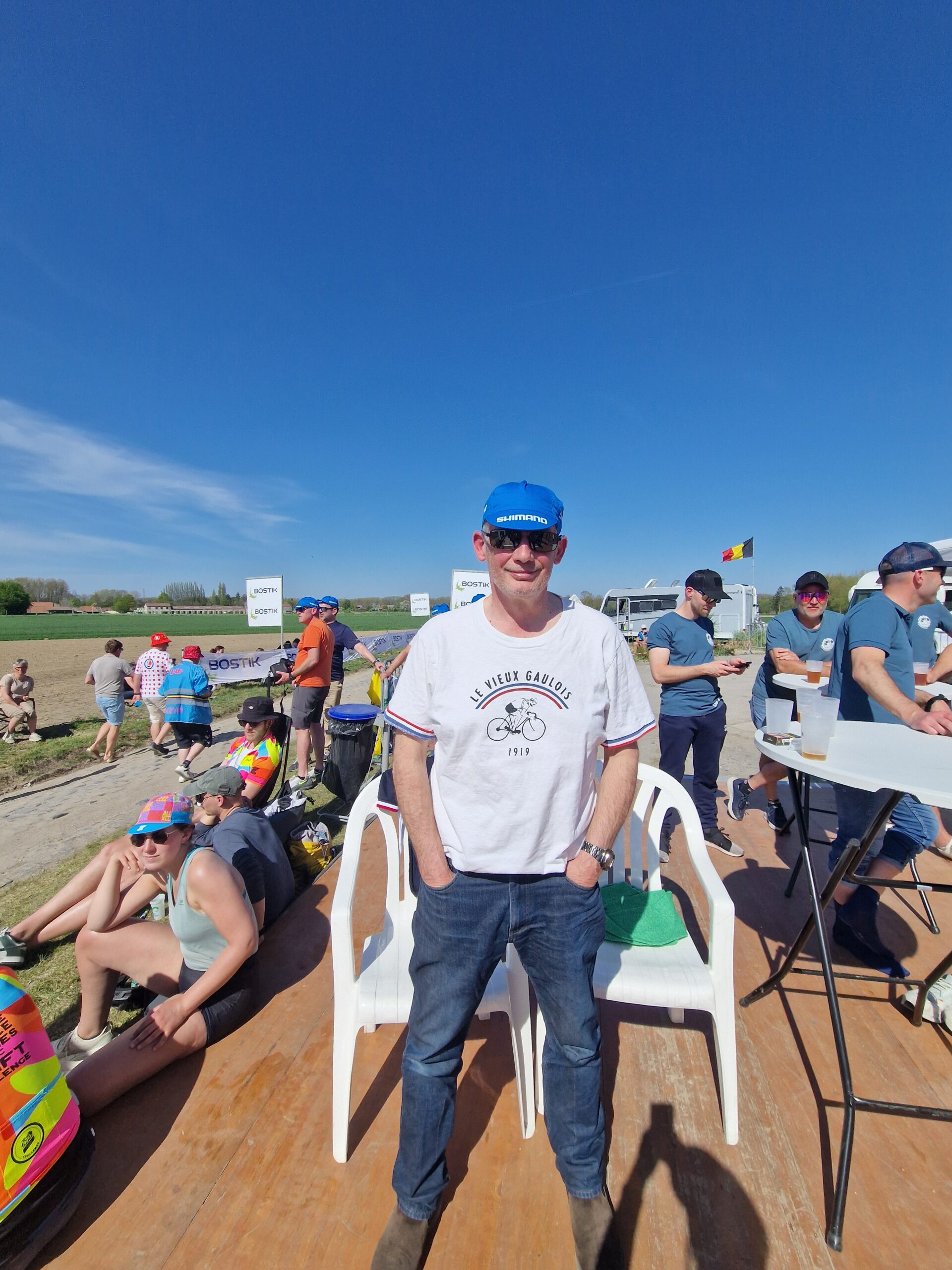
Andy Sutcliffe is a British cycling journalist and former Editor-in-Chief of Cycling Weekly, where he also launched Cycle Sport and Mountain Bike Rider magazines. He later founded Cabal Communications, launching titles including Procycling. After decades covering the world’s biggest races from team cars, helicopters and press centres, Andy now lives in Templeuve-en-Pévèle, just south of Lille, where he teaches English and works in marketing for local businesses. He created Tour de Lille to help visitors make the most of their trip to the city and region he now calls home.